Club Chicxulub Journal
Vol. 5, Pandæmonium

Club Chicxulub Journal: Vol. 5, Pandæmonium

Copyright © 2026 Club Chicxulub

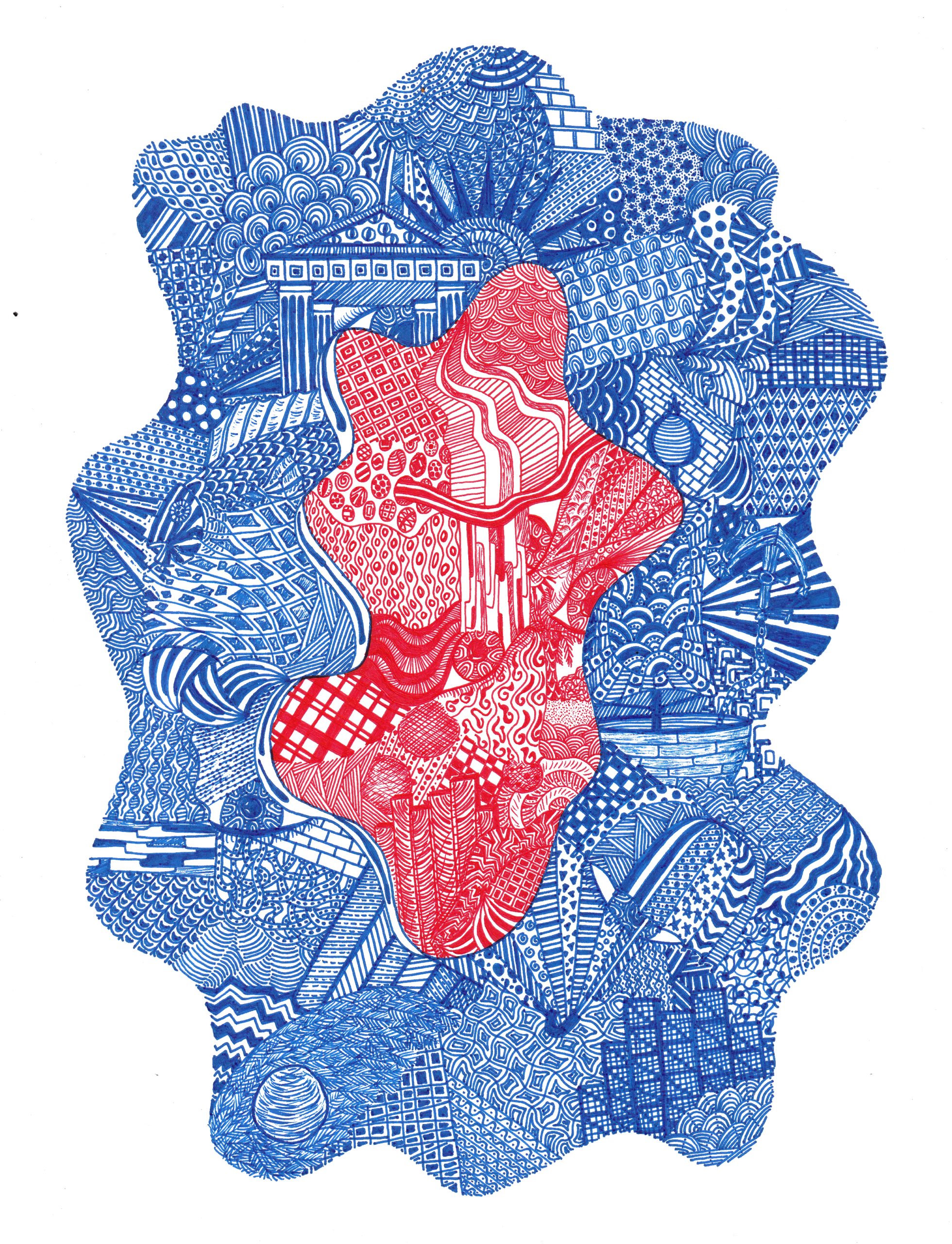
Cover illustration: “Bunny Bird” by Beatriz Bradaschii


Club Chicxulub:

Created by Matt Scott Carney & Lauren C. Johnson

Produced by Carney, Johnson, Dev Bhat, and Kristin Eade. 

Website: clubchicxulub.com

IG & Bluesky: @clubchicxulub


Promotional rights only.

This document, or parts thereof, may not be reproduced in any form without permission from the producers and individual contributors.

THANK YOU for supporting this journal on Patreon:

Heidi Kasa

Forewords
Forewords

Maybe the antidote to pandemonium is trust.

Once upon a time, I was a much younger fiction writer and musician with an axe to grind, and I fancied myself a speculative satirist. The human condition and its enterprises of control can be so obviously corrupt and myopic, why not expose fallacy through social caricature and viscous mockery? But how the decades have passed, and how the tables are turned: The cultural, social and political chaos of the mid-2020s is now viciously mocking us in ways we could not foresee. It feels almost impossible to write speculatively about hypocrisy when the policies in vogue are willful ignorance, malicious delusion, and incoherent loyalty. In the paradigm of flippant idiocy, rationality is the caricature.

I had a vivid dream a little while ago. I was a passenger on a plane, and suddenly the wings exploded into flames. I looked out the window as the engine erupted and shouted, oh my fucking god the fucking wings are on fire! And the man sitting next to me looked over just to laugh and say, lol no they’re not.

The true pandemonium of our moment is that you are a creative thinker grounded in history, art, science and modern philosophical ideals, and you are being annihilated by a kind of tacky contrarian hostility young you couldn’t possibly imagine. You watch a rocket launch in real time that flings astronauts into the void of nature at its grandest scale, deeper into the void than any individual of any species on your planet has ventured during all 3.8 billion years this world has hosted life. You compulsively scroll a device pitching data at nearly light speed where untold morons infinitely comment without evidence that everything amazing we’d seen lately is a scam, any proof you have about literally anything is a lie, and everyone is laughing at you—many of these commentators may not be human, but rather immortal machine learning models pantomiming the facsimile of hatred. The chief executive of the most absurdly armed state society to exist on Earth shits himself on television, falls asleep at meetings, calls someone who questions him “piggy,” rebrands “groceries” as “old fashioned” and “83%” as “600%”, has never heard of a corner store, and threatens via AI slop to destroy an entire civilization as stock market manipulation… But you? Your criticism makes you the lunatic. You are destroying our culture. You are the enemy within.

This is pandemonium.

And this is why Club Chicxulub exists and has always existed. We offer qualification and challenges to the darkness of humanity, and in this case Vol. 5 Pandæmonium offers trust.

Personally, one aspect of trust is in how Club Chicxulub has evolved into a significantly more collaborative operation. November will mark five years of its existence, and I am so thrilled we’ve welcomed a new permanent collaborator into the fold, a fabulous past contributor and our new friend Kristin Eade. My musical contribution as N! to our soundtrack with our friend Dev Bhat as Shipwreck Detective has also evolved; for the first time, we composed and recorded a score live together in the same studio for M. E. Detlef’s fantastic “Devil’s in the Details.” These are also the first Club Chicxulub recordings to include vocal parts from me and Lauren C. Johnson especially featured in Joanna Harris’s “The Prom King,” and likewise past contributor and our friend Kelechi Ubozoh has returned to perform A.P. Ritchey’s “The Search for Silence.”

I feel that each piece Kristin, Lauren, Dev and I curated for this issue somehow engages with trust. Who we can and cannot trust. Trust in what remains in absence and what will not. Trust in what we create. Trust that we can make it across the river together. This work asserts that the trust that binds us against contrarian erosion is curiosity, love, resistance, and above all our vulnerability.

That is the trust I hope you find as you make it through Pandæmonium.

Matt Scott Carney

Life has been chaotic lately, hasn’t it? Some days it can feel like navigating a kaleidoscope, the barrel turning and turning as you fight your way past fractals and falling shapes that are at once wretched yet beautiful.

As our lives are made psychedelic, each day distorting into polygons of panic, then softening into whorls of beauty, then sharpening into terror, then melting into love, how do we find purchase? In a barrel that keeps on turning, where there’s no horizon to orient yourself, what do you grab on to?

In these moments, I turn to art. Art reflects the absurdity of our modern lives. It reminds us that, no, we’re not making up how we feel. It offers us the relief of escaping to a wild new world we could only ever dream of. It gives us hope, however guttering, however fleeting, that tomorrow might be better.

“Pandæmonium” is exactly what it sounds like: a wild mélange of art, stories, and music that offers your scrabbling hands something to hold onto. Lose yourself in a tender, newfound community of empty nesters; in the hunt for a planet of pygmy rhinos; in a sexy masquerade ball where finding your lover is like trying to grab smoke. Or, if you’d rather, perhaps you want to enjoy a chilling prom night, or make art and love amid the ruins of a wasteland. There’s even a magic towel.

There is so much brilliance in this volume of Club Chicxulub. Thank you to the many talented humans who have thrown us a lifeline by sharing their words and art with us. Your creations do the hard work when the kaleidoscope keeps turning—they offer us a hand to grab and the mercy of a few moments of respite from the world’s sharp edges.

Kristin Eade

Music is a wonderful thing to create and enjoy alone. It is a universal force of connection when it is a shared experience. On one level, composing for Club Chicxulub has always been a shared musical experience between the authors and I, though removed to a degree. Gradually, the shared experience has been deepening through Matt and I steadily experimenting together musically to tackle some of the wild stories that have come our way. In this issue, I think that experimentation has fully set into collaboration. The result is something infinitely more satisfying than work I’ve composed alone.

Maybe I’m projecting, but this approach heavily informed my general feeling around the stories this time around. What I see in the stories are cautionary tales about trying to go it alone, or what happens to us in isolation. There are surreal visions of disconnect and the disquiet that ensues. There is an acceptance of solitude yet a yearning for connection. Collaborating with Matt on the music replicates what I wish more for our world and an answer to these cautionary tales: connection creates. Connection saves. We don’t have to—and frankly can’t—do all of this shit alone.

Dev Bhat

Each time Club Chicxulub opens for submissions, I’m humbled by the authors and artists who answer the call. Each of these pieces—from the stories, to photographs, to musical sets—was created with soul, and it’s an honor to present the work entrusted to us in Vol. 5.

Here, you’ll find versions of Pandæmonium that scale from personal quests for isolation and erasure to state-led prohibitions against feeling all emotion. But don’t be mistaken; there’s joy, levity, and pleasure in Pandæmonium, too—whether starting life anew as an otherworldly empty nester or chasing true love across every ballroom, every lifetime.

I believe the Club Chicxulub Journal is best enjoyed in the evening, when you can put work aside, put your phone in another room, dim the lights for mood (but not so much that you can’t read), pour yourself a drink, and read and listen without distractions. The stories, poems, and visual art are complex and require your full attention. Read them slowly. Go back and read them again. There’s an LP-length worth of musical tracks, too.

In a media landscape flooded with 6-second reels and TikTok videos, Club Chicxulub resists the attention economy. The pieces in this issue are a testament to the fact that 100% human-made, long-form art is alive and well.

Lauren C. Johnson

✵ Table of Contents

Joanna Valente: To The : Depths of Nothing
To The : Depths Of Nothing  Joanna Valente

M. E. Detlefs: Devil's in the Details
Devil’s in the Details M. E. Detlefs

There is always a ball in the Gallery. No one remembers how it began or knows when it will end—least of all me—though many speculate. But that’s all that happens at parties like these, isn’t it? Speculation.

The Gallery flirts with space and time. Its hallways weave together to create an ever-shifting tapestry of crimson and sin. The walls are mahogany paneled, or upholstered with crushed blood-red velvet, or draped in curtains that reveal hints of mirrors behind the heavy swaths of burgundy. All the windows are tucked away behind drapes. Only once have I pulled back the fabric to peer through shards of stained glass, and I was met with an endless spread of stars. The passages double back on themselves—lace together like the back of a corset—and act as veins between ballrooms and vestibules and antechambers where couples dance and drink and whisper. Yet, I’m never really sure if the room I’m in is one I’ve seen before. Chandeliers overflowing with candles and dripping with rubies, amber, and diamonds light the space, their rippling glow leaving just enough darkness in the corners to foster forbidden deeds.

Though, only one thing is forbidden. Every partygoer wears a mask, and every hour, the mask changes. One must never remove it. The command is written in blood on a stone arch in the main hall.

Hours are a fluid thing, subject to the whims of the Gallery. If there ever was a host of this lavish masquerade, they forgot it was them three glasses of wine ago. But there is a grandfather clock in the central amphitheater—an ornately carved fortress of stately walnut and brass clockwork behind single-paned glass. Every time the minute hand hits twelve—which can be what feels like minutes or days apart—the Gallery plunges into the same darkness that floats beyond the windows. When the candles flicker back to life, every guest has donned a new raiment, their identity tucked safely behind a new guise. A deck of cards reshuffled.

It’s a slow hour right now, and I wait. My features are concealed behind a golden dragonfly that perches on the bridge of my nose. It spreads out past the sides of my face, and I watch the world through the latticework of its ardent wings. Around me, a faceless crowd rustles like a horse stamping its feet in a too small stall before a race. We stand before a shoulder-height platform, its edges bedazzled with rhinestones and bleeding black lace. I’m in the second row of onlookers.

I’ve been loitering in this room for several hours, nursing a Grenache and filling an empty stage with my imaginings. At the top of the hour a voice piped through tinny speakers informed us that a show would be starting soon, but for now I can fill the blank canvas of the stage with anything I want. A metal skeleton suspends halogen lights over the stage, and finally now that the room is full, they dim.

The murmurs settle, coaxed to bed like a child tucked beneath a blanket by the shifting hues. We hang in collective anticipation for another few heartbeats, then the lights flare back to life with a resonant click, bathing the stage in a red and orange glow.

The Performer saunters onto the stage from the midnight curtains of the right wings. They wear a well-tailored black blazer with jutting shoulder pads and nothing but a crisscrossing strand of pearls beneath it, and matching bellbottoms with slits up to their knees studded with unlaced silver rivets. Their blond hair is in a braid like barbed wire, perching high on their scalp and slithering down their back as they walk. They strut to the condenser microphone, their platform heels clapping against the wooden floorboards. The lights hit their mask, making stars flash in my vision. It’s made of interlacing silver thorny vines, allowing only the slightest hint of their eyes to peek through and extending down past their nose, but leaving their cherry-red-stained lips free to taunt the crowd with a wide grin.

As the Performer caresses the microphone with long fingers tipped with nail polish like pomegranate seeds, an unseen piano strikes up a sultry tune, and they begin to sing. Their voice is deep and rough around the edges as they spin a ballad of roses and deceit, cloaking the crowd in their presence.

Our eyes connect as they start a new verse, and the faintest glint of recognition flashes behind the briars entangling their face. A hungry kind of knowing curls their lips as they look at me. And it’s all part of the show, but I might as well have taken a swig of scalding cider the way their umber gaze hits my stomach. This is exactly what I have been looking for. They’re what I’ve been looking for.

Their eyes flit away, leaving a sweet taste lingering on my craving tongue, making me aware of the empty space between my ribs. But their attention is elsewhere, and the hour is almost up. The Performer belts the final notes of their song, then drops into a bow, blows a few kisses, and bounds off stage, braid trailing behind them like a whip. I’m already moving toward the exit, hoping to catch them as they leave the backstage area, but I’m caught in the muddle of the crowd, and as I push my way into the corridor, a declarative GONG plunges the Gallery into the abyss.

I’m lounging on a velvet sofa and the person feeding me honey-cakes is wearing a dress that looks like the space between the stars was painted directly onto their skin. Everyone in the Gallery forgot their names long ago—if we ever had them in the first place—so I think of them as the Wolf. Their polished platinum mask is carved into a canine head that covers their whole face, the Sirius of their night sky. Their eyes are concealed behind a black veil that fills the wolf’s eye sockets.

We’re tucked away in an alcove off one of the Gallery’s intimate dining chambers, a pilfered plate of pastries resting on the expensive fabric between us. We never exchanged words. I simply felt a hand around my wrist, turned to find an offered platter, and let them lead me to a corner. A layer of ruby-colored tulle half-conceals us from the eyes of passersby, and we all pretend it does more.

I take another bite through the crisp outer layer of the cake in their delicate fingers. The cake is dense and crumbly and its nutty, spiced sweetness coats the inside of my cheeks as I chew. Its tangy, buttery scent fills my bronze serpent mask. Fangs hang down from beneath my eyes, and when I chew, they dig slightly into my cheeks. Crumbs speckle the white silk of my dress, embroidered with black vines that crawl down my waist. The Wolf’s fingers follow the line of the thread to brush the crumbs away. They leave yellow-tinged grease stains on the fabric, but it hardly matters. At the end of the hour I’ll be cloaked in a new garment, a shell that never knew the Wolf’s touch.

There’s something in the way they move that snags at my memory like the anxious habit of someone pulling a thread loose from their sleeve. It’s the angle of their collarbone as they hold their arm out to offer another bite of cake, the ripple of their stomach as they shift their weight. But I can’t place it.

“Do you …” I begin, but I’m losing my nerve two words in. I don’t know the question I’m trying to form.

And then they cock their head in just the right way, and I can imagine the smile beneath the metallic snarl.

“Wait—” The grandfather clock strikes the hour, and I’m reeling like I’ve been hit upside the back of the head with a brick as the Gallery tumbles into darkness.

When the candles flicker back to life, I’m alone in a clean pinstriped suit, an unfamiliar weight on my face, around my neck, and in my heart.

I’ve been watching the Monarch for the better part of an hour. They’re in a cream ballgown with layered skirts that brush the floor like a nitpicky nanny running a finger down a banister that’s been cleaned twice to inspect for dust. Beaded rubies bleed from the waistline of their dress like a firework sending its trailing sparks to earth. They hide behind a mask with protruding horns, the gold filigree inlaid with garnets. Similar jewels are twisted into their short brown curls.

They’ve waltzed with nearly every person in the packed ballroom. While the masses blur together, waterboarding me with glimmering silk and empty eyes, I can pick out the confidence of their steps from across the room. Certainty occurs to me, but it’s a fleeting thing that dissipates as the line of their jaw breaks the illusion. Then, they vanish into the swarm, someone else in their arms.

I lean against a pillar and fiddle with the diamond studded collar around my neck. It’s the width of my fingers, with jewels the size of my nails fastened in floral patterns that lay heavy and cool on my bare skin. My plunging dress is the color of the cushioned burgundy walls, and with how the Monarch was looking at everyone else, I might as well be part of them.

“Evening,” says a rich voice from behind my ear.

I jump, and there they are. Their choice of words catches me. Evening. Like it’s something worth greeting. Like we could ever have something else.

“Evening,” I say for lack of a better response.

“You’re not going to ask for a dance?” Their voice curls up in my ear like a cat exposing its belly to tempt a hand into braving its claws. The sound of it summons up vestiges of memories lost to the endless churn of a clock’s gears. I want to know them. I’m almost sure I do.

“Is this you trying to ask for one?”

They gesture with their chin toward the elevated platform in the corner of the room. “We may have missed our chance.” The string quartet is packing their instruments back into cases made of black leather that matches their masks.

“I want to find you again,” I whisper.

I unclasp the choker from my neck and drape it over their shoulders. My fingertips brush the tiny hairs on the back of their neck as I fasten it. I do this like it matters. As if I will last.

All I get in response is a flash of white teeth in the night as the clock chimes once more.

I stalk through the corridors. The softness of their skin lingers on the pads of my fingers, carrying me forward like a compass needle redirected by a magnet.

Empty ivory masks leer at me from brackets on the walls, and I see no difference from the ones tied around faces of my fellow partygoers. No difference from mine, caged behind fresh steel. Violins cry out from open doorways and clash over me as I wander the center passage, determined to find them again. To find an answer to who they are. To who I am to them.

Diamonds twinkle at the end of the hall like a North Star. They hook me, dragging me along, around a corner.

“Wait!” I call as I slip through a fluttering curtain that hangs over a doorway.

On the other side, my reflection rises to meet me, and then severs itself as I stumble into a mirror maze. Music echoes around me, adding to the disorientation. Transparent brick-red silk gathers around the ceiling and in the corners between the panes of milky glass. I rush my way through a few crossroads, teased onward by cashmere-like laughter without a visible source.

“Fuck.” I stumble to a halt and lay my hand on a pane of polished glass, reaching for myself. I’m locked in the center of an army of gorgons with expressionless features, snakes twirling around the forehead and cheeks. Beneath the mask, my head is completely covered by black lace that extends down my neck, all the way beneath the waistline of my black slacks. I stretch on forever, but it doesn’t give me any clarity.

I can only take so much silent judgment from these monsters trapped behind glass, so I slide to the floor, kicking off my heels as I link my wrists on top of my knees and bury my face in my forearms.

“Is it really as bad as all that?”

I look up because I want it to be a voice that I know. But there’re no diamonds waiting for me. The Angel is draped in heavy swaths of blackberry velvet, features tucked away behind a feathered mask that looks like interlocking birds’ wings.

They brush their finger beneath my chin. “You okay, love?”

“Fine.” The fabric covering my eyes is damp and clings to my lashes. “I’m in your way, aren’t I?”

“A little bit, yes.”

I stand and slip my feet back into my stilettos. “Sorry. I was looking for someone. Got separated.”

“Well, I hope you find them. Best of luck.”

They smile and I think maybe the strawberry red that glistens on their lips is familiar, but every other figure in this damned maze wears it, too.

They’re already walking away.

The darkness fades with the resonance of the grandfather clock, and I find myself swirling in the center of the main dance floor. Cast iron tongues of flame guard my face. A massive candle-filled crystal chandelier drips red wax onto the dancers below like blood from a knife wound. We revel in each pinprick of heat that finds its mark on skin.

Death wears a lacy scarlet corset and once-white pants that look like a crime scene. Their bare shoulders are crusted with wax. Their face is covered by a paper-white skull that’s missing its lower jaw.

The wave of the crowd pushes us together, and I offer them my hands. The claw-shaped rings that tip their fingers guide my hands around the back of their neck, pricking my skin like spider legs. Death pulls me against themself by the waist and I melt like the liquid divot at the base of a lit wick. My hands float over their shoulders as we sway in time to the music. I dig my nails into the speckles of wax and crack their outer shell. It leaves crimson crescents where there should be white. Their skin feels foreign from the residue. Tacky.

“I’m glad to share this moment with you,” they say.

There’s a lick of finality to the way they say “you” that makes me think they recognize me. I hope they do. I’ve nearly given up on finding whoever it is I’m looking for. I can only keep up my search for so long before despair chokes hope out. I want to let myself slip back into the mindless waves of the crowd, to lose myself in the revelry. But there’s something familiar to the slant of their hips against mine, the pallor of their skin beneath oppressively warm light. I look for green-flecked hazel in the hollows of a skull but find only shadow. Maybe I can trust their tone if I can’t trust myself.

We enjoy this time. They enjoy this time. The question that lingers, ringing in my mind like the faint tone of a wind chime, is who do they think I am?

Our lips are both free, so we take advantage of this new hour. The Gallery obliges us with an empty room—a snug speakeasy-type space with wide maroon stained-leather booths and tiny circular tables sporting drink rings.

They’re a flitting Nymph encased in a polished wooden mask carved with leafy vines. We take up one of the couches, and I straddle their lap. I comb their short blond hair back from their face as we kiss with enough teeth to leave our lips blooming like rose hips in each other’s wake.

We’ve met before. I know the tension of their waist beneath my palms, the dimple of their shoulder. But whether their fingers cradled a microphone or brushed my lips as they fed me sweets, or led me in a dance, or belong to someone from hours that have long since faded from my memory, I don’t know. It could be all of them, or some of them, or maybe if I’m drunker than I think I am, none of them.

“May I?” they whisper, fingers looped in the ribbons above my chest.

What I do know is that right now, their fingers are the ones unlacing my bodice and so they must be the one I’m looking for. Drenched in time and longing, their voice is exactly the one I want to be hearing.

“Yes.”

I want to know if I’m in love. Sometimes I think it would be easier if I was blindfolded instead of masked. Then all the silk-gloved hands that touch me could be one, and if they weren’t I would have no way of knowing. I wonder if that’s the kind of thing you can decide. Can we control who we trust? All I can do now is watch.

I’m leaning against a bar, head bowed from the weight of solid metal that slumbers on my brow. Quiet chatter rustles the intimate room. The walnut paneled walls are bedecked with swirling floral patterns brushed with gold leaf and accented with gathered curtains in the corner that break up the darkness like raspberry jelly in the center of a chocolate. Expensive bottles fill shelves behind the bartender, who wears a mask with curling antlers that rise from the temples.

I rotate an amber glass of scotch on its damp coaster, then carry it to the Dragon at the other end of the bar. They’re doused in a beaded flapper-style dress that disintegrates into separated threads that swish around their thighs like they’re walking through flame. They’re crowned with a gleaming scaled helm.

I pass them the glass. “I love you.”

They accept the drink, downing half of it in one swig, and inspect me with a twisting mouth.

“You promise?” they ask.

I nod.

“Then I’ll keep finding you.”

The darkness of changing times is welcome.

The undercroft of the Gallery breeds secrets. Follow a spiraling wrought iron staircase into the underbelly of this lavish nest, and you find stone vaults with buttresses like the inside of a ribcage. The Lover leads me deeper into the network of pillars by the hand. I know it’s them. I know the texture of the lines of their palm, the sway of their gait when they walk in heels, the way they shift their weight. Their mask feels fitting—it’s a three-faced thing, a charlatan from a stage-play. The central pale face grins with high arching brows, while the side profiles that curve around their cheeks and over their ears grimace.

“Do you trust me?”

“Yes,” I decide.

They untie their mask. They have high cheekbones, a delicate brow above hazel eyes.

Their features bounce right off me. I don’t know them. I don’t know why I expected to. I see flashes of familiarity and think maybe, but I can’t be sure. And maybe we’d done this before, but I can’t trust that I would know.

I wonder where we go from here. The only directive we’ve ever been given is to never show ourselves, and here we are breaking that. But the Gallery doesn’t burst into flames. The party doesn’t screech to a halt. Voices still chatter upstairs, unaware of what lies beneath the surface. The grandfather clock will rip us from this place soon enough, of that, I’m sure. And I wonder how many cycles it will take until the texture of their pores blurs in my memory. Until it fades entirely.

The Lover slides the mask back into place, and for the remainder of the hour, we hold each other.

Because that’s all we can ever offer each other. A moment.

Joanna Harris: The Prom King
The Prom King Joanna Harris

He’s surprised when she’s elected Prom Queen. He pictures pig’s blood raining from the ceiling, a ruined dress, ugly crying—he’s seen Carrie. But her smile is big and bright as the sash is draped over her pale, freckled shoulders, her eyes two crescent moons as she squints in the light of the bright white spotlight. She is laughing, her cheeks pink. The other girls and their dates are clapping and cheering. Genuine joy pulses through the room; it sparkles around him like the tinsel hanging from the ceiling.

He is below her, among the rest of them. Guys in ties, girls in silky ball gowns. The smell of teenage sweat and sugar, candy-sweet body spray permeates the air. The fervor is more than what Trevor expected. The girls are crying out her name, telling her they love her. Their dates hoot and holler, raising their arms and revealing circles of sweat stains. He grins, bewildered but just as ecstatic as they are. Maybe the criteria for cool in a small private girls’ school is different than in a public school. Maybe freckled, brainy girls with hooked noses and long, middle-parted hair the color of wet sand are what’s in with this crowd. St. Judith’s Alternative School for Girls.

The inside of it looks how he always imagined a Catholic school to look: dark, lots of wood, velvet cushion pews. Statues are everywhere, their stony eyes boring into his Protestant-raised soul. Even in the gymnasium, with its shiny, scuffed floors and a basketball hoop on either side, there is a towering, marble white statue in the corner. A woman with a spikey crown—not a crown of thorns like the Main Man on the Cross, but like a headband with spikes sticking out of it. The disco lights and their shadows spin rapidly across her face, almost giving the illusion that she, too, is laughing.

He had met the now-Prom Queen in SAT class. It became apparent during the first class she was one of the smartest people there. He asked for her help with one question, which quickly became ten. She only looked him in the eye after question seven. Her eyes were the lightest gray-blue he’d ever seen.

They started saying hello at the beginning of class, then making small talk between questions. She asked him things about himself other people didn’t ask him. Things like:

“If you knew you were going to die tomorrow, what would you do today?”

That one caught him off guard. It struck him as somewhat similar to that question adults asked him all the time: “What are you going to do with the rest of your life?” But it was different. Better. He joked with her that she sounded like a college admissions packet, but several days later took her to the roof of the boathouse he worked at during the summer, staring at the cold, inky waters.

“I come here to not think,” he said, passing her the bottle of Jack, secretly gifted to him by his college-aged cousin at Thanksgiving. Every adult in his life was mad at him, he told her. No, frustrated, as his dad had screamed at him the night before, because he couldn’t seem to prioritize his future. His future. He told her that when he pictured his future, he pictured this, and gestured dramatically out to the black waters. Nothing. He’d tried to lie awake at night and imagine things, realistic things, like his parents always told him, and he couldn’t think of anything. His old dreams were things like being an archaeologist and astronaut, and the first one was too impractical and the other he was too stupid for. So what was there? His best subject was math. Why don’t you be an accountant? His mother had suggested.

“I’d rather die,” he took a swig of Jack for emphasis, “than be an accountant.” 

He could barely see her face in the dark, but he knew she was studying him. There was a breeze, and the moon created an arc of light along her jaw, tingeing the ends of her pale lashes. He kissed her then, quickly, the lake air filling his nostrils along with the smell of whisky, her lips soft on his. When it was over, she whispered a poem to him. It seemed like a poem, anyway. It was about night, the chilling wind, the creatures lurking in the forest and beneath the steady currents of the water, them sitting together on the roof. It circled around his head long after that moment: when he caught a ride with his buddy to school, when he sat and ate lunch in the cafeteria, when he was alone in his room looking at e-girls on his phone.

She asked him to her school’s prom the next time they were at SAT class.

If this had all happened at his school, his friends would’ve teased him. You got a new girl? You got a hot date? But they were in a room of sleep-deprived strangers, people from other schools who could barely keep their heads off their desks long enough to parse sentences and word problems. He didn’t have to act like he was embarrassed, that he didn’t like her at least a little. He shrugged, grinned, and said he was free.

He wondered if he fulfilled a fantasy for her, like the “cool jock falls for brainy girl” trope. He never really thought of himself as a “jock”—none of the track guys did, that was the football guys, the basketball guys. As far as being “cool” went, he thought of himself as a “B-list popular” person. The A-listers liked him, some even considered him among their closest friends, but he knew he faded in and out of the background for them, that he was just a passing side character in the high school chapter of their lives. He was average, acceptable, okay. He had symmetrical features and a reasonable amount of intelligence; he did mostly okay at school, and decently in his divisions in track and field, but was by no means a star. He didn’t stand out. He didn’t mean that much to anybody, beyond the reasonable amount.

With her, it felt different. He became obsessed with seeing himself through her eyes. He walked down the hall to SAT class with more swagger in his stride. He leaned over her desk, putting his head inches from hers while looking over a math problem. He relished in the feeling of her watery eyes drifting over his toned arms, the shy way she looked up at him through her sandy eyelashes. It became his fantasy that he was hers.

This was how he came to be standing in the St. Judith’s gymnasium, looking up at his new Prom Queen, beautiful and draped in sparkling silver, a crown on her head and a cool jock in the crowd cheering her on. 

“Damn!” says the guy next to him. He’s a tall guy, big and loud. They’ve been hanging with him and his date most of the night. He forgets his name. “Congratulations!”

He smiles. “I think that goes to her.”

“That’s your girl, right?” The guy claps one of his big hands on his shoulder. Brian. That’s the dude’s name. Brian laughs. “You’ve been chosen!”

He sees that two chairs have been brought to the stage. They are quality and ornate pieces of furniture, not gaudy and bedazzled like the repurposed Goodwill chairs the Homecoming court sat in at his school. The backs of them are segmented into squares with symbols carved in them. On one chair, there is a torch, a labyrinth, three moons, a wolf, and a knife. On the other there is a key, a flame, and other things. He can’t really tell; his vision is getting blurry. She handed him a flask in the parking lot, and he drank with vigor, eager to impress her. Other girls in plain white dresses and flower-laced braids appear on the stage and set candles on the ground, lots of them. Seems like a hazard, he thinks, near all this wood, with all these drunk teens, but what does he know. Must be a Catholic thing. His grandmother always said a lot of Catholic stuff looks like witchcraft. He can hear her voice in his head now: “They didn’t do enough to distance themselves from their pagan ancestors.

A voice overhead announces something. He feels like he is underwater and the voice is coming from somewhere above. A lifeguard, maybe, telling him he’s gone in too deep. They’re saying his name—twice now, and he hears giggles and people crying out to him.

“Get on up there!” Brian booms, clapping his shoulder. “She’s waiting for you!”

He looks up at her. Gone is the shy, beige girl from SAT class. She is radiant, her hair no longer mousy but gold, and flowing, her blue eyes piercing, her lips red. The crown she wears matches the one worn by the statue, only it is gleaming gold, so bright it almost hurts his eyes, with small rubies studded between the long spikes. She smiles at him and extends her arm. She says his name, and he shouldn’t be able to hear it over the crowd, but he does, and it fills him with fire.

Somehow, he is lifted up onto the stage. His eyes locked on hers, the world around him melting into soft colors and noises. The smell of incense, or what he thinks is incense, makes him dizzy, but excited. His heart drums in rhythm with the thunderous applause.

The SAT had happened the previous Saturday.

He didn’t know what had happened. He’d felt as ready as he could ever be going to bed that night, and then the next morning, he had a ringing in his ears he couldn’t get rid of. It stayed with him through the Logic section, and the Verbal, and even the Math, which he should have done best in, even though they say no one does. 

He didn’t tell her, or his parents. He thought he’d get through tonight then deal with it. Deal with his mother crying, his dad screaming, being forced to quit track, early mornings and late nights, being trapped at school, then home, then school again. Repeat, suffer, repeat. Feeling like a prisoner, feeling like an idiot, as his talented, A-list friends breezed through assignments with ease, as they got offers from schools and talked about the future like it was so easy to imagine, like they were just waiting and biding their time instead of endlessly suffering. 

But now, he is on stage with the Prom Queen. As he holds her hand, something about the smell of the fire from the candles makes his senses come rushing back into sharp relief. He hears chanting from the crowd, from the girls in white holding hands around them. He knows this is not a Catholic school nor an ordinary prom. He’s about to be sacrificed or brainwashed or something. This now-beautiful woman that is in front of him, holding a silver knife, is now in charge.

He smiles so big he feels like the skin on his lips is about to split. He laughs, he cannot stop laughing, he starts running out of breath. His stomach hurts.

She smiles at him. She leans in and embraces him, and he feels the knife in her hand pressed against his back. He presses his cheek against her soft, fine hair; it smells like musk, roses, and jam.

“Tonight you will become the Hound,” the Prom Queen whispers into his ear. “And I, the Queen of the Hearth. Hecate will bind us for eternity.”

“Yeah,” he says. “Okay. Sounds good.”

The chanting continues until it’s like ocean waves crashing against his ears. A cloak is draped over his head, smelling sharply of herbs, and as he coughs, he feels the knife in his side, sharp and cold. He bleeds, screams, howls. He senses that he is leaving and something else is taking his place. His side screams in pain, his skin feels too tight, his teeth are trying to punch their way out of his jaws. The cloak feels like it’s choking him.

The Prom Queen pushes it back and he only gets one breath of air before she kisses him, hard. He breathes his ragged breath into her. When they break, she throws back her head back and cries out:

“Praise be Hecate! All hail the Prom King!”

The crowd repeats it after her, then they wordlessly scream and cheer for joy. He hears clothes ripping, dresses and tuxes; he sees them being thrown into the air. Fleshy forms are dancing to new music, nothing like the Top 40 from before, something that is wild and rhythmic and primal and strange. His hearing is changing, his vision is changing, sharpening, the colors going gray and red. He looks at his Prom Queen—the disco lights flood her body and light up her sequined dress, making her look like she is on fire. But those gray eyes of hers are the same; they are two cool pools of rainwater that he wants to wash over him. Gazing at her fills him with ecstasy. He speaks to her his last words tethered to his mortal coil and she nods with approval before embracing him again.

The chant continues:

The path is dark and winding,

Praise be Hecate, guide us

Dark shadows tear the spirits free

Praise be the Hound, defend us

May the fire of Hecate’s Hearth

Burn away our earthly binding,

Praise be the Hearth, release us.

Joanna Valente: The Rib Eater
The Rib Eater Joanna Valente

Beneath my left rib, a vampire is
gnawing on bone, sucking on the cartilage
and marrow between it—twisting a knife between
to hollow it out;

I want a giant demon to carve out my side
and empty it of blood and guts so I’ll turn
numb like the dead

and the predead M whose redundant joy
at your coming home like a Cezanne with fruit
is evident:
the morning sun, a blur of color mocking

a-type coroners previously a Leonardo
in overalls, and we learn
her liver isn’t working and her heart is
overworking like a pre/post worker drone

and I touch your arm hair at the event
where there’s too many people and not enough seats
and my dad is a musician who works a job
like a snail in a black hole and my mom used

to play the flute but never found a sacramental
dream and my unborn is a gem unfound
in a gilded forest, unreal like a virtual ocean
pushing back the horizon into a craterless

orb, an ever-seeing eye violet in flames.
And the earth is now a burning
imp, its fingers

like tiny icebergs trying to light
Cleopatra’s needles and decipher

the art of being a creator, the birther
of new life, a tiny being made up of
blood vessels, embodying personhood,

spider veins spreading bridges, connecting
traffic like organs to beating horns
atop a moose stuck like Cezanne’s brush
painting the woman I’d pass every morning

on the bridge, both of us walking
to work, her glasses a figure-eight
gliding an ice skater round and round

waiting for the circle to break like a branch—
doesn’t know I’ve moved away and I’ll likely
never see her again.

Carolina Campos: Portal
Portal  Carolina Campos

Julia Rajagopalan: After Completion
After Completion Julia Rajagopalan

On the third day of the blue comet, we celebrate the Festival of Completion, and I say goodbye to my only child.

My child, Bufla, is moving into communal housing with five other Jibari youth, no unions, not yet, but shared lodgings where they can begin their newly adult lives. I know it is an excellent living situation for Bufla, who is outgoing and gregarious. Still, I feel an irrational sense of insult that they have chosen a lifestyle so different from the one in which they were raised. I suppose that’s the way of children. I grew up in a noisy house with five parents and eleven offspring, and chose to raise my child alone.

“Are you ready, parent?” Bufla asks as I wash my face in the small waterfall that flows through the center of our main room. It forms a small pool in the center and trickles out through a hole in the floor. I have designed it as the focal point, with couches and tables surrounding it.

“One more moment,” I beg as I dry my face with a towel. I look into a mirror and adjust my robes as my bemused offspring watches. I am always amazed at how much they look like me. Same long, curved nose. Same wide, full lips with long white tusks. Same thick pink fur, though there is more white in mine than there used to be.

“You look beautiful,” they say as they stand next to me.

“We look beautiful,” I correct.

I have woven our green and blue robes myself, and we look resplendent in the shimmering silk. I allow myself to feel pride in my skill. The mottled patterns are elaborate and stunning on our tall, thin frames.

“I can wait for the next comet,” Bufla says with an anxious look on their sweet face. They worry I will be lonely, but it is long past time for them to start their adult life. The blue comet will not come for another four years, and that is too long for them to wait.

I gather my things, and we leave, closing the door behind us. Bufla pauses on the platform in front of our sod-covered home, a ripple of sadness passing through their fur.

“Don’t cry, my darling,” I say. “You’ll be back to visit soon enough. It’s not like you’re going far. It’s only a fifteen-minute walk, and it’s mostly downhill.” It is a joke from Bufla’s adolescence when they begged me to move into the city to be closer to friends. I transfer my things to my left arms and wrap my two right arms around them.

“It’s downhill one way and uphill the other.” Bufla’s fur shivers, but they seem to cheer. My house is on the side of Mount Sharm, and even I will admit, it is a long walk.

The views, though, are worth the effort. We look at our small city, mounds of sod-covered buildings, none over three stories, sprout out of the rolling hills of the valley. Their long grasses ruffle like fur in the wind, and large, circular windows remind me of wide-open eyes. Multicolored, festival flags flutter along strings stretched from building to building.

“I’m sorry for being maudlin,” Bufla says as their fur ripples. “It’s your celebration. It’s just sad I won’t be able to visit home for three months.” We do this so that the young ones do not move back immediately after leaving.

“Nonsense,” I say. “You must feel your feelings. Anyway, I will come see you soon.” I squeeze them, and we set off down the mountain to the festival.

The narrow streets are a chaotic press of bodies as we near Celebration Park. Everyone will be at the festival, even if they have no offspring completing childhood. I usually skip these things, but it would be an insult to my offspring.

We enter the festival grounds, an open space with more flags than I have ever seen. Bufla selects a wreath of yellow flowers and places it over my head. Immediately, people begin touching my fur in congratulations, which I hate, and I feel sugar-sticky fingers in my fur. Bufla sees my discomfort and ushers me to the parents’ section, which is roped off and more spacious.

There are forty parents in the section, of different sizes and colors, drinking wine and eating snacks. Bufla leaves to get drinks, and I am left to make small talk, which I hate worse than sticky fingers. One of the parents is in hysterics, their thick yellow fur rippling in dramatic bursts.

They remind me of my volatile First Parent, whose erratic outbursts of emotion ruled my childhood home. We would skulk around on the points of our claws, trying to keep them calm, but it never worked for long. As their oldest, their wrath fell the hardest on me, and my younger siblings escaped much of their petty hostilities. This actually hurts worse. Because it is not that they could not control their anger, they could not control their anger toward me.

As I wait for Bufla to return, I see Oxam. They catch my eye and nod, and I am forced to acknowledge them. They are likely Bufla’s other parent. I engaged with many partners in the Festival of Mating thirty cycles ago, but I spent the most time with Oxam, who gave me their gift several times that week. Seeing Oxam’s large black eye, so similar to Bufla’s, it is hard to deny the relation.

“Congratulations, Solobar,” Oxam greets me, touching my fur gently with, thankfully, clean fingers. “You have raised a stunning and productive offspring. You should be proud.”

“Thank you for your good cheer.” I think that Oxam too believes that Bufla is theirs, which is fine. They have never carried a child, but they must have many children. It is hard to know sometimes. I have never given my gift, so Bufla is the only child I have.

“Can I get you a drink?” Oxam asks, seeing my empty hands.

“Bufla is retrieving me one, but thank you.”

“Your robe is stunning. You really are the best weaver in the nation.”

“You flatter me.” I feel my lips turning white in embarrassment.

“Your designs have made me a fortune. They’re some of my most sought-after goods.” Oxam is a highly successful trader.

“You’ve bought my weaving?” I sell to a broker, and did not know.

“As many as I could,” they admit. “They are so beautiful, I don’t want to sell them. Almost as beautiful as you.”

I am saved from response by Bufla, who arrives with wine and treats. They give them to me, and I drink. My offspring looks curiously at Oxam, but I doubt they see the resemblance.

“Bufla, this is Oxam, my old friend.”

“You must congratulate your mother on your completion,” Oxam says pleasantly.

“Thank you,” Bufla says. “I am very grateful to them.”

“I saw you in concert a few months ago,” Oxam continues. “Your mother has raised quite the singer. I have rarely heard such a stunning voice.”

“That has nothing to do with me,” I interject. “I don’t have a musical finger in my hands.”

“I love music,” Oxam admits. I glance sharply at them, trying to see if they make a parental claim. It would be so tasteless to do it now on the Day of Completion, but they do not.

We chat and drink and listen to the music, an orchestra of a dozen string instruments, booming bass drums, and even some horns. They are not professional class, but very good, and Oxam and Bufla convince me to dance. I pretend to hate it, and though it is beneath my dignity, I dance with them, my arms waving above my head like the others. Oxam bumps into me, a little too often for randomness, but I let them. I have had more than a few glasses of wine.

Finally, it’s time for the ceremonial presents. The parents stand in a line in front of the crowd. I think that Bufla will gift me a song. Their voice really is stunning, but instead, they walk toward me with a large basket. Bufla hands it to me, and I look down to see a baby inkidu, six-legged with long white hair and a cute, smooshed face. It blinks its four eyes sleepily at me. They are diurnal creatures and sleep at night.

“What did you do?” I breath as I reach in to stroke the creature. I do not want a pet. I just stopped caring for another being, yet I cannot resist touching its soft fur.

“I didn’t want you to be alone,” they tell me, and I take my gift because I do not want to insult my child.

The celebrations continue, but I am a little drunk and a lot overwhelmed, so I leave. Bufla’s fur shivers in consternation. They are more than a little drunk, but their roommates are there, and I leave Bufla in their care and walk back home with my new pet and the community gifts. There are bags of treats and snacks, a handmade journal and several new books, and even a basket of seeds and a trowel. The community wants parents to have hobbies during the transition.

I arrive at home and make the little creature expel waste before we go in. The town is still alight with celebration, and music drifts up on the breeze. I go to bed with the window open, listening to the joy of others dribble in like trickling drops of summer rain.

My head pounds the next day as I sit outside in the shade of my Oot Fruit tree. Usually, Bufla would be sitting next to me, drinking tea and making me laugh. Instead, my new pet frolics in the garden. I must think of a name for the thing.

I hear steps on the path, and I worry for a moment that it is Bufla. They will not be punished, but it is not wise for them to visit during the Period of Separation. Instead, to my surprise, it’s the yellow parent from the celebration last night. They look tired, but wave cheerfully.

“That’s quite a walk,” they say as they collapse dramatically on my couch.

I get them refreshment as they play with my pet. What are they doing in my home? Did I do something wrong or insult them?

“Thank you,” they say as they take the tea. “I don’t think we met properly. I’m Taza. I heard that you, too, completed your final child, and I feel a kinship with you. When I heard that you have no partners, I made it my mission to come and see you.” They bend over and scratch my pet on its little head.

“Thank you for your kindness,” I say cautiously.

“We are siblings in our shared grief,” Taza tells me. “I’ve gone through this five times before, but none have hurt so much as the last.”

“It’s quiet here without Bufla,” I admit.

“Well, I am here to keep you company, though perhaps next time you will visit me. I don’t think my claws can make it up this mountain again.”

We chat for a while, talking about our children and our lives. They do not have a profession, but are supported by three partners. I have my weaving, which occupies my thoughts and days.

Taza leaves, giving me their address, and I promise to visit, though I doubt I will. We have so little in common, I cannot see how we will be friends.

Two days later, I hear steps on the path again, and this time I hope that it is Bufla, though it would not yet be proper. I miss my offspring more than I thought possible. Instead, it’s Oxam.

They sit outside as my pet harasses them. I have decided to name it Fluff. I get tea, and we relax looking out over the town. They are silent at first, but I give them time to come to their purpose.

“I wanted to see how you’re doing,” Oxam admits finally. “I know you’re alone up here.”

“I don’t mind,” I lie.

“Yes, it must be satisfying to see a part of you move out into the world,” they say. “I suppose it would be worth the loneliness.”

I want to shout at them that they know nothing about it, they have never carried a child, but I stop myself. I am being unforgivably rude. It is none of my business how they reproduce or not reproduce at all.

It is an emotional time, so I give myself grace.

“You must be glad to have so many partners,” I say. “You cannot possibly be lonely.” I think they have at least three.

“We dissolved our union two cycles ago,” Oxam says, surprised. “We weren’t happy. Too many different personalities. It was miserable toward the end.”

“I’m sorry. I didn’t know.” I admit. I am too far out of town to hear all the gossip. I wonder if Oxam is searching for a new union. I am not opposed, but I do not want to rush in just because I am lonely.

“I’m not sorry,” they say. “We’re all much happier now. When I saw you at the celebration, I remembered how much fun we had all of those years ago.”

My lips turn white at the memories. We had quite a lot of fun. We are far too old for procreation, but never too old for fun.

“I recall those days fondly as well,” I admit. “Perhaps you would like to come in and relive some of those old times.” I cannot believe how bold I am, but I know Oxam will agree, and no one is around to see my rejection if not.

“I would adore that.” Oxam nods eagerly. I put Fluff in the garden, and we go inside. We have fun for many hours, and I wonder why I waited so long. Oxam leaves as the sun sets, though I think they would like to stay. Instead, I offer to visit them, and this appeases them as they leave.

A few days later, I travel down to town to shop, Fluff scampering on a leash by my side. I carry two finished robes to take to the broker. After dropping my wares, I go to the tea shop. In the little store, I pick a blend, make a packet, and bring it to the shopkeeper, who smiles.

“You’re one of the parents in the festival, but you’re not wearing the yellow flowers of celebration,” they say as they eye me critically. “Congratulations on your achievement. Let me make you a special blend.”

“That’s not necessary.” Fluff wiggles impatiently beside me.

“Well, then it’s free. In the Days of Joy, we honor the ones who continue our world.”

I thank them and leave, surprised. I wander, finding myself on Taza’s street in front of their house. I almost walk past, but before I can knock on the door, it opens. They have a broom in their hands, about to sweep the steps, but they stop when they see me and hop up and down in joy.

“Solobar, you’ve come to visit me! I didn’t think you would.”

They are smarter than I give them credit for. I had not planned on it. They are wearing the yellow flowers of celebration, but if they get so many free things, I might wear them too.

Fluff and I come in, and Taza settles us in a comfortable, if worn, courtyard. I sit on an old couch with thin, threadbare cushions. There are chips in the paint on the interior walls. Still, the place is cheerful, and the aging looks more from use than poverty.

Taza returns with tea and cakes, and insists I try some. The cake is one of the best things I have put between my tusks, and I tell them so. They beam with pride.

“One of my talents is baking treats, but I have so few people to feed these days. My partners are always trying to eat healthier for some silly reason.”

We chat some more, and they find a child’s ball to throw for Fluff, who runs ecstatically around the courtyard chasing it. Fluff has an accident, and I am mortified, but Taza is unbothered and quickly cleans up the mess.

“What is the point of a home that cannot be used?” they ask. “This place has seen worse.”

I like Taza more than I thought I would.

They admit that they are already at a loss for how to fill their time. “You’re so fortunate that you have your weaving.”

“I could teach you.” I offer.

“Would you?” they hop again in joy. “I asked the school about learning something new, but they said I was too old. I have a friend who I’m sure would like to come too.”

I want to protest that I do not know this other person, but it would be rude. Besides, it irks me that the school will not teach older people. I agree, and Taza insists on payment, which I refuse. Instead, they decide that they will cook for me.

“People tell me I’m the best cook around,” they brag, but I believe them. The cake is delicious.

I leave with a bag of old toys for Fluff and an appointment for Taza and their friend to visit. On the way home, I ask around and locate Oxam’s home. It’s a small but very pleasant two-story mound on the edge of town. They are not home, so I leave a note inviting them to visit as well. After last time, I am sure they will.

I walk back to my home on the mountain, the warm summer sun shining on my fur. I stop to pick the fat yellow flowers that grow along the edge of the path, gathering them in a bunch. I will not wear them, I will put them in a vase on my table in a little celebration just for me.

Richard Z. Santos: Baby Porcelains
Baby Porcelains Richard Z. Santos

It sucks. It sucks. It sucks up anything you drop. Watch this! Coke on a wedding dress? No problem! Blood on white linen? Zoooom! It’s the only product you will ever need! Call now! This sham really gets the job done, and it’s almost free.

Well of course when I leaned forward to get a better listen my bowl of chunky chip cookie ice cream slipped out of my hand and splooshed all over the carpet. I never had a good grip. This one time in school my pencil flew across the room and hit Blake Robison in the eye. He started crying and wore a pirate patch for the rest of the week. I was in love with Blake Robison, we all were. When I tried to apologize, he didn’t know I had done it, so he didn’t even call me a queer or a wetback or say anything back to me at all, and I’m not saying that’s worse than him calling me names because of course it’s not. But it kind of was worse.

Seeing the sweet cream with the sogged cookie bits floating on little pools in the carpet, I knew I needed that sham.

While waiting for the package, I dropped everything more than usual. I swear it was the anticipation. Spaghetti on the couch. Milkshake on the bedspread. My blue plastic mug that I fill with ice and pop for when I get on the computer and try to make some money plunked right onto the kitchen tiles. But I wouldn’t be mad at myself and say sausagefingers all nasty like I was a kid. No anger because I knew the sham would be there soon enough.

Then a thick brown envelope, rolled over and wrapped in tape, showed up. It was the same kind of envelope I use to mail my dead mom’s old porcelains off to the suckers buying them at $100 a pop, so I knew how to open it all gentle and careful.

The sham’s soapy blue color was pretty like the sky is supposed to be. It felt warm like I could crawl inside and sleep in it for days. I thought of tipping over my hot chocolate right then, but it smelled so good and I’d spill something before too long. 

That’s what I get for assuming though. All that night and all the next day I didn’t spill a drop of anything anywhere. Ravioli—nothing, not a red fleck. Ice cream didn’t drip off the scoop. Nachos crumbled but every drop of cheese, bean, and salsa landed square on my plate, neat as a pin. Milkshake drunk in bed barely touched my lips, much less the sheets. It didn’t make sense because my mom’s patience and carefulness never passed to me. While painting her porcelain babies, the ones that have been pulling in the big bucks for me lately, she’d grip a teeny toothpick brush and wear magnifying lens glasses that made her look all buggy. She used to say, Being careful is free, but fixing mistakes can cost you everything.  

One night, I took my food and set up in front of the TV. I placed the sham next to me on the couch, pulled the tray up close, and grabbed the remote. Nothing. Not even static. I walked to the TV and hit the top. Well, I must have picked up the sham when I left the couch because suddenly I was yelling you dumb fat old thing and threw the sham right at the TV. And then the sham was floating down and I could see dusty flat carpet and little round footprints from where the TV had pressed for so long. I picked the sham up, shook some of the dust out of it, and sat back down. I chewed my food and looked at the wall where the TV used to be.  

The next day I was looking at those old pictures of mom and dad. God knows why I even put them up on the wall because they don’t look happy and I wasn’t happy back then. I wanted new pictures. I wanted a new mom who wasn’t so careful and a new dad who didn’t look like one of my mom’s dolls. I wiped the pictures right off.

Honest, I can’t remember when I was happier or lighter. After that was the books I always read. Nothing but lies and fantasies that I didn’t need anymore because I had my own miracle. Then I dug out my two file folder boxes of childhood trinkets. I lifted the lid just to wonder what was in there and knew nothing was worth keeping. They weren’t good memories anyway. Maybe if Blake Robison’s pencil was in there I’d keep that. 

I wanted new clothes that made me feel pretty. My boy shirts were all too tight up top and they pinched under my arms and I always felt like I had to tug them down over my belly every few seconds. My girl shirts went out in the trash long ago.

It took a while for me to send my clothes all away. Even the ones that fit me never really fit me, you know? Not having any clothes to wear made me feel better and free. And I didn’t even mind walking around naked because getting rid of the mirrors made me free. 

Soon no one would recognize me and if someone tried to talk to me I’d turn to them and say, Oh it’s you I remember you from school you’re the fat weird one and now I don’t want to talk to you. 

I spent an hour trying to decide about my mom’s baby porcelains. I still don’t know why people pay so much money for old dolls and rosy-cheeked kids. All those years of effort and tiny calluses she formed from tiny brushes gone with a wipe.

Happy. I was so happy that when I walked into the kitchen I wasn’t paying attention and stubbed my toe. I shot my hand down and squeezed my foot, but the sham was still in my hand and my foot stopped hurting because there wasn’t nothing there to hurt anymore. Well, I reached one arm out to brace myself and looked at the air under my ankle and I felt bad because for a few seconds I missed that old foot. But the other foot had yellow nails crackly at the edges and thick white gator-skin at the heel. There’s no point getting rid of only one ugly foot when you can get rid of two. 

Sitting on the floor, standing got hard without feet, I noticed little black hairs like scattered eyelashes on my veiny calves, so those had to go. Well then, my thighs looked like two pale ham butts just lying there all stubby and I couldn’t have that.

We all know that song about the thigh bones and the hip bones and that spot between them they leave out so conveniently because who wants to sing about that? I closed my eyes and reached down and rubbed till I felt the tile cold and sharp under my hand. I ended just after my wide gash of a belly button. 

My stomach was lumpy and foldy so I laughed and laughed as I took it away. Who wouldn’t get rid of their fat, purple belly? Anyone would and they’d like it.

There I was. My thin birdcage chest and too thick arms. My left hand and arm were always extra clumsy, so I took it off all the way up to my shoulder. 

My chest. My chest was never right. I never had the money, or honestly the nerve, to go into treatment so they were just chubby boy boobs that did no one good. No stopping now, I needed to keep going.     

Down to one arm and a hand connected to a shoulder and neck. I thought about my hair, too curly to be straight but never pretty curly so I wiped it off leaving me bare and smooth. 

I balled up the sham in my remaining fist and extended my arm over my face. I closed my eyes and smelled the pizzapockets cooling in the microwave. My mom was wrong—it turns out you can fix big mistakes for free, or almost for free. The floor was hard, rock hard without hair. I opened my fist and let the sham drop.

Jordan Spalding: Planet of the Pygmy Rhino
Planet of the Pygmy Rhino Jordan Spalding

Of course you volunteered to be the first to set foot on the undiscovered world. A new phenomenon, an anomaly of science. You the intrepid explorer will be the first to parse its hidden depths, to solve the mystery of a planet inhabited only by pygmy rhinos.

The terrestrial species went extinct over a century ago, one of the last remaining charismatic megafauna of Old Earth. Consumed in the fires of progress. As mankind flourished, your favorite creature, the veritable mascot of your childhood, quietly died off before you were mature enough to do anything about it or indeed realize what was happening. The day your creche robonurse told you, you cried and cried. Your dreams of being the next Jane Goodall, dashed upon the rocks.

That night you tore down your rockstar poster of the naturalists of antiquity in a blind rage. Broke your statue of St. Francis, knocking his head clear from his shoulders upon impact with the modded grass-carpet of your creche alcove. That night you started on the path of becoming a frontier scout. If you can’t beat ’em, join ’em, right? Join with progress and dive into the great unknown. Face the cosmic horrors of an uncaring universe with unblinking stoicism. Boldly go, and all that.

A thousand Cesium half-lives have passed since you laid eyes on the ad in the paper (papers are back in vogue) from the Knights of NASA Sirius Chapter. A listing looking for intrepid explorers (the exact job title you listed in your government embedded implant alongside the status Seeking Work) to investigate an anomaly. A planet whose population consists entirely of pygmy rhinos.

How has this phenomenon come to be? Perhaps a Goodall-esque benefactor saved a small population in your childhood and whisked them to safety? A rogue gene tweaker shared your passion for the animals and broke all moratoriums for the greater good. Maybe the species evolved on its own in a miraculous case of convergent evolution? Such things were not unheard of, bipedal humanoid aliens had been discovered on at least five hundred worlds, baffling scientists and vindicating a century of low budget episodic science fiction shows.

You pinch yourself with disbelief even now as you approach the orbital temp offices. Your childhood leaps forth, forcing a wide grin that will not ebb and bringing life into your eyes they haven’t seen in a decade. Both your life passions have collided through improbable coincidence. Nay, through divine intervention. A caring universe has carried you gently on the path you were meant to follow. Destiny manifest.

A representative of the Knights waits in the office, sharing a bulb of stimulants with the young secretary. You’ve been here before, when you picked up a gig dismantling old generation ships (a defunct technology in the face of the invention of the hyperwormslipwarp drive). Long hours of grueling work you would happily wish on your worst enemy.

You jut out your chest in bloviating confidence and proclaim you are the intrepid explorer here to accept the call and discover the secrets of the anomaly. You have cut out the newspaper ad in a highly fashionable and trendy manner, and you present it to the Knight now. The knight blinks slowly, sips their coffee—I mean, stimulant.

Another knight comes in, takes the slip of paper from the first and rotates it one hundred eighty degrees.

What makes you qualified to undergo this dangerous mission, the new knight asks. You gush about your childhood and the benevolence of pygmy rhino social groups. You show them your pygmy rhino tattoo and hope you haven’t overstepped as you pull your pants back up.

In conclusion, you are ecstatic to run a survey. They give each other somber, worried looks. No one speaks. All of them dare the other to say something, but you have no idea what it might be that they’re not saying. Maybe they just dislike charismatic mammals and feel guilty about it. No matter.

The knight says they can see your dedication. All they need is some readings and a sample recovered. Easy peezy. Before you know it, you’re on your way to the planet of the pygmy rhinos.


In high orbit you wake from ultrasleep to a pale grey world with a wide band of grayish rings. The ship cannot find a suitable landing site. Screw your aging corellian cruiser and its defunct super AI computer. You tell it you plan to upgrade to the latest model and it weeps quietly over the speakers.

You activate an armored nanotech expedition exosuit and board an orbital drop pod. The drop rattles you good and leaves a crook in your neck. It’s a softer landing than you expected. The wall of the pod blows off on its explosive bolts and you are met with a wall of gray. Textured leathery material, like cells wedged together, meet your gloved hands. They writhe as if alive at your touch. Above your head is the deep hole carved by the drop pod, wreathed in smeary rust-colored fluids framing the black starlit sky. Anomaly indeed.

You climb, wedging hands between the gray lumps, wondering if this is a property of the soil, or some kind of living organism. You note with some giddy expectation these organic walls remind you of the thick armored leathery flanks of a pygmy rhino, lending evidence to the convergent evolution theory.

The climb takes forever. You resort to your jetpack. The hole does not recede at the surface so much as the wall of flesh dissipates. Your computer informs you that you are nearly a mile above the planet surface, and still you are surrounded by this strange grey matter. The stars call out to you, one among them is your ship and you are beginning to connect why it says it cannot land. Eventually you are past the strange tunnel and you can turn back and see what phenomenon has thwarted your efforts at landing.

That is when you see them.

Billions of pygmy rhino, drifting, spinning aimless, floating in the ether. Dead. They form a loose shell encircling the planet, a vision of horror you are sure cannot be matched. It’s as if the entire population (and then some) has collected on some tiny asteroid and bred themselves into a collective mass suicide.

A whimper catches in your throat. You turn away from the horror but the vision remains seared behind your eyes. The unspeakable truth of the mission, and of the hesitation of those damned knights. You’re going to be sick.

You are sick, all over the inside of your helmet. Gross.

Your jetpack can’t get you back to your ship. You must find a landing site, or you must make one. You return to the surface that is not a surface, push aside dead pygmy rhinos, sending their frozen corpses off spinning, a captain’s burial amidst the stars, a gruesome, twirling display of an uncaring universe. The density of pygmy rhinos thickens to a degree you can stand on something resembling a “surface.” Here, you must carve a landing site so you can escape this nightmare.

You pull the unobtanium machete from your back and hack at the accumulated dead flesh. Speckles of blood and viscera spray into space and coat your nano-exo-suit. Through your blubbering tears and snot-covered nose you can barely see what you are doing, but the machete will never dull (in fact it sharpens as you work) and you make rapid progress over the next several hours of hacking and slashing.

The vomit draining down your corrugated neck seal is cold and viscous now. You shiver. The landing site is ready, a great bloody mass grave, roughly circular and flat. You might almost be proud of yourself if every emotion wasn’t buried under a mountain of disgust that leaves your fingers numb and your brain tingling.

You’re about to call your ship, The Lusitania, down to roost, when a writhing sensation under your boot distracts you. The rising and falling of a breathing flank of gray sparks at first unreasonable fear and then undeniable curiosity. You replace the unobtanium machette, doused in blood and dripping, onto your back, and kneel to inspect this new phenomenon. This pygmy rhino is warm to the touch, almost… alive?

You have no idea how this is possible but you’ve carved your way down to what must be a narrow band of living specimens. The goldilocks zone of this tumbling ball of grey death. The equivalent of the stem cell layer. Are these the breeders that produce the rest, their progeny doomed to die, adding to the mass of this affront to nature?

Trapped as it is, you can only imagine it suffering in its stinking prison, shoulder to shoulder, ass to mouth, everything to everything, embedded here under the surface. Thank god you freed it. Thank god all that awful hacking and digging might yield some pale recompense.

You wedge your hands around its edges. Your fingers are mushed numb. They feel like they might break as you lift. Gradually, painfully, the living specimen comes free and nearly floats away from you in the reduced gravity. You take hold of its front paws and meet its face, its wide eyed with panic—and yet cute in that way only pygmy rhinos can be. It’s a juvenile, pale and wriggling and perfect.

Freed from the horrid writhing mess of its kin, there is no oxygen here in the vacuum above the surface. Its admittedly cute panic is probably the fact that it’s suffocating.

The nanos in your suit manufacture a friend-line from your tank with a fitted mask on one end that you attach to the struggling rhino’s face. The nanos, now activated, clear out the vomit and recycle it back into your blood stream as component elements, replenishing you. The fact would mildly disgust you if there was any room left in your addled mind for additional feelings of disgust.

Frost threatens the grey flanks of the rhino. Time is short. Lusi’ comes down hot and bothered, scorching the “ground” and, probably, killing hundreds of entrapped stem-cell rhinos.

Oh well, you couldn’t save them all.

Frankly, you’ve had your fill of rhinos for a couple of lifetimes and you struggle to even care at this point. You’re going to tear down your poster when you get onboard and get laser tattoo removal at the nearest spaceport.

Back on board the pygmy rhino you liberated bounds around, happy to be free, confused and delighted in its own, overwhelmingly cute way. Maybe things aren’t so bad after all. You’ll swing by a Total Recall station and have your bad memories wiped and hell, maybe the Knights will let you keep the specimen once they’re done with it? You aren’t entirely clear on what they were going to do with it, but you’ll clarify that point when you return triumphant.

You take a leisurely orbit up and out and swing by the rings. Yep. More fucking pygmy rhinos. Millions or billions of them, floating out there, cold and dead as rocks, the whole lot of them. You guess they don’t rot in vacuum. They might be a million years old.

You remember to run the requisite scans and then burn to a higher orbit. Once you clear a few million klicks you’ll activate the hyperwormslipwarp drive and be halfway across the galaxy in a half hour. Good riddance.

A warning beeps. At first you can’t make sense of it. The pygmy rhino planet gravitational field is shifting violently. Out the double-pane porthole you can see the planet physically growing like some space-blastula infused with a goddamn energy drink. The landing site, you exposed the stem cell living rhinos to open vacuum and, for some reason you cannot deduce, they’re breeding at some impossible rate. All the dead tissue must have been slowing them down, maintaining a global homeostasis. What you’re witnessing is like eutrophication at an impossible scale.


The planet of the Pygmy Rhinos reaches a tipping point. The scopes tell you minutes before you witness it yourself out the porthole. The planet is collapsing, achieving ignition into a new star. Somehow those stupid fuckers are breeding themselves into rapid and sudden stellarification.

You slam the thrust pedal to the floor and turn the giant wooden ship’s helm, a custom piece you had contractors install last year, holding tight against the nubbed handholds. The Lusitania is fighting you, or more accurately, the impossibly growing mass of the now-hot-Jupiter-status amalgamation of Pygmy Rhinos pulls with an insatiable hunger. A hunger matched only by their insane proclivities. The rhinos’ sheer sexual stamina and vivacity threatens to pull you in like your ex’s very strange orgy that one time that you try not to think about.

A deep resonant Whump! rocks the ship and your own sharp shadow casts on the helm in front of you. Over your shoulder, a star is born, and your cheap, thirty-billion-horse-power thrusters cannot save you. Stupid. Fucking. Rhinos.

Your ship falls by inches and your mind races, and you consider your predicament with a serious calm. You consider your thrusters are capped out, full tilt, even with the nitro boost, and consider the inescapable thrust to mass ratio running through the futuristic abacuses of your modern mind, and what might be discarded, and the modest pay for the recovery of a sample, and you consider your feelings about the whole pygmy rhino thing, an obsession you’ve quite recently grown out of. Consider the cute, black eyes peering up at you, the delicate button nose with a round tipped stuffed-animal’s semblance of a horn, the elegant grey flanks of its fat little body, and then consider the bone chilling shiver that rides up your spine and scrambles your brain to even suffer to look at it—and back to the thrust to mass ratio and the thrusters—and the answer comes to you then.

“Sorry,” you say to the beady black eyes looking up at you, like a doll’s eyes, empty and soulless practically, dripping with hope and stupid naivety as if it has no idea what’s about to happen.

You activate the magboots in your nano-exo suit, sealing you to the metal bulkhead, and trigger the rear ’lock without bothering to cycle the oxygen. Explosive decompression hurls the rhino aft and you shout at the receding, terrified gray form, flailing its stubby grey legs as it tumbles out into vacuum: “See you in hell!”

The ’lock shuts, the O2 cyclers replace what was lost and the thrust to mass ratio tips to a favorable crawl—you clear the deadly influence of that radiant star built of blinding pygmy flesh.

As you leave the system, your shipboard AI cries through sniffling snotty voice why did you do that? and you tell it to shut up and make a calendar event to have it replaced. The AI, still ugly-crying over the loudspeaker, informs you that the star is somehow still accruing mass from nowhere. A phenomenon so improbable you can understand why those nerds back at the Knights wanted a sample. Somehow, the incandescent rhinos are still fucking, under all that fusion. That’s some sick, kinky shit, that. In sixty thousand years, they’ll collapse into a blackhole and then, finally, the universe will be rid of the accursed Pygmy Rhino once and for all.

Joanna Valente: The Mother As Invisible
The Mother As Invisible  Joanna Valente

A.P. Ritchey: The Search for Silence
The Search for Silence A.P. Ritchey

One day the world became too loud. 

It was the same day she looked at herself in the mirror for the first time in a week and noticed the size of her ears. They had grown. Bloomed. Blossomed. To this she attributed the sudden noisiness of her townhouse. She tried to adapt by sleeping with headphones on, then with earplugs, then with earplugs beneath the headphones, but it wasn’t enough. The world was only getting louder and her ears didn’t help.

“What’s the deal with your ears?” her father asked her, point blank, from the opposite end of the video call.

“No deal, Dad, just a growth spurt,” she said.

“I like them,” he said. “Fits your face.”

“I like them too, I suppose. But everything is so loud.”

As the days went along, her ears continued growing. So too did the volume of things around her. Kids chattering in the street. Trains clacking on the elevated tracks. Sirens wailing throughout the night. Soon, it was simply too much so she put her townhouse on the market and left the city for the suburbs, where her ears continued to grow. 

“You should look into modeling,” her father said on the video call. “Have you given any thought to becoming an ear model? Might be money in it. Plenty of women make money with their feet, hon. You should measure them. If you had a new girlfriend, she could measure them for you.”

“Dad, we’ve been over this. She wasn’t a girlfriend, just a friend. You know I like men.”

“Well, it’s hardly safe to ask you about men these days, without being called insufferable or misogynistic.”

“General life rule—let your kid bring up personal stuff.”

“Then how am I supposed to ask about you? About your life? If I can’t ask about relationships or your ears, what else is there?”

Dammit if he didn’t have a point. 

Worse, because her ears had continued growing, she found the suburbs were no quieter than the city, what with the bustling parks and jing-jangling ice cream trucks and cheering parents at the baseball fields.

So after a time, she moved on, out past the suburbs, to a place among the farms and ranches. In the rental moving truck’s rearview mirror she had noticed them again, her ears. They were clearly, objectively larger, one more so than the other. To be absolutely sure, she pulled over, took a selfie and then flipped back and forth between the new image and older images. The change in her ears was obvious.

By the time she unpacked, the top of her larger ear was nearly equal to the top of her head. It wasn’t the size that bothered her as much as the unevenness. 

“They’ll even out,” her dad said on their weekly call. “I bet there’s lots of European artists who’d love to have mismatched ears,” he said.

He was probably right, but she couldn’t focus on that. Because even out there among the farms, the world was loud—harvesters thrumming, machinery clanking as it moved between fields, cattle shifting and calling. The noise followed her everywhere she went.

Down at the general store she got a pair of rubber bathtub stoppers and a heavy rubber-coated mallet and gently tapped the stoppers into her enlarged ear canals. The world took on a strange, compressed, muted affectation, but was not silent.

Her father shook his head on their next call. “Please be careful putting stuff in your ears,” he said. “Oh, and, did you hear about the new program? They can take excess ear and remove it and use it to help the earless. Have you given any thought to the needy?”

But she wasn’t listening to him, because between the tractors and the cattle and the endlessly squeaky windmills, there was no end to the noise in the countryside, especially for someone such as herself.

So when she once again moved on, she bought land far from any other people, high in the mountains, on a remote stretch with no neighbors for miles. It even had a cave opening into the rock. There, she hoped to escape the noise.

On the way up the mountains, she listened to people talking loudly on the radio on the road. 

“Charles, what have you been hearing about the weather this weekend?”

“Well Christy, I hope you like the sound of rain. Potentially record-breaking rain. Great news for the drought stricken areas.”

“I like the sound of that,” Christy said, turning her attention now to the farm report.

The moving truck clattered onto the gravel road leading to her new house. She wondered about Charles and Christy and what enlarged or misshapen body parts they had. All radio people had an oddly growing body part or other affliction, that’s why they’re on the radio, after all.

By the time she unpacked, her ears were larger than ever. Two fleshy satellite dishes that swiveled in unison when she turned her head.

“Remember when you were a little girl and I tried to teach you to make your ears twitch up and down?” her dad asked that afternoon. “I bet you wish you’d listened to me now, huh?”

Falling asleep was not uncomfortable, aside from the noise. Her larger ears actually softened the pillow. But waking up was painful. The folds of her ears compressed into sensitive creases. She tried to sleep on her back, but no one falls asleep on their back anymore.

She called her father before entering the cave. 

“Do you need me to support you or be upset with you?” he asked. “I mean, not upset with you, but upset alongside you, like we’re on the same team and we’re mad at the same things.”

“Both,” she said. “And neither. You can support me and you can be disappointed along with me without being disappointed in me.”

He sat with that for a lingering moment. “Maybe when you get settled you can write down some sample questions and topics for me to use next time we talk.”

He was trying, she realized. He was old and trying to figure out how to speak with his adult daughter in a confusing world that was changing just as fast as her ears were growing. But, bless him, the man was trying. 

“There are plenty of deaf people in China who’d love to have those ears,” was the last thing he ever said to her.

They hung up before she remembered to mention the cave.

She took nothing with her, other than her impossibly large ears with the bathtub stoppers and noise cancelling headphones. The cave, she realized, was her last hope. She stepped into the darkness and let her small eyes adjust. But the echo of her footsteps and the water dripping from the rock were still too loud. So she continued deeper into the earth until there was no light and she could hear only her pulse in her ears. 

And when even that was too loud, she lay down. 

It was too dark to see anything and she didn’t have a mirror anyway, but when she touched her ears they now felt the same. 

He was right, she thought to herself. They did even out.

She focused on her breathing, slowed her breathing to nearly nothing, and waited for the cave to become quiet, and after a time she found a silence so complete that she heard nothing—not the blood pressure inside her body, not her pulse in her ears, not the water dripping from the stalactites, nor the torrential rain far overhead, nor the billions of gallons of water trickling down through ancient seams in the bedrock, nor the cave quickly filling from the lowest chambers upward. 

Kahlo R. F. Smith: Until Now You Have Not Listened
Until Now You Have Not Listened Kahlo R. F. Smith

Blood

The night before the first plague, Dad stumbled home late, blood trickling from a shard of glass lodged in his elbow. He was laughing as Mom bandaged it, pressing kisses to the side of her head, riding the fumes of a bender, and I thought he’d dropped a glass.

They were loud, so I slipped into Luke’s room and peered over the side of his crib. I smoothed down a few flyaways and poked his milky white cheek. I felt like Luke could sleep through anything.

It was mid-winter cold when I slipped into bed. That night, I sweated through my sheets. When I woke up at six to Mom’s screams, it was humid outside.

Blood flooded the morning. The dew was deep, rusty red, and the clouds were all fleshy pink. Mom turned the faucet and our tap spewed blood. The news said it was algae or cinnabar dredged up from underground.

Dad didn’t mind. He was scrolling through the forums again. “Showed those fucking lizard people,” he muttered, fingers clattering across the keyboard.

I imagined the river streaming past our city like a wide red worm.

It was Sunday, and I wandered outside in my yellow raincoat. The air made my stomach churn, clouds of sweet rot steaming in the late-coming winter sun. Storm drains scabbed over.

The shades of our secret fort were all pulled down. I crossed the lawn with careful steps, each footprint in the grass filling scarlet. Mouser perched on a fencepost, swishing his tail back and forth. I grabbed him and cuddled him to my chest. His fur was wet with dew, and it stained the raincoat, making it look like I’d been stabbed.

Isaiah Levi—my best friend in our whole seventh-grade class—waited inside the shed. He tried to smile up at me. “Hey, Lydia.”

I dropped Mouser in his lap and scrubbed my palm across my rain jacket. “Blood brothers,” I said, sticking out my wet hand.

I splayed my fingers in a Vulcan salute, and Isaiah did the same, because we liked Star Trek and Isaiah’s synagogue had a stained glass window with the same two salutes pressed against each other in blessing. We fit our hands together by the v-shaped gaps and shook.

I didn’t let go. “You have to say it too.”

“Blood brothers,” Isaiah repeated, even though he was an only child and I was a girl. Isaiah never made a big deal about things like that.

I sat next to him and buried my stained fingers in Mouser’s fur. He let me scratch his belly before sinking his teeth into my finger. “Mouser!” I scolded as he darted off and hid behind the disembodied mailbox we stored treasure in.

Isaiah took my hand and patted the cut with his shirt. “My Imma says I shouldn’t play here anymore,” he said, staring at my hand instead of my eyes.

“But Dad won’t let me play at your house! I thought you told her about the fort.”

“I did, but now she’s worried. Didn’t your mom tell you? Your dad and his friends broke a bunch of the synagogue windows last night.”

I looked down at my fingers, seeing the Vulcan window and the glass sticking out of Dad’s arm. My wrist prickled with goosebumps. “Does that mean we can’t have secret meetings anymore?”

Isaiah squirmed. “We can. But they’ll have to be super secret.”

We shook on it again with sticky palms.

Frogs

A cacophony of frogs drowned out the rushing gutters. They clustered thick in grassy lawns, nestled in every crevice, houses lost to the bloody new swampland. At school, we taught ourselves about frogs. Half the class had fled across the river, filling hotels in other towns where the taps ran clear. So had most teachers. Unsupervised dissections took place on the lawn.

Isaiah and I spent lunch scooping frogs off the blacktop before they could be squelched. He’d packed a chicken wrap, and I had a pork hot dog he wouldn’t eat. “But you like hot dogs!” I whined, angling for half of his wrap. “I’ll give you my pack of Gushers and first turn at tetherball.”

Isaiah took a bite. He nodded thoughtfully, smiled at me, and swallowed. Then he ran to the edge of the hill and threw up into the grass. The frogs swarmed it, stepping on each other’s heads to circle the patch of vomit.

I rubbed Isaiah’s back and apologized, quietly, as he hiccuped and laughed.

Once he’d spit everything into the grass, we herded frogs off the tetherball court. I let him have first serve. He won.

Lice

They were giving out delousing supplies at school, so I walked there alone, hoping I could do it myself in the gym showers. My raincoat was clotted with dried blood and frogspawn.

I kept my head down in line. There were no other kids outside—not since the teachers and the preachers and even the news said plague. I was itchy and tired and I couldn’t help feeling like every other kid was home with someone combing carefully through their hair.

“Lydia? Where’s your mom?”

I blinked back tears and looked up into Mrs. Levi’s face. She was the only woman in line not wearing a hairnet or a towel. She wasn’t itching her wig at all.

“She’s in bed.” I scratched my head. “Where’s Isaiah?”

We got to the front of the line, where a PTA mom handed out shampoo, hairnets, and combs. When she turned around with a bottle and saw Mrs. Levi, she blanched. I recognized her because her husband was one of Dad’s friends.

“Hello,” Mrs. Levi murmured.

“Hello,” the PTA mom repeated. “I’m…glad to see you’re doing well.”

Mrs. Levi handed her a box. “We’re out of shampoo at the downtown distribution center. I hope your family is holding up okay.”

She loaded the box with shampoos and other small defenses. As she passed it back to Mrs. Levi, she whispered: “I’m sorry.”

Mrs. Levi’s mouth opened in a helpless, gasping laugh. “So am I.”

The two of them hugged awkwardly over the boxes of medicine, and I stood there waiting my turn. When I had my bottle and comb and net, Mrs. Levi sat me down on the curb. She ran the comb through my hair, snagging nits and tangles where I’d tried to brush it out myself. It hurt, and I hoped she would think the pain explained my tears.

Flies

Someone killed Isaiah’s dog.

He found her in the yard that morning, drooling and seizing, and I found him on the sidewalk, sobbing. Flies swarmed her body, coating her in black-winged fur.

We buried her in the Levis’ backyard, and Mrs. Levi let me attend the funeral. She draped black tulle over our heads so we could breathe without inhaling flies. She tucked her own dark netting into her collar to dig a pit in the back of the garden, and horseflies gnawed her fingers as she dug.

She and Isaiah held hands and sang over the grave, and then each of us picked up a handful of dirt and threw it into the hole. Isaiah gave a speech, though the buzzing drowned him out. Mrs. Levi laid some flowers on the grave and went inside to sew more veils.

Isaiah and I stood shoulder to shoulder. A hum rose over the neighborhood, like we were standing in the center of a hundred-lane highway and listening to cars zip past. There were no flies inside the Levis’ house, but they drummed against the windows.

“Sorry about your dog,” I said.

He swallowed so hard I heard it over the flies. “Was it your dad?”

“What? No!” I backed away, struggling for air through my netting. “Why would you even ask that?”

Isaiah didn’t look at me. I turned my back on him and stormed through their gate. What I wanted to say was that I didn’t know, and I was afraid of the answer, and I was sorry anyway. What I called back was: “I hate you and your stupid dog!”

I ran all the way home, frogs crunching under my heels like leaves.

Pestilence

Mouser died under the porch.

I had to crawl, spiderwebs catching my face like grasping hands, and wrap his body in a cotton pillowcase. All through the city, cats and dogs and hamsters and snakes and fish were laid to rest.

I shoveled a hole in the corner of our yard all by myself. Gently, I laid Mouser’s body at the bottom. Luke was too little to care, but I brought him outside, and I set a clod of dirt on his palm for him to drop into the hole. He cooed and squeezed it until loam burst from both sides of his fist.

The next morning, I looked out my window and saw flowers on the grave. When I picked them up, the shiny gold ribbon holding them together unraveled, and daisies and dandelions splayed across my hands. The back door flew open. I knew without looking that Dad was storming across the grass, so I shut my eyes and held the flowers tight.

“I saw that Levi brat crawling through our grass last night,” he spat, grabbing me by the back of my neck. “You wanna tell me what he was doing here?”

“I don’t know,” I said, pressing the daisies between my palms hard enough to make them disappear.

He let go of my neck to grab my hands, cracking them open. Petals drifted down onto Mouser’s grave. “Don’t you know it’s his goddamn fault the cat’s dead?” he roared in my ear. “Don’t you know it’s his fault we’re stuck here, since they closed the bridge?”

His voice was shaking.

Boils

There was just one distribution center left. I lined up, pressing my arm so I wouldn’t scratch. The boils were itchy—like the lice, the fly bites, the scabs—and painful. Red lumps swelled and softened as pus pooled beneath my skin. Everyone in my family had boils. Even Luke, who sobbed no matter what position I put him to sleep in.

Supplies were running low. Everyone in line got one pack of bandages and one tube of ointment.

When I reached the front of the line, Mrs. Levi put a hand over her mouth. I looked up at her, trying to smile through the boils that lined my lips. “I’m okay, Mrs. Levi. The rest of the family has it worse.” I was hoping she’d be happy.

Instead, her eyes watered, and she handed me two tubes of ointment. “For Luke,” she said, and hugged me so softly it barely hurt.

Hail

I think Isaiah biked by in the afternoon, but it was hard to tell time under our blanket of red clouds. He skidded down the hill with sheets of blood and ice spewing from his tires. He was fishtailing when he hit our block and bucked hard against the curb.

I hesitated before sneaking a bandage from the bathroom, and again as I held the warm cloth and precious antiseptic ointment, and again with my hand on the doorknob. I only stopped hesitating when I realized Dad might look out the window. Then I ran to Isaiah and pulled him towards the shed.

Inside I pressed the cloth to his elbows, hands, and knees. I smeared on antiseptic and swaddled him in clumsy bandages. Blood dripped from my hair and shoulders. Floating strands of fur stuck to my hands.

Isaiah gave a final phlegmy sniffle and wiped his face with his arm, smearing blood from his chin to his forehead. “I haven’t seen you since they cancelled school.”

“Don’t bike by my house anymore,” I whispered, staring at the bloody handprints in our carpet. I left him in the shed and ran stooped along the house so Dad wouldn’t notice. When I came inside, he was watching a pastor on TV, knee-deep in a puddle of melting blood-hail, yelling at a crowd through a megaphone. I toweled myself off, then walked back through the house, cleaning every trace of blood I’d left behind.

Locusts

Locusts skimmed the streets in tornadoes of ash, feasting on the city’s blood. They clung to my veil the whole walk back from the distribution center. I unpacked some cans into the cabinet and some clear water into the fridge. The locusts had eaten most things that weren’t blood-soaked or infested, and Luke cried because Mom couldn’t make enough milk.

Dad was off the couch and pacing, snapping at Mom whenever she tried to turn down the television. I fled to the backyard and holed up in our empty shed. Alone, with blood caked on the carpet and frogs and locusts claiming the old workbench, it didn’t feel like much of a secret hideout.

The flag on our mailbox treasure chest was up. I opened it, even though I knew it meant Isaiah wasn’t avoiding our house like he was supposed to.

Inside the treasure chest were two packs of hot dog buns, twist-tied and double-bagged, still soft beneath the plastic. I ate one right there on the floor of the shed, chewing it into a paste through my tears.

I snuck the rest back to the kitchen, opened our last jar of peanut butter, and brought lunch to Mom in her bedroom.

Darkness

Luke couldn’t sleep through the darkness. The sun was gone, dead and buried in the midnight sky, and he wailed for it all day.

I lay with the covers over my head. Smothered by a warmer dark, I pressed cotton over my eyes, willing my bedroom to turn back into itself. For a long time, I had felt like the world was ending. Now I was sure it was over. There was nowhere to go, no house but our house, no parents but my parents. If Isaiah and Luke and I were in charge of the world, I thought, things would be different. But everything felt so much bigger than us.

The knock on our front door was so quiet I thought it was hail melting off the eaves. When I heard hushed voices in the living room, I crept closer.

Mom stood in the doorway with Mrs. Levi, who held a jar of blood. It was candy-apple red, brighter than the icemelt speckling our windows. Mom was crying. Mrs. Levi took her hands and wrapped them around the jar. She whispered something to her, and took her face in her hands.

A door opened down the hallway, and Mrs. Levi ran, the front door slamming shut behind her.

“Who’s there?” Dad shouted.

“Just me letting a frog out.”

I sank back into Luke’s bedroom and covered my hands with my ears, but even over the frogs and locusts and flies and dripping I heard Dad screaming: “That’s their mark of the beast! You’re damning us all!”

The crash was perfectly clear.

When things had been silent for a while, I slipped into the living room and found the shattered jar still sparkling on the floor. I sopped up the blood with a wet rag and added it to our ever-growing trash hoard.

Killing of the Firstborn

Isaiah opened the shed without knocking. I sprawled on the rug, pretending I could still smell Mouser’s fur.

I squinted up at him through the dim red almost-light. “You’re not supposed to be here.”

“There’s no blood on your door,” he panted. “You have to put it up before tonight.” He pulled a jar out of his jacket pocket. He reached for my hands like Mrs. Levi had reached for Mom’s. “The last one is the angel that takes the sons away.”

My shaking fingers wouldn’t close around the jar. Part of me thought maybe I could be tall enough to reach the top of our door, and tall enough to stare Dad down when he caught me, and tall enough to reach into the sky and catch an angel before it passed over our house. But I felt my smallness. “Dad won’t let me.”

“You can always come to our house,” Isaiah whispered. “You can bring Luke with you.”

I shook my head again. I wasn’t allowed to play at Isaiah’s house. There was a knot in my stomach that I wanted to vomit up. I tried not to think about what my Dad said about the blood, about anything, but I was so tired.

“No,” I said, and ran back to the house.

I found Mom asleep at the dining room table. It felt like Mom was always asleep when I needed her. Strands of her hair soaked in an upturned bowl of cheerios, so I pulled them out and brushed them back against her head.

Luke slept in his crib. I looked down at his face, cheeks still pink and soft. Five tiny fingers clenched and unclenched. Each of his pale fingernails stood out from the skin. Luke was like a frog—with a big enough boot, you could kill him in a single step.

I swaddled Luke and draped Dad’s extra-large veil over us. He was watching television, and he didn’t see me slip out the door, cradling Luke like a bottle of lamb’s blood.

I raced across our lawn, studded with shrieking frogs. Clouds of flies battered my head and crawled down my legs into my boots. The jostling woke Luke up, and he cried, hiccups mingling with the buzz of insects and gurgling gutters. The sun was low.

Every house I passed was coated in flies, either suckling dried blood or because everything in our city was coated in flies. The Levis’ doorway was streaked along the top and sides with ribbons of blood. Sweat slicked my back as I ran. Hair stuck to my face, fabric stuck to my thighs, and my boots stuck to the layer of dried blood coating the sidewalk.

“Are you going to the bridge?” an older girl called from across the street. She was pushing a stroller, and instead of a net she wore a fencer’s helmet to keep out the bugs.

I had no plan when I left the house. Dad had said the bridge was closed, but the girl wasn’t the only one walking out of the city. A wrinkled woman in a silk bonnet led two boys by their hands. A pair of men dashed by, one with a baby cradled in his arms, the other jingling a mobile to keep the kid from crying.

I followed them all until they turned down Main Street and we could face the water.

Bodies swarmed the bridge like locusts. On our side of the river, people in yellow vests waved the crowd across. I saw Mrs. Levi among them holding tight to Isaiah’s hand.

The sun was setting, but the crowd was at a stand-still. A woman with an eight-year-old riding piggy-back was the first to step into the water. She wrestled with the current, but cheers rang out when she reached the opposite bank. Families flocked to the water and I stumbled after them. I hesitated at the edge, the river lapping my boots. Then Luke squirmed in my arms, and I raised him above me like a boot-wearing angel, leading us into the current.

Water rose up past my waist. As the wind whipped scarlet eddies in the current, my shoes sank into the muck. My breaths became quiet wails and each of my steps took me deeper, still fighting towards the opposite bank. I felt my arms bending low towards the water.

Then Isaiah had me by the elbows, hauling us up the embankment. We collapsed at the feet of the crowd.

With Luke cradled in my river-soaked lap, I turned back. People still pushed across the bridge and waded through the stream, all sprinting against the final afterglow of sunlight on the horizon.

As darkness fell, a scream rose from our city. It howled through the trees, foaming up the river, sweeping down empty streets. One long wail from many mouths. I imagined my father in front of the TV, melting away like hail.

The three of us huddled on the ground until it went quiet.

In its wake, sobs crept through the crowd like frogs hopping between throats. I pressed a hand to Luke’s chest and felt his heartbeat flutter.

The black sky shifted silver. We all raised our faces to a shower of rain. In the streets of our city, blood thick with flies washed down storm drains. Isaiah and I grasped each other’s bloody rain-slick hands.
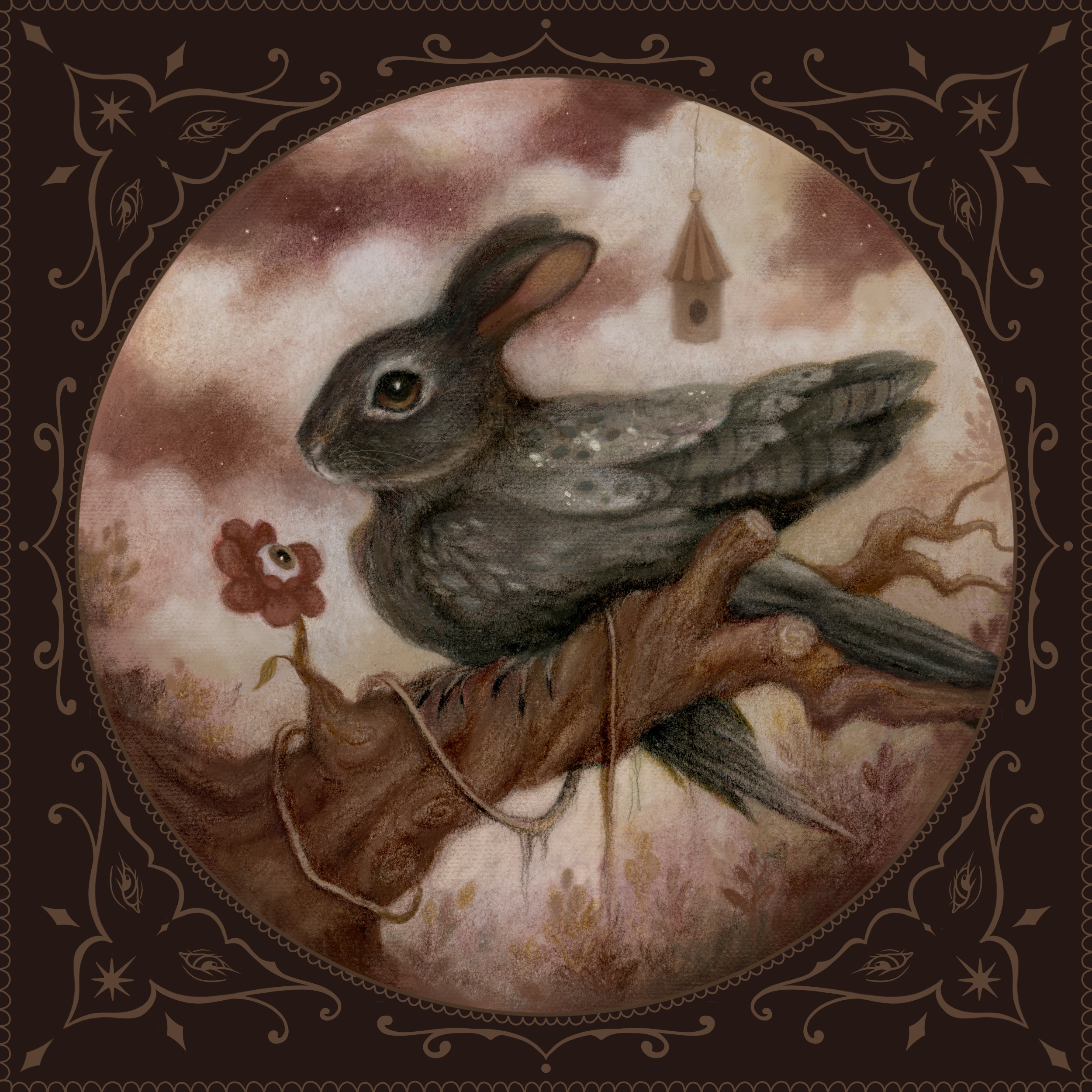

Joanna Valente: Untermeyer
Untermeyer Joanna Valente

let’s just leave
and go
to the MET and think about our mortality
on this dying planet

;;; pixel-paved roads to a crystal
tower evaporating—now the itch 
of thinking
each a stairwell, a stranger’s mind—

blinking from one to another, waking
with eyes to see
inside their dust-filled minds, glinting
with absence, a rage once left

behind—in one mind, a story
about limes drifting in seawater, waiting
for the touch of hands—and in another,
we had married on a Saturday

afternoon, a daughter born on a Sunday
morning then fading into a
serial killer addiction like melting
waxed chocolate, sliming a green velvet

couch all smooth
a New York fog coughing
in your absinthe memory
dark ibis glasses obscuring

;;;;


your expression / can’t be yourself if
you don’t know
how to live
so go underground

into a dungeon with a man
you don’t know, his mouth
a vampire, his new
obsession

for power is our obsession
for bloodied tulips, an old world
god made new—instead
of a star

in a dark river, now a thin robot
with claws for eyes, a whirring
sound with a dim lightbulb asking
ChatGPT, where is

my brain ;;;
living inside a Bosch painting, we’re all
becoming / lizard people
at least you aren’t dying

of the plague—M reminds you—
just becoming and unbecoming
Tetsuo,  in heaps of garbage—
unbecoming


;;;;;

that river where angels
float serenely above
an emerald and fish-like
imps flutter

in man-made bubbles—where
did it begin?


;;;;

Where does it finally
end? 

An apple-ripened-father
built a park for his daughter
rhododendrons, gilded lace–
her future—lilac wedding—all 

sphinx and unintentional
Berkowitz, sinister-webbed

rituals, cherub in the dark
smiling off center, stalactites in
the mind

asking
ChatGPT tired questions. 

Inside a home

when no one is home
but you and you
and you in a unicorn

costume making love 

to no one in particular.

Sherry Shahan: Ginia and Vitti
Ginia and Vitti Sherry Shahan

Ginia and Vitti meet each night in the mangled milieu of glass, steel, and concrete that was once museums, libraries, couture shops, and bowling greens. Endless debris unfurls around them like hot tar. Rust grows where nothing else will.

Vitti plays guitar. Ginia paints, using the old-world technique of fresco. Tons of plaster litters the ground, so no problem there. Vitti watches Ginia—shy and vulnerable though clothed in brilliance—as she separates areas on a scrap of plaster with a piece of metal. She sketches skirted girls in satin with cherry lips, hailed by cupids, flouncing across fertile fields and swelling seas, bucolic places they’ll never see or smell.

“Tell me what you think?” Ginia asks.

“It’s your best work yet—so organic and alive.”

Ginia lulls her love with tales of paintbrushes woven from her hair and tints mixed from blood and tears. Other fluids, transformed into vibrant pigments. Her precious rat Michelangelo perches on her shoulder, his long pink tail skimming the hollow between her breasts. Vitti has to look away.

“I tried State-sanctioned art,” Ginia says with a lazy stroke, adding carmine to an otherwise colorless world. “We were forced to replicate the work of unimaginative men, from archaic books. Mine were exact copies of course, garnering great approval and favor, but I was lifeless inside. Neutered. I once suckled my own breast as a way of calling myself back from nothingness.”

Vitti gasps a little. “It’s up to us to create light.” The only things worth saying are what she’s feeling. It’s sometimes so simple.

“Do you believe we have mothers other than those in the lab?” Ginia asks. “I once dreamed of being scooped from the hollow belly of a wailing woman.”

“I’ve had similar dreams.” Vitti’s voice trembles.

“The State only wants us to know what they want us to know.” Ginia pauses, as if falling into the center of the universe. “Imagine Michelangelo, years spent lying on his back painting a ceiling. So long ago, yet his images tell the story of creation and the fall of humanity. Did you know he wrote sonnets?”

Vitti marvels at the way great thoughts seep from Ginia’s mind. The cosmos dropped the perfect lover in her junk pile. They have the same thoughts at the same time. Like all star-crossed romances.

Vitti wonders if being in love means you’re a little bit crazy. If allowing yourself to feel, like the State says, is the definition of madness. But then, only they hear birds chirping in Greek and King Edward VII uttering curses from burnt rubble.

Luxurious nights pass in secrecy, near the opening of a subterranean unit with glass and steel life-pods, where gas is pumped in to eradicate memories of how their ancestors expressed themselves. Strangely enough, some things are erased; others replaced.

“Elder Abraham showed me a book well-hidden,” Ginia says. “I touched pictures of walnuts and pomegranates, a sheaf of corn, a bowl of jubilee grapes. Is it possible that such marvels still exist?”

Vitti stares at the curve of Ginia’s neck. Perfect, unflawed. She sweeps her beloved’s cheek with the back of her fingers. Ginia blushes as if brushed by a ripe apricot.

“I was once so hungry and without a stitch of clothing. I thought of chickens but stole a capon instead. Was I mad?” Ginia asks. “Or was it a dream?”

“Are you hungry now?”

“Ravenous.”

Vitti lifts the top half of her neoprene wetsuit and unwinds her nutrition tube. She licks the end, shuddering as it swells, and gently inserts it through a tear in Ginia’s uniform. Vitti is gentle, working the tube into her navel clamp, allowing her own life juices to flow into her love, all without spies or regret.

Ginia moans as the tube pulses and releases bursts of pleasure. “It’s too dangerous to keep meeting here,” she says, her eyelids fluttering. “We must find a place that is ours alone.”

Ginia grinds plaster and mixes pigment in preparation for their journey. “Being together is like soaring with butterflies,” she says. “Our hearts will always remain free.”

Vitti tunes her guitar to Ginia’s breath. Then she stands for a moment, uncertain. There’s so much to do. What will they need?

Her movements are uneasy, as she gathers essentials: antiseptic swabs to clean her nutrition tube and a tarnished brass box of fire-stick matches she unearthed, worth a fortune on the black market. A corroded hubcap becomes a second seat on her bicycle. Her guitar, strapped on the back fender.

When it’s time to set off, Vitti slips her shorty wetsuit over Ginia’s tattered uniform. Nothing but rags, nothing left to barter with.

“If only . . .” Ginia pauses.

Vitti understands completely. No one can be wholly beautiful in State-issued shoes. Guaranteed ugly for life. She steps from her combat boots. “Wear these.”

Ginia smiles, lovely as a cellulose rose.

Vitti puts on her non-skid rubber booties.

Ginia laughs. “You look like a victim of pyrotechnics.”

“I’m properly dressed for the occasion.” Vitti simpers. “Best to blend into the inky night.”

They travel under a moonless sky. No stars. No asteroids. Only dust particles and chemical pollutants extending into other galaxies. Vitti chokes the handlebars and beats the pedals with her rubber booties. Then she laughs.

Ginia hugs her sturdy waist and coos to Michelangelo perched on her shoulder.

They pass a billboard with enormous words: ‘Fear Books! Paintings! Music! Poetry! Thinkers!’

Vitti immerses herself in a new theory, letting it expand from conjecture to verity. What if State-professed enemies are imaginary? Who would know in a world where truth is a lifeless reflection of the few in power?

“Can we really survive on our own?” Ginia whispers in her ear. “Find a place far from wicked men who are sleepless?”

Vitti inhales Ginia’s breath, so sweet; often it’s the little things. “A wish is waiting for us on the wind.”

No one had ever been so in-tune with her, not even her Petri-parents. Sure, they’ll miss her, as she misses them. No doubt they’ll spawn a clone from her DNA, but without the passionate gene.

Vitti’s diagnosis had come in Institutional Day Care when her brain rejected the requisite digital-chip. A month of interface examinations revealed a hypersensitivity to touch and affection. Her QR tattoo scans ‘loving, generous, independent, courageous.’

Vitti stares into the raven night, alert to danger. She blinks against the hum of drones and hovercrafts, praying the bike’s metal frame will protect them from thermal sensors. The State sanctioned unspeakable torture for those who flee: Displayed in glass cubicles, brushed with milk and honey while insects dine.

It’s cold and getting colder.

They pass burnt-out trees along the banks of an ancient waterway. Bodies impaled on spikes, dried and shriveled. Their garments rotted off. What’s left of a large horned animal, its legs sticking out stiff and straight. The stench, long gone.

A dusky sky turns its face away in shame.

Ginia sobs. “What could they have done?”

“Dared to think. Dared to love. There are infinitely more punishments than wrong-doings.”

In a different time, they would have found a way to bury the remains.

Another day, here and gone.


On the seventh day of their trek, Vitti and Ginia settle in the bowels of a toppled theme park, in a moat where the head of a decapitated Alice in Wonderland lolls in a cracked teacup. They stow away during the day, foraging at night for anything useful—hauling off smashed and broken bits of this and that.

A miniature castle door becomes their front gate. They plant a plastic palm, add a one-legged garden flamingo. Scraps of wire mesh are woven into a dome-type roof to protect them from winged spies.

Vitti digs a waste pit.

Ginia chips grime from a plastic bench. “Look! It’s Beauty Pie Pink.”

Vitti rushes over to kiss her. “The perfect settee.”

They sit on the settee, stretching their arms over the filigree back, laughing as if rolling in a field of clover.

“Do you see the yellow butterflies?” Ginia asks.

“Yes, my love, and I hear the buzz of bees.”

They were in tune with the tides in their bodies, the highs and lows.

Michelangelo eliminates marauding rats, pulverizing bones, devouring fatty organs with pulsing veins. Ginia soaks and tans the hides, stitches them together, and fabricates something she calls a rag rug.

They rummage around, uncovering a sealed case of deep-fried Mars bars, which somehow survived their expiration date.

“Caramel.” Vitti cries. “Corn syrup!”

“Monosodium Glutamate!” Ginia presses her lips to Vitti’s sweet mouth; Vitti loses herself in a primeval memory of vanilla and orange blossoms.

“Ours is the Happiest Place on Earth,” Ginia says.

Even wearing a wetsuit, Vitti feels sticky leakage from her tube. She picks up her guitar, arranging words in an elaborate language.

Ginia works pigment into wet plaster, languishing over her latest fresco, Vitti’s Song. Michelangelo nibbles her bare foot.

Vitti shoos him away. “Your toe,” she says, “it’s bleeding.”

“Red! Quick! Fetch a receptacle!”   

Soon the trees in Vitti’s Song bloom scarlet.

Vitti never hungered for her more.


Early one morning, Ginia weeps over something she can’t explain. Vitti believes her tears are opalescent from the absorption of fluids through the feeding tube. Ginia must have taken in too many nutrients, Vitti reasons, because Ginia’s breasts are overflowing with the same milky substance.  

Ginia fashions a tent-like dress for herself. “Rock-a-bye, baby, on the treetop.”

Vitti doesn’t know if it’s a song or a poem or how she knows the next line. It seems to sprout from an ancient spring, “When the wind blows the cradle will rock.” 

Summer heat rages and violent winds consume the crumbling ruins, sweeping away Ginia’s last morsel of plaster. She weeps and wails, her tears raining on seething thermals. 

Vitti curves a splintered wooden stake into a bow. She braids twine, knots it over the ends, and pulls it taut. Another stake becomes an arrow with a razor-sharp point. Ginia fashions an over-the-shoulder sheath from rat hides.

Together they repair a broken handcart. “I’ll gather enough plaster to last forever after,” Vitti says.

“When we’re together I’m rarely afraid.” Ginia’s smile gathers her in. “Stay with me in this moment and the next.”

“Oh, my cherished. You’ll be much safer here.” 

Ginia rubs the round of her belly. “We share a past, things only we know. Things only we can talk about, together.”

Vitti shoulders her sheath and places the bow in the cart. “Your heart travels with me.”

She stumbles, feeling a nervous twitch, and pushes the cart into a twilight of strange colors. It’s as if someone sprayed everything gunmetal grey. She thinks about her life with Ginia; how Ginia creates art from nothing, knowing no one but her will see it. Just as she shapes songs, knowing no one but Ginia will ever hear.

She frets over Ginia’s swelling belly, fearing it may be an invasive growth. Instead of looking for plaster she should whisk her love underground to a clinic. But that would mean turning themselves in to the State.

Vitti presses on, beneath black and yellow smoke, a steady rolling haze that creeps across the horizon. The wheels on the cart leave ruts in an expanse of Stygian ash. Dead bugs crush underfoot.

Clouds peel back but don’t reveal the next form.

On her own she feels like a pirate, reckless, circumventing danger. She steps in something squishy and refuses to look down. Something is behind her, its hot breath mist on her neck—but when she turns, alarmed, there’s nothing. She leans into the haunting wind, pretending it’s a song. There’s plenty of nothing in every direction.

It’s impossible to know how far she’s gone. She grows weary, retracing her path to avoid sinkholes, and stops near a pyramid of broken asphalt where a mischief of rats groom themselves. Their fiendish eyes are ghastly. All wear gilded collars.

“Domesticated!”

The implications leave her breathless. Pets? Spies? Carriers of poison? Impossible to know.

A mangy rat skulks forward, barring its fulvous teeth, strings of drool quivering. Vitti grips her bow, retrieves the arrow, and fires. The winged shaft rips into hide and flesh, taking the rodent by surprise.

She recovers her arrow, watching one rat assault another. Bones are exposed, pulled and twisted outward like great wings. The head of the attacker disappears as feasting moves to the bowels.

The sky continues to move too fast to settle into a single shape.

Further on, Vitti exhumes a chunk of moldy stucco—a thrilling moment since Ginia doesn’t have that shade of green. She leverages it into the cart and visualizes Ginia’s impish glee.

Vitti feels the hardening ridge of her nutrition tube, which had been tucked back between the folds of her buttock cheeks. Juice bursts like guava seeds with microscopic tails.

The windstorm dies as the day’s last light shakes a dusty haze.

Closer to the moat, an unfamiliar scent assaults her. Sweet and salty. But not unpleasant. The fragrance lulls her, pulling her the rest of the way home.  

Vitti rushes inside the compound to find Ginia, lovely in reclining nakedness, a primitive portrait. Her hair is knotted up like the petrified bird’s nest they discovered early in their journey. “Ginia!”

Her beloved smiles, cradling a writhing bundle.

Their daughter lets out a wail, a cacophony of hope and promise. Life is full of astonishing and wondrous surprises.

Vitti kneels beside her nearest and dearests and serenades them in song.

Michelangelo hunches by the gate, ichor staining his whiskers.

Beatriz Bradaschii: Zorya
Zorya Beatriz Bradaschii

Creator Bios
Creator Bios

— Support creators everywhere! —

Pay your fellow workers for their art.

All funds received are distributed to the creators in this journal. 

“Self Portrait With Headphones.” Woodcut. 2025.

AP Ritchey is a professional graphic designer, published board game inventor, multi-instrumentalist and an accomplished printmaker. His speculative fiction has appeared in or is forthcoming from Zodiac Review, AntipodeanSF, SciFi Shorts, Eye to the Telescope, Rat Bag Lit, Nunum, 4lph4num3r1c, Club Chicxulub, Frightening Tales, and Typishly, among others. adamritchey.com @adamritcheyprints  

“My name is Beatriz Bradaschii and I’m an artist born in São Paulo, Brazil. Art has been the most prominent aspect of my life since I can remember. Today, it has become an incredible instrument of inner healing, introspection and self discovery, a way of understanding myself and the world on a deeper level. Fascinated by the strange and the unconventional from a young age, I aim to create windows to other worlds by juxtaposing elements of our own, my dreams, and childhood memories…

“My work focuses on exploring the subconscious mind through surrealism, imaginative realism and symbolism. Oils are my primary medium for painting, but I also use acrylics, gouache, and watercolor. I also love sculpting with different types of clay. Creating is what I’m most passionate about and everything I make holds a piece of my heart and soul in it.”

beabastet.com @bea.bastet

Carolina Campos is a Portuguese biologist with published work in river ecology and a passion for making art. Sometimes that art takes biology and art history as inspirations, other times more internal things, be they various anxieties or the occasional attempt at being philosophical. But it’s often art made for the joy of making it. It’s been featured in magazines like Warning Lines, Northern Otter Press, Wrongdoing, Sweet Tooth and more recently in Horns Magazine. You can find Carolina on twitter @brungaderie.

Joanna Harris is a writer, librarian, and sketch comedian who lives in Washington, D.C. She has had pieces published in places like Points in Case and Slackjaw (sometimes under “Joanna Lazuli”) and has written and produced several stage shows, including a comedy show called Fanfiction Theater at Rails Comedy. She loves foxes, tabby cats, and lemon ginger tea. @lemonberryfox

Joanna C. Valente is a human who dreams of living inside a seashell. Joanna is the author of several collections including η ψυχή, η ψυχή μας/the soul, our soul. They are the illustrator of Dead Tongue by Bunkong Tuon and Raven King by Fox Henry Frazier.

Jordan Spalding is a writer and avid reader who lives and breathes science fiction and speculative fiction. He’s mostly obsessed with forces of nature greater than ourselves. The things we cannot best, but may survive if we are lucky. Jordan has forthcoming work in Schlock! Magazine. In his free time, Jordan is a bird watcher and video editor. He lives in Denver, Colorado with his partner, two small parrots, and a boston terrier named Fig. jpspalding.com @jordan_spalding_dot_com 

Julia Rajagopalan is a writer of speculative and literary fiction who lives just outside of Detroit, Michigan, with her husband and their very grumpy dog. For links to her stories, check out her website: JuliaRajagopalan.com.


Kahlo R. F. Smith (she/it) was born in the redwoods of Felton, CA and is pursuing an MFA in Fiction at UNR. Her work has haunted F(r)iction, Luna Station Quarterly, and Trembling With Fear. When not hunting Bigfoot or navigating catacombs, it can be found at kahlosmith.wordpress.com. @vellumgarden

M. E. Detlefs (they/them) is a Boston-based audio engineer and writer who works predominantly with fantasy, romance, mystery, and climate fiction. They are the author of Growing Home, a queer cozy post-apocalyptic fantasy, and their short fiction has appeared in Altered Reality and Generic Magazine. Maren received their BFA in Creative Writing from Emerson College. When they are not writing, you can find them drinking tea and watching The Lord of the Rings with their dachshund, Peanut. @authormedetlefs

Richard Z. Santos‘ debut novel, Trust Me, was a finalist for the Writer’s League of Texas Book Awards and was named one of the best debuts of the year by Crime Reads. He’s the editor of the anthology A Night of Screams: Latino Horror Stories. His fiction has been nominated for the International Thriller Writers Awards and has been cited as a notable story in Best American Mystery and Suspense. His stories, nonfiction, and essays have appeared in Texas Monthly, Slate, The Rumpus, Ellery Queen Mystery Magazine, Oxford American, Los Angeles Review of Books, Like the Wind, The Laurel Review, Pank, Austin Noir, Lone Stars Rising, Latin American Shared Stories, and more. richardzsantos.com

Sherry Shahan started ballet at 40, and pole dancing at 75, which seems sort of silly. She holds an MFA from Vermont College of Fine Arts, taught a creative writing course for UCLA Extension for 10 years, and has been nominated for 2 Pushcart Prizes and Best American Short Stories.

Producer Bios

Matt Scott Carney is a Pushcart nominated Latinx writer and musician residing in San Francisco. He holds an MA and MFA from SFSU. His fiction and poetry have appeared in A cappella Zoo, Inkwell, Red Light Lit, sPARKLE & bLINK, Entropy, Anti-Heroin Chic, Tilted House, The Racket Journal and in readings at seedy bars across California. His short story ‘On Becoming’ was a finalist in the 2017 Omnidawn Fabulist Fiction Contest; and ‘In Fresno, One Last Bath in Dust’ was included in the Baobab Press anthology This Side of the Divide: New Lore of the American West. He is a co-founder and producer of Club Chicxulub, a fabulist science fiction performance series.

Find his Art Rock/-wave project N! on Bandcamp, Spotify and everywhere else. 

mattcarney.space @ruddagerrustin

Lauren C. Johnson attributes her upbringing in Florida, America’s weirdest state, to her interest in the ecological and surreal. Her writing has appeared in Mason Jar Press, Maudlin House, the Swamp Ape Review, the Museum of Science Fiction, and others. She is the interviews editor for The Racket Journal and is a member of The Ruby, a Bay Area collective for women and non-binary artists and creatives. She earned her MFA in creative writing at American University and lives in San Francisco, where she is a co-host of Babylon Salon, a quarterly Bay Area reading series, and Club Chicxulub, a sci-fi and fantasy performance series.

Her debut novel, The West Façade, is forthcoming from Santa Fe Writers Project (SFWP) in 2026.

laurencjohnson.com

📸Rachel Ziegler

Born in San Jose and living in San Francisco’s Sunset District, Dev Bhat is a musician, composer, sound designer, and copywriter. He grew up performing in bands that could be characterized as industrial rock, shoegaze, hardcore punk, drone, doom, and ambient. Dev’s solo work features synthetic and organic textures using analog synthesizers, old tape recorders, samplers, drum machines, loopers, and a dense combination of effects processors. He draws inspiration from nature, horror films, classic video games, 90s anime, and all forms of speculative fiction.

@shipwreckdetective

Kristin Eade is a writer from Seattle, although she currently calls the Bay Area home. She received her MFA from California College of the Arts and has an ardent love for words, especially those that need a good edit. Her work has appeared or is forthcoming in Bellingham Review, Defunct Magazine, Spectrum, and Rogue Agent. When she’s not writing she enjoys bookbinding, playing with cats, and being in nature. You can find her at www.kristineade.com.

Kelechi Ubozoh is a Nigerian-American writer, performer, and mental health advocate blending trauma, race, and mental health into her work. Originally from Brooklyn and the first undergraduate published in The New York Times, Kelechi is a Pushcart Prize-nominated writer featured in MultiplicityClub ChicxulubWhen We Exhale, and several anthologies. She co-edited the book and audiobook We’ve Been Too Patient with LD Green and co-hosts the MoonDrop Productions reading series with Cassandra Dallett. Explore her work at kelechiubozoh.com