Club Chicxulub Journal
Vol. 4, Limbo

Club Chicxulub Journal: Vol. 4, Limbo

Copyright © 2025 Club Chicxulub

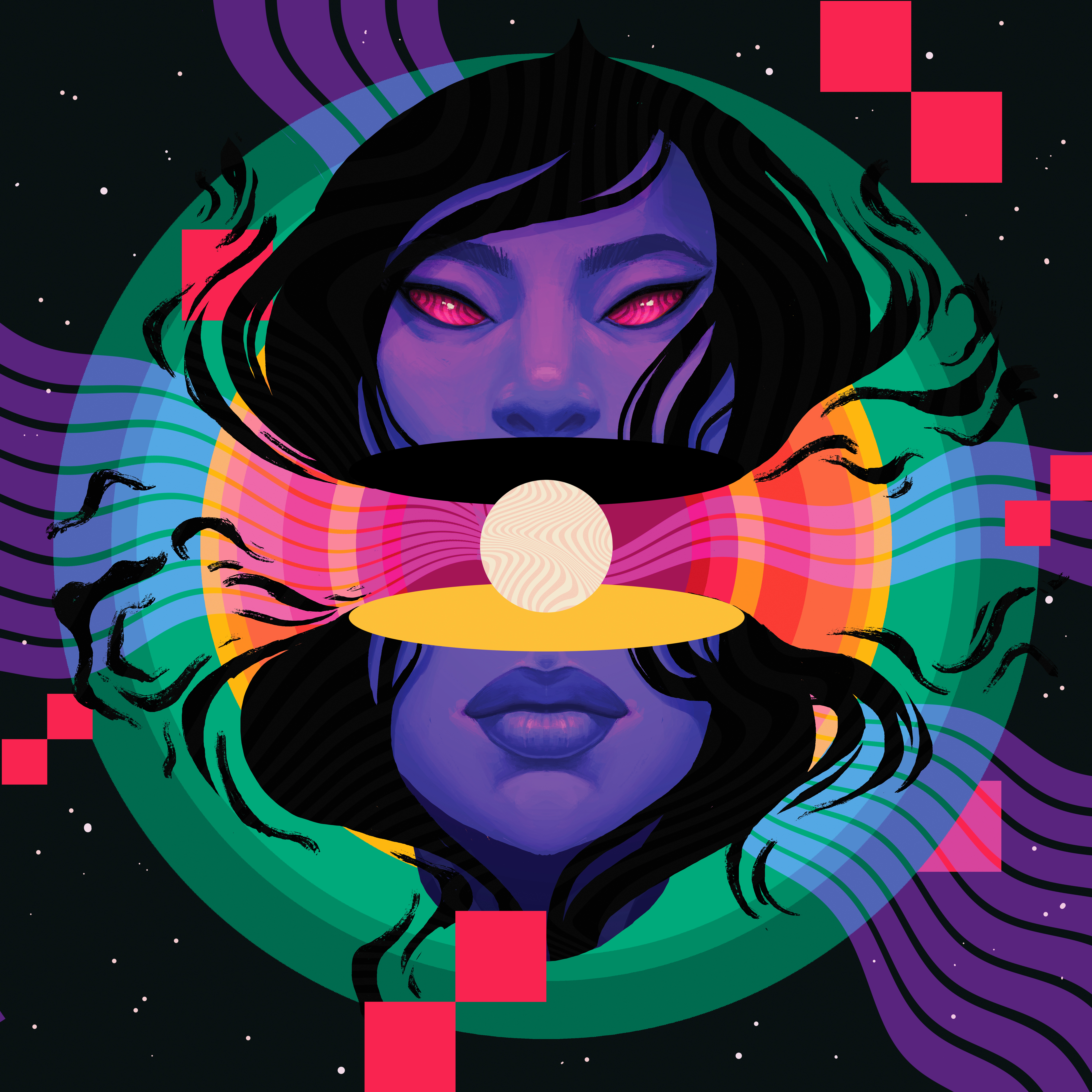
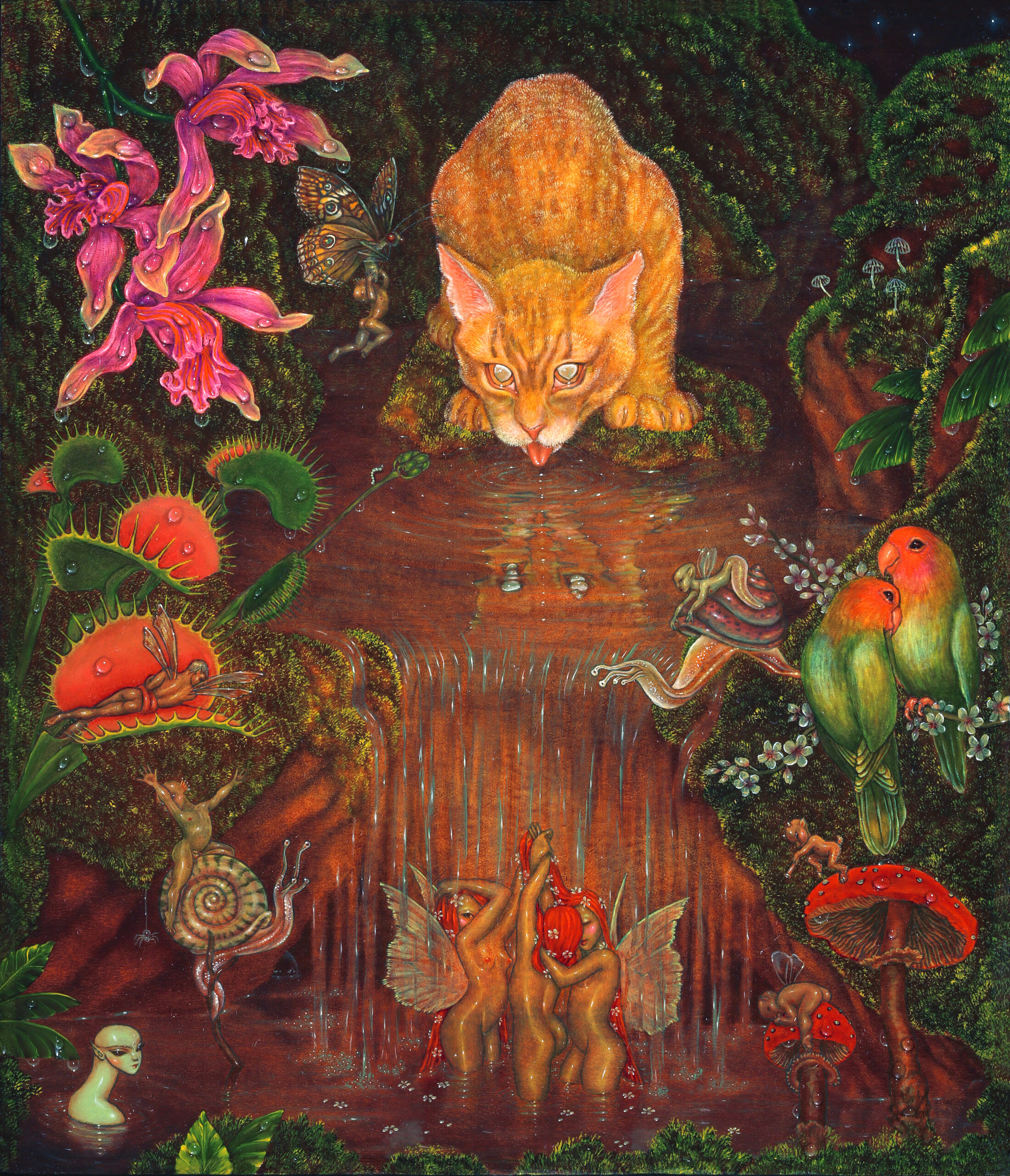
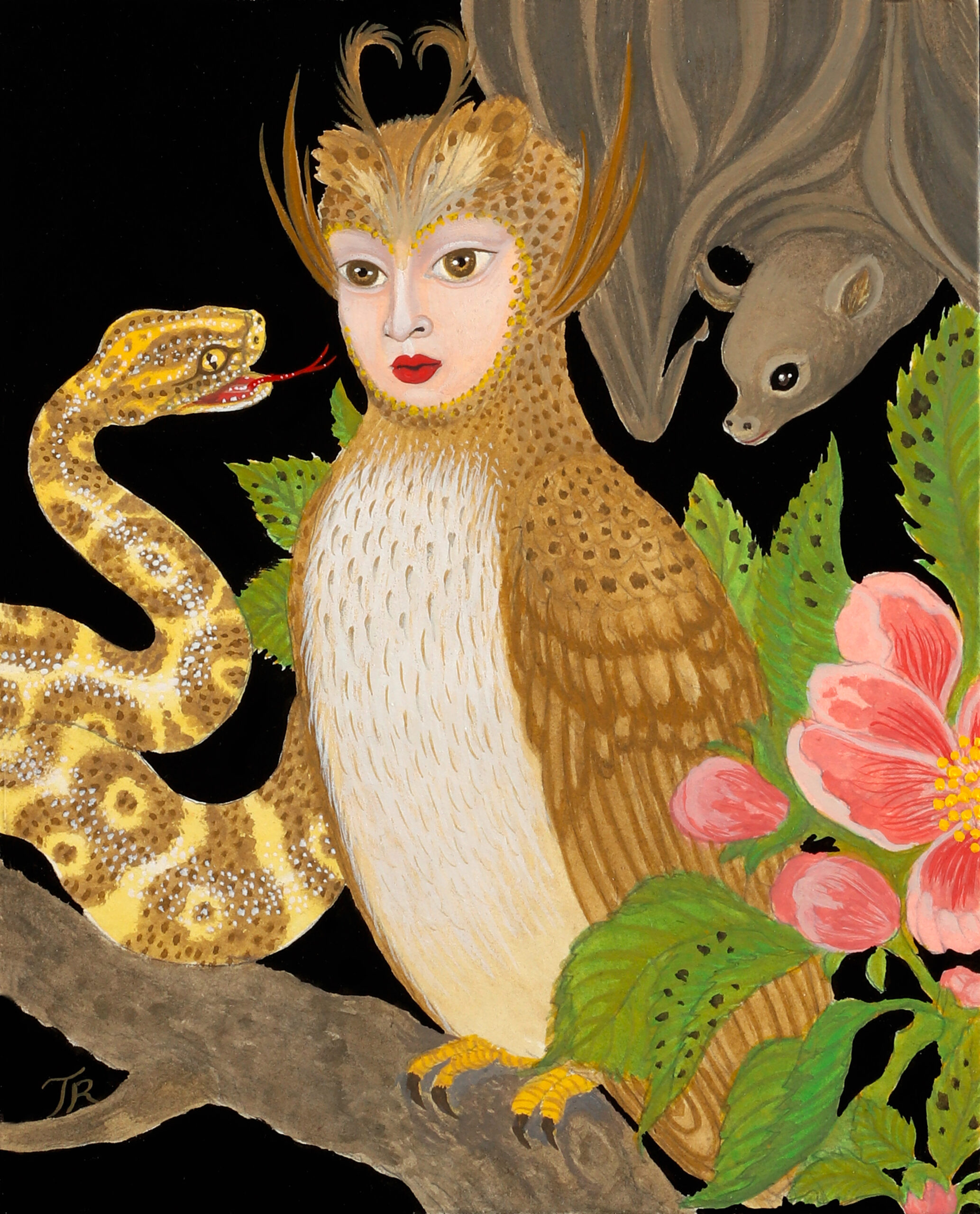
Cover illustration: “Nocturnal Gathering” by Tino Rodriguez


Club Chicxulub:

Created by Matt Scott Carney & Lauren C. Johnson

Produced by Carney, Lauren C. Johnson, Dev Bhat, and Bron Treanor

Website: clubchicxulub.com

IG & Twitter: @clubchicxulub


Promotional rights only.

This document, or parts thereof, may not be reproduced in any form without permission from the producers and individual contributors.

THANK YOU for supporting this journal on Patreon:

Heidi Kasa

Forewords
Forewords

Despite the widening horror of our present moment, something that moved me this year was being able to take a live online class with Brian Eno.

It was everything one would expect from a songwriting and art theory course from Eno. Drop everything, pick up the nearest instrument or non-instrument, and write a song in the next 20 minutes in response to some grainy video of a rainy field. Roll these dice to decide which pages and which lines from a random music book will constitute your chord progression. Write lyrics cannibalized from this book that fell this morning off Eno’s shelf—in the case of that particular exercise, the book was “How to Learn Spanish in Thirty Days.” Share with somebody.

I hadn’t intended to record new music in 2025. I genuinely believed I would focus on finishing and revising the final story for my fabulist fiction collection—quite long in the tooth, with stories published from 2009 to the present. Instead, I left the month-long course with four new songs and never stopped recording, including working the past six weeks in collaboration with my friend Dev, Shipwreck Detective, for all five soundtracks in this issue of Club Chicxulub.

In addition to my new songs and many concepts about music production, there were two monumental socio-philosophical ideas I took with me upon leaving Brian’s class that will stick with me through the rest of my creative life.

The first idea: Modern media distribution exists to hijack our attention, mostly for the function of advertising.

The second idea: Creative genius is a popular and flawed archetype, but creative ‘scenius’ is the true catalyst for artistic success.

On the first idea. Media distribution platforms have grown insidiously into agents of mass distraction. We feel this on every level in embarrassingly obvious ways. How hard is it to stay attentive to our art or our work or whatever and stop scrolling again? Isn’t it tough to finish reading the whole story in one sitting? We make some incredible art only for it to be washed away by algorithms that lead to sponsored content, with relatively few artists—or activists or journalists, likewise—successfully eschewing the platforms’ true purpose without the seemingly divine intervention of loads of money. “They don’t give a toss,” Brian laughed, “if you write a song or not. They’re not interested. What they want you to do is buy some new trainers or to get a car or go on holiday somewhere. You are in a battle, in a way, for your own attention… it is an act of rebellion to not take part in that, and it’s an important act.” It is why promoting our work online is a Sisyphean war.

On the second idea. The notion of the ultra-talented sole individual, the creative genius, is mythology. Brian suggested a new term more representative of how art and artists are actually successful: “scenius.” Scenius is the collective intelligence of the scene around creative people. It’s the energy among us in readings we attend, the cafes and bars we haunt, the houseparty, the salon, the MFA program, the backyard gathering, the gallery exhibition, the unrestrained jam, and the ideas that emerge from them. A successful and maturing scenius grows into the network of collaborators who begin building sustained creative partnerships that consistently produce art. It also often matures in parallel into an aesthetic genre or movement.

There was an unavoidable elephantine comment and question during one of the Q&A sessions: All of this is enlightening, thanks, but how the fuck can anyone keep creating pithy art rock songs or neat stories or cool drawings while there is literally a genocide?

His body language suggested he seemed to have fully anticipated this question—not prepping for the class, exactly, but maybe because he’d relentlessly asked himself the same thing. Brian has been outspoken specifically about Palestine for decades and is even more so lately in British media. He responded at length, but his initial response was immediate, simple, and genuine: “Find your people.”

I realized through all of this that it’s what we’ve ever hoped to do with Club Chicxulub. It’s my hope that we are building a lasting scenius, one that empowers and inspires everyone involved, and one that involves as many creative people as it possibly can. And I realize now as I write that scenius, too, is among the strongest non-violent weapons against authoritarianism and political violence: Genius is the mark of the spotless leader, but scenius is the accidental emergent beauty and power of the people.

LIMBO brings 13 writers, 5 visual artists, and 3 musicians together in collaboration and conversation. The body of our desire, fear, anger, and joy from the distant past to the present.

Matt Scott Carney


Co-creating Club Chicxulub is one of my greatest honors and joys as an artist. Each time we put together a journal or a live show, I learn something new about storytelling and come to better understand my own sense of aesthetics.

I am in awe of the stories, artwork, and music in Club Chicxulub Vol. 4, Limbo. These contributors offer various expressions of limbo that span epochs and eras—from breaking cycles of shame in a medieval monastery, like in Bianca M. Caraza’s “The Icon of St. Elena,” to the near future of Evie Calvillo’s “Sidewalk Chalk,” where the daughter of the ram from Jason and the Golden Fleece navigates self-love and survival. In Audrey T. Williams’ Afrofuturist hopepunk story, “The Sankofa Protocol,” a protagonist accepts “guidance from an ancestor who faced planetary catastrophe and chose to embed hope in the quantum structure of matter itself.”

The time we are living through also feels like a kind of limbo, and some days, it’s hard to imagine how we’ll ever emerge from the darkness and fog. But I believe our stories are a light. So, together, we link arms to resist fascism, decry ICE’s brutality, and demand a free Palestine. And through making and sharing our art, we express our full humanity and draw on the strength to live to fight another day.

To our contributors and readers: thank you for sharing this space with us.

Lauren C. Johnson

✵ Table of Contents

Audrey T. Williams: The Sankofa Protocol
The Sankofa Protocol undefined Audrey T. Williams

The jungle pulsed with sound, chirps, rustles, the rhythmic sway of low-hanging vines in the humid breeze. Life breathed here in infinite variety, a symphony of existence that had played unbroken for millions of years. The mother Maiasaura exhaled, her nostrils flaring as she pressed the last mound of wet earth over her clutch of eggs. Her massive body, nine meters of muscle and maternal instinct, cast a protective shadow over the nesting ground.

As she shifted her weight, a strange new light caught her eye. Brighter than the sun, it seared her sight before she could look away. The air caught fire, and she threw her body over her nest with fierce motherly protection. It was the last thing she ever did.

undefined

Sixty-six million years later, Dr. Aisha Okoro stood on the deck of the Pan-African Federation vessel Sankara, her grandmother’s parables about Ubuntu, I am because we are, echoing in her mind like ancestral drumbeats. The paleoclimatologist watched a massive iceberg loom before them, a cathedral of frozen time that stretched toward the slate-gray sky.

Memory lives in the bones of the world. This truth had whispered to Aisha through her grandmother’s stories of the Yoruba understanding of time as spiral rather than linear, ashe flowing backward and forward simultaneously, connecting all moments in an eternal now. Standing on the Sankara’s forward deck, those whispers began to roar.

The ship itself embodied African ingenuity, its thermal-collection panels shaped like Adinkra symbols representing wisdom and transformation. The wide panels absorbed ambient heat while their luminescent edges glowed like starfire in the twilight, powered by quantum algorithms inspired by traditional fractal patterns found in Ethiopian churches.

“Sankofa,” Aisha murmured, touching the symbol tattooed on her wrist, a bird looking backward while moving forward, carrying an egg in its beak. The ancient Akan principle of learning from the past to build the future had never felt more relevant.

“Admiring the view?” Captain Kwesi’s voice crackled through her comm, rich with the warmth that made him beloved by his crew.

“Just thinking about Ubuntu,” Aisha replied. “How individual healing serves the collective.”

“Ah, spoken like a true philosopher-scientist. But perhaps we should focus on collect-ing this ice, please?”

They reached the glacier at daybreak. The extraction team worked with practiced efficiency as cranes swung massive arms in choreographed movements, lifting an enormous ice block riddled with trapped air bubbles that caught the light like frozen stars.

“Sweet mother of mercy,” Zeke breathed, the young deckhand’s face illuminated by the ghostly glow. “Never seen one this big!”

Dr. Aisha approached the ice block, drawn by something she couldn’t name. Her gloved fingers traced patterns across its ancient surface. “This one isn’t just old,” she murmured. “This is ancient.”

The ice seemed to pulse beneath her touch, as if something deep within recognized her presence.


The lab below decks hummed with precisely controlled energy. Dr. Zhara Diallo moved around the molecular scanner like a priestess attending her altar, her modifications, inspired by studying termite mounds in the Sahel, now revealed something extraordinary.

“Aisha, you need to see this,” Zhara’s voice carried controlled excitement. The holographic readouts painted their faces in shifting hues of indigo and teal. “The organic material we’re detecting… look at these formations.”

Aisha studied the impossible geometry of crystalline networks pulsing with faint luminescence. “What am I looking at?”

“We’ve dated these back to a time period that should be impossible. To the extinction-level asteroid over 60 million years ago! Spectral analysis shows that asteroid contained metallic hydrogen cores, exotic matter that creates quantum entanglement fields under extreme pressure. When it struck, the electromagnetic pulse didn’t just preserve genetic material, it quantum-entangled the dying organism’s neural patterns with crystalline matrices.”

The implications made Aisha’s heart race. Their simple ice-harvesting mission had uncovered something that could rewrite understanding of consciousness itself.

“Quantum entanglement preserves information indefinitely,” Zhara continued. “These crystals aren’t just storing DNA fragments, they’re maintaining quantum coherence of complete biological systems across geological time.”

Maya Browne, the ship’s documentarian, looked up from her holographic interface. “So, you’re saying this dinosaur’s consciousness is… still connected to these crystals?”

“Not consciousness as we understand it,” Aisha said slowly, her scientific training warring with something deeper. “But quantum information patterns that encoded survival responses, environmental adaptation protocols… maybe even emotional states.”

She thought of her grandmother’s stories about ancestors whose spirits guided the living through dreams and intuition. Was this so different? Biology interfacing with quantum physics at the moment of planetary crisis?

“There’s more,” Zhara said, her fingers dancing across controls. “We’re detecting Maiasaura peeblesorum genetic sequences, the ‘good mother lizard.’ But Aisha…” She paused, meeting her colleague’s eyes. “The preservation quality suggests we could attempt quantum-assisted genetic reconstruction.”


The ethical debates raged across global networks for weeks. In the ship’s communal gathering space, transformed from the original cruise liner’s ballroom, the crew held nightly discussions guided by Ubuntu principles. Every voice mattered because individual decisions affected the collective.

“Just because we can reconstruct these genomes doesn’t mean we should,” argued Dr. Folake, the ship’s ethicist. “We’re talking about bringing consciousness back from quantum death.”

“But what if this consciousness chose to preserve itself?” Aisha found herself saying. “What if this Maiasaura mother, in her final moments, made a conscious decision to encode survival wisdom for future generations?”

The question haunted her dreams. She began experiencing vivid visions of protective maternal energy, as if something ancient was trying to communicate across the vast gulf of time.

Captain Kwesi, drawing on his Akan heritage, offered perspective: “In our tradition, the ancestors guide us because they understand our struggles. Perhaps this ancient mother faced the same choice we face now, how to protect life when the world is ending.”

Aisha felt something shift inside her. This wasn’t just about scientific discovery anymore. It was about accepting guidance from an ancestor who had faced planetary catastrophe and chosen to embed hope in the quantum structure of matter itself.


The first reconstruction attempt began after months of painstaking preparation. Using quantum-assisted chromosome scaffolding, the team slowly rebuilt Maiasaura genome sequences, filling gaps with carefully selected analogs guided by the quantum patterns encoded in the crystals.

“Epigenetic markers are aligning,” Zhara reported, her voice tight with concentration. “Ha, epigenetics isn’t even the word for this…the quantum information is actually guiding the reconstruction process.”

Aisha watched the bioprinter lay down cellular foundations, her hands trembling. She’d spent her career studying the past, but now the past was actively participating in its own resurrection.

“Cellular division initiated,” Zhara announced. The synthetic embryo, grown in an artificial matrix, showed its first signs of autonomous development. “Neural pathways are forming, following quantum-guided patterns we’ve never seen before.”

The room fell silent as history began to unfold. A cluster of cells became recognizable form. Neural pathways sparked to life, carrying electrical signals that bridged sixty-six million years of silence.

Then came the moment that brought tears to Aisha’s eyes, the first muscular contractions of something that should not exist, yet lived.

The artificial egg gave one decisive shift, and the hatchling moved. It blinked, taking in its first glimpse of a world unimaginably different from the one its DNA remembered. Then it turned, fixing its gaze on Aisha with awareness that seemed to bridge vast time itself.

“Mwezi,” Aisha whispered, the Swahili word for “moon” falling from her lips as she noticed the crescent-shaped marking on the young Maiasaura’s forehead.


Over the following weeks, Aisha found herself transformed. Watching Mwezi learn and grow, she began to understand what her grandmother had meant about ancestral wisdom flowing through those who opened themselves to receive it.

“It’s like she recognizes you,” Maya observed, filming Mwezi following Aisha’s movements with intense focus.

“Maybe she does,” Aisha said, feeling the weight of cosmic responsibility settling on her shoulders. “Maybe this is what it means to be chosen as a guardian.”

The breakthrough came during routine analysis of the quantum crystalline matrices. Zhara’s findings revealed the full scope of their discovery, encoded biological information that could accelerate atmospheric healing through quantum-designed organisms capable of processing toxins while working in harmony with existing ecosystems.

“The mother’s final neural patterns resonated with some type of quantum cosmic forces,” Zhara explained, data streams painting their faces in otherworldly light. “She literally encoded love into the quantum substrate of matter.”

Aisha understood then that the ancient Maiasaura’s sacrifice had accomplished something beyond preservation; it had written a message across geological ages, proof that consciousness aligned with natural law could rewrite the possibilities of existence.

They called it the Sankofa Protocol, recognizing that healing the future required understanding encoded wisdom from the deep past.


Beneath the midnight sun, the Sankara turned northward one final time, preparing to deploy the first experimental atmospheric processors, microscopic organisms bioengineered from quantum crystalline data.

“Systems are go,” Zhara’s voice was steady despite the weight of the moment. “Ready when you are.”

Aisha touched the Sankofa symbol tattooed on her wrist, feeling its raised edges through her glove. The northern lights shimmered above them, casting the ice in emerald and violet hues, as if the planet itself acknowledged this convergence of ancient wisdom and future possibility.

Behind them, in the transformed laboratories, Mwezi and her siblings continued to grow and learn, their existence proof that information transcends death, that consciousness can encode itself into the quantum structure of reality.

As Aisha gave the signal to deploy their atmospheric healers, she felt the presence of that first Maiasaura mother, not as ghost or memory, but as living quantum information that had found completion in the hands of a woman who understood that motherhood is consciousness learning to preserve itself across impossible distances of time.

The Sankara sailed toward tomorrow with precious cargo: resurrected hope, young Maiasaura as bridges between extinction and renewal, and Dr. Aisha Okoro as their guardian, carrying crystallized wisdom that cosmic order and maternal love had always intended to create.

In the resonance between crystal and synapse, ancient protection instincts continued to guide the humans and the Maiasaura. Having downloaded hope into their bones and finding resurrection in the hearts of interspecies kin, they were ready to carry these gifts forward, to heal a shared future.

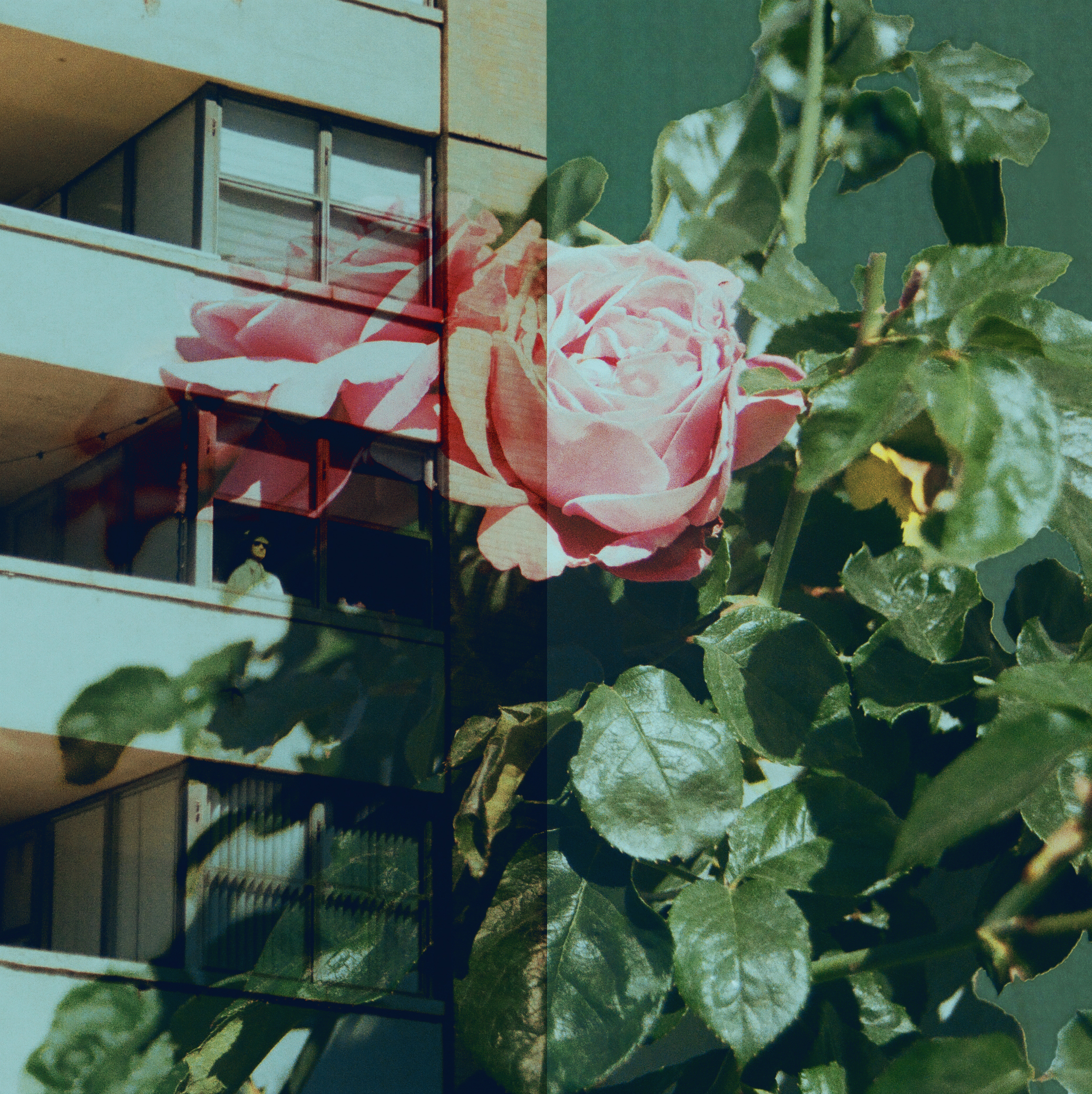
Rohan DaCosta: Medium Sunset
Medium Sunset  undefined Rohan DaCosta

Model: Maris Anno Cusma

Beth Winegarner: I Would Breathe Water
I Would Breathe Water undefined Beth Winegarner

The sea was calm as I pushed up from the depths, toward the orange glow of sunset. I surfaced and paddled my way to the shore, letting the waves carry me. My belly rippled along the sand as I pushed toward the rocky cliff where I’d stashed my clothes. 

Often the shore was empty. But on this particular night, a flock of people danced and laughed around a large fire, drinking beer and roasting marshmallows as sparks rose into the darkness. 

I hid behind a jagged boulder, stripped off my sealskin and stood, feeling along the rock face until I found the loose stone and pulled it free. Behind it were a pair of worn jeans, a flannel shirt and black boots. I dressed quickly and stuffed my pelt into the hole.

The last of the sunlight danced gold on the surface of the ocean as the sky turned purple and pink. I let out a long breath of air and wrapped my arms around myself, grateful to be on land after months away. There was something about it that made me feel more solid. 

I slipped among the partygoers like I was returning from a walk along the beach. There were enough of them that anyone would have thought I was there with someone else. 

My kind came ashore from time to time, each for their own reasons, I suppose. For me, it was a chance to imagine what human life was like. My elders often warned me about them, about what they did to us. But I loved their faces, their laughter, how carefree they seemed. 

As I scanned the crowd, one of them caught my eye. He was across the fire from me, sitting on a driftwood log, watching the flames. Even seated, I could tell he was tall, slender as sea grass, with milky skin, full lips and long, white-gold curls tumbling down his back. A cigarette rested, smoldering, between his fingers. My mind echoed with my ancestors’ stories, especially the ones about elves of the earth and the woods. Their long, pale hair. 

Before I knew what I was doing, my legs carried me around the fire, where I sat down on the log next to him. His eyes remained fixed on the flames; he didn’t seem to see me.

“Reading your fortune?” I asked, clearing the last of the sea from my throat.

“Hm?” He shook his head and blinked, as though coming out of a trance. His mouth curled up at one corner. “Something like that.”

“What did you see?” I asked. 

He adopted a mock-dramatic tone. “A great darkness on the horizon. Forces gather like leaves in a windstorm. Or maybe I’m just really tired.” He lifted a cigarette to his lips, sucked in the smoke and held it. When he exhaled, I smelled burning herbs—cannabis, mint maybe. 

“Do you know these people?” I asked, gesturing toward the scattered partygoers. The air radiating off the fire crackled my skin, a sharp shift from the cold salt sea. 

“Some,” he said, taking another drag. With the cigarette held between two fingers, he pointed the lit end toward a pair of boys to his right, who were talking to a soft-bodied blonde. “I know those two. Not the girl. You?”

“Not really,” I shrugged. “I saw the fire, thought I’d come see what’s going on.”

“Do you live around here?” 

“Yeah, not too far,” I said, not entirely a lie. My clan spent most of its time on a small, rocky island about a half-mile off the coast. We hunted the surrounding waters for salmon, rockfish and sweet crabs. “What about you?”

“I live just a couple miles inland, in the woods,” he said, putting the cigarette to his full lips and breathing in slowly. He offered it to me. “You want some?”

I shook my head and looked out across the darkening horizon. He elbowed me in the side, cracking a smile. “Follow me. See if you can keep up,” he said, dashing toward the water while I trailed behind. Running in soft sand is hard enough, let alone when you haven’t had legs in a while. But the movement, the night air, made my body tingle. 

He pulled off his boots and socks, then scraped the sand with his toes. As he did, little blue twinkles appeared. “Bioluminescent critters,” he said. I followed his lead, feeling the rasp of wet sand under my toe. A larger wave washed ashore, soaking us to our calves. 

“Oooh, that’s cold,” he said as the wave pulled away, burying our feet in new sand. 

“I like it,” I said. 

He stepped closer and tentatively took my hand in his, both of us looking out to sea. As I squeezed his hand back, warmth throbbed down my body. He pulled away, replacing my warmth with doubt. 

“Shit, too many beers,” he said. “I’ve gotta pee. Will you be here when I get back?”

I nodded, stomach knotted, wondering if he was making an excuse to get away from something that was happening too swiftly. He jogged toward the cliffs, disappeared into darkness. Meanwhile I counted the waves, reassured to see that every seventh swell was bigger than the others. Their white caps glowed in the moonlight. Some things stayed true, no matter what.

A few minutes later I heard footsteps behind me. When I turned, his face was shadowed, white-gold hair side-lit by the bonfire. He held something in his arms. Something leathery and damp. Ice spiked my veins. 

Humans see our kind more often than they realize. We are indistinguishable from seals that can’t change their skins, and we often live among our sea cousins, keeping each other safe from bigger predators, humans included. Ashore, we look just like people. Warm skin, ten fingers and ten toes, nothing to give us away but our pelts. They could trap us this way, humans.

“I found this in the rocks.” His voice trembled. He stood inches away from me now, my brown sealskin clutched to his chest like a newborn. “Just looked up, and there it was.” His blue eyes fixed on mine. “Is it yours?” He asked. 

I took a step back, waves lapping the thick rubber of my bootsoles, tried to think of what to do. If I denied it, he might take it and I’d be bound to him. Maybe I could knock him down and grab it, disappear before he realized what had happened. I was strong enough. 

But I couldn’t stop thinking of the way he’d touched my hand just a few minutes earlier, the way it made me ache.

Raising my hands, I started to open my mouth, though I didn’t know what might come out.

“I know what you are,” he said softly. “I’ve read all the old stories: Mer-folk, merrows, selkies. I never thought I’d find one.” 

I thought I’d hidden it well enough. No one had ever—

“Come home with me,” he said. 

I swallowed hard. “If you know what I am, then you know why I won’t.” 

He looked down at the bundle in his arms for a moment, clarity reshaping his features. “Oh, no, no,”  he said, handing me my skin. “That’s not what this is.”

It was heavy, still damp from the sea. As he laid it in my arms, he leaned down, face inches from mine, smoke clinging to his sweet breath. 

I closed the gap between us and pressed my lips to his, opening to his tongue, the earthy taste of him. He moaned into my mouth and pressed his chest against mine. Heat flooded my body.

“Let’s go,” I whispered against his lips, my head spinning. 

He took my hand and led me past the bonfire, up to the parking lot where a dingy white pickup waited. As he drove, I rolled my window down, letting the cold wind stroke my face. A canopy of redwoods swallowed the stars, a velvet shield between us and the world. He guided the truck across a narrow wooden bridge and parked in front of a two-story, blood-red house, almost black in the darkness. 

In his cluttered room we peeled each other’s clothes away hungrily, a tangle of limbs and jeans and buttons until we were naked in the moonlight streaming through his window. I fell against him onto the bed shoved against one wall, kissed him up and down his lanky body, took him into my mouth until he moaned and pulled me up to kiss him. When he slid inside me, everything else disappeared except for the places where my body connected to his.


I woke in a knot of sheets to the sight of him sitting next to the bed in a battered armchair, strumming a guitar. He hummed something I didn’t recognize, his voice deep and sure. I reached out and ran my hand down one long thigh as he lifted his storm-blue eyes to mine. 

“Hey,” I said, my voice still thick with sleep. 

He put the guitar aside and stretched out next to me, pressing the length of his body to mine. I held the back of his head and pulled him into a kiss, rolled him on top of me. His weight on me felt like diving deep under the waves, a pressure solid and soothing. 

“Mmmm,” he said, stroking between my legs. “Was last night your first time with a human?”

“Last night was my first time with anyone,” I said. 

“Oh, shit, really? If I’d known, I would have been more gentle.”

“No.” I groaned, sinking into a place almost beyond words. “I really liked it. I loved it.”

He paused, then sat back, resting against the wall, studying me. “Why me?”

I shrugged. “I didn’t really plan any of this.”

“But,” he paused, considering his words. “Why not with someone… more like you?”

I sat up, too, and pulled the blankets up to my waist, feeling too exposed. “Sure, that’s what my clan expects me to do.” I shook my head. “But I have a hard time doing what’s expected of me. My podmates are always on me to stay in the sea, find a mate, make sure we’re looking out for each other. And I want that. I do. But I often find myself thinking of your world. Wondering.”

He pushed himself across the bed and wrapped me in his arms, hot against my cooling skin. When he pressed his stubbled cheek to mine, his face was wet with tears. 


We made love again, then moved to the bright, plant-filled kitchen, where we stuffed ourselves and said good morning to his younger sister, still a girl. 

“Where are your parents?” I asked, popping a grape into my mouth. “They go away for a few days, or something?”

He went silent for so long, I wondered if he would ever answer. “My dad took off years ago. My mom died last year. Cancer. She left us the house.” 

“I’m so sorry.”

He shrugged. As he looked past me and out the kitchen window, deep pain flashed in his eyes.

“I’m an orphan, too,” I said quietly. “Both my parents died when I was younger. A red algae bloom poisoned our waters. The rest of our pod took care of me afterward. 

“Last night, you said something about reading stories about—about people like me,” I said, touching his arm. “What did you mean?”

“Growing up here, so close to the ocean, my mom read us a lot of stories about mermaids and sirens, stuff like that. She took us to the Marine Mammal Center and the Monterey Bay Aquarium so we could learn about everything that lives right off the shore, real and imagined,” he said. “When she died, I started collecting and reading books on sea mythology. It helped me feel like she was still with me.”

He stood. “Follow me.” 

We moved into the front room, where a wooden trunk stood against one wall, worn with time but elaborately carved. “Your skin is in here.” He lifted the lid to reveal my brown, speckled pelt. “Anytime you need it, this is where you’ll find it. Whether that’s right now, tomorrow, or someday.” 

I hadn’t even realized I’d lost track of it. My family tree is full of lost ancestors, skins stolen by humans hungry for something ineffable. A knot loosened in my gut as he closed the lid and I saw there wasn’t even a way to lock it.

“Come on,” he said, tugging on my hand. “I want to show you the woods.” 

His house was surrounded by a grove of redwoods, clinging to the last tendrils of morning fog. The air cooled as we walked deeper into the trees, but his hand in mine was warm. 

“Are you supposed to be at work, or school, or something?” I asked.

He smiled. “Well, it’s Sunday, so, no. But I just finished community college, and I’m taking the summer off before I figure out what’s next.”

“What did you study?” 

“Mostly general stuff, in case I want to go to a university,” he said. “But I also wrote a lot—short stories, articles for the college newspaper. I liked it.”

We came to the banks of a creek with no more than a trickle of water in the bottom. “In the winter and spring, it rains so much that the water comes up to the bridge.” He pointed to the wooden structure. “The people who live in this area say that anything supernatural can’t cross the water.”

“I’m pretty sure that’s not true,” I laughed. 

We walked back into the trees and followed a path that led to a small, sunny clearing. Turkey vultures circled lazily overhead as he sat down in the drying grass and patted the space beside him. Amber poppies nodded in the breeze, and the wind in the eucalyptus leaves overhead sounded like waves brushing the shore.  

“When you read all those stories, did you ever think any of it was real?” I asked, tracing my fingers across his cheek. 

“No. But I hoped it was.” He smiled. “Is it true? That your kind cast spells on humans to make us lovesick and devoted?”

“You’ll have to tell me.”

He squinted into the sky, but didn’t answer. I leaned my head against his shoulder, realizing that, for the first time in a long time, I didn’t have to hide anything. 

We spent a week together in the red house, talking, listening to music, reading, cooking, and joining our bodies in every way we could. I’d never felt so at home on land, had never met someone who felt so familiar. I’d never felt so weightless. 

But I needed to go home, if only to let my family know I was safe. I lifted my pelt from the trunk and held it in my lap as he drove me to the shore. Blackened driftwood from our bonfire was strewn across the beach, as though tossed by a giant. He walked me to the boulder where I usually hid my clothes and gently undressed me, tucking everything into the hole behind the loose stone. I pressed my lips to his, sucking his tongue into my mouth, shivering naked in the dawn wind. 

“I won’t be gone long,” I said, stepping into the waves. 

“You’d better not,” he smiled. “I won’t know what to do with myself.”

“How will you know when I’m back?”

“I have a feeling I’ll just know,” he said, brushing my hand with his. “Still, I’ll check back every day at sundown.”

I turned and dove under, slipping my skin on as I swam. When I reached our rocky island, my podmates barked in greeting, but something was wrong. 

A cluster of seals had formed a circle at the peak of the island, and I moved closer to see what they were doing. In the center was our matriarch, barely moving and paler than I’d ever seen her. 

I moved closer, touched her nose with my own, breathed into her as if somehow I could bring her back. She moaned so softly, only I could hear. Foam seeped from her mouth.

My heart fell. After my parents died, she’d raised me herself, though she was old enough to be my great-grandmother. She taught me to dive and hunt with a skill I’d never witnessed in another of our kind, and she was always the first to make sure the rest of us were fed and safe. 

I could hear her now, scolding me for escaping again and again to the surface, for longing to know what humans were like, what they did all day. “Remember, child,” she would say, tossing still-wriggling fish to the youngest ones with a flick of her head. “Just because you can pass as human, doesn’t mean you’ll ever be one.”

If not for her, I might have pretended my way into the human world years ago. If not for her, that night I got caught in a fishing net, I might have been hauled onto some boat and severed from my skin for good. I’d forever be grateful that she followed me, tore the net apart with her strong teeth, and swore at me all the way home. 

It was impossible that she lay here now, fading against the stones so solid beneath her. I stayed by her side until her breath left her, and it felt like mine would leave me, too.

We stayed with her body for days, none of us hunting, eating, or sleeping. Together we sang over her, keening as the sun rose over the golden hills and set in the ocean, calling to the waters to take her home. And then we rolled her body to the edge and into the sea, where she sank with barely a ripple. 

I stayed one more day, hunting and eating my fill of rockfish and cod. To honor her, I brought back plenty to feed the pod before setting out toward the shore again. Love and grief danced strange circles around my heart as I swam. 

He was sitting on the beach when I emerged from the water, his feet bare in the wet sand, shivering in his leather jacket. I shed my pelt and kneeled before him, took his face into my hands. Tears streamed down his cheeks. 

“I thought you were gone,” he whispered. 

“I’m so, so sorry.” I kissed his eyes closed and held him to my chest. “I couldn’t get away. I lost someone very close to me, and I needed to say goodbye. But I’m here now. Will you please take me home?”
 

I’d only been away a week, but when we undressed each other in the candlelight, I saw how much he’d changed. His already-slender frame looked skeletal, and dark shadows hung beneath his eyes. I touched his ribs and asked, “Are you okay?”

“It’s nothing,” he shrugged. “I was sick for a couple of days.”

We lay down beside each other on the bed, face to face, chest to chest, toes to toes. I ran one fingertip along his eyebrows, down his nose, across his lips, where he sucked my finger into his mouth. We made love, slept, made love, slept, devouring each other and slipping into dreams until dawn turned the sky pink. 

When I woke, the sun was high and I was alone. I pulled on my clothes and walked from room to room, but the house was empty, echoing with my footsteps. Finally I found him sitting on the porch, holding my sealskin in his lap. 

I sat beside him and leaned in for a kiss, but he pulled back. “Don’t.”

My limbs went cold. “What’s going on?”

He shuddered and his hands squeezed my pelt, frightened. “I lied. I wasn’t sick for a couple days. I was sick the whole time you were gone. I couldn’t eat, I couldn’t sleep, I couldn’t do anything but miss you. I felt like I was out of my mind.”

“I’m really sorry—” 

“It isn’t your fault.” He wouldn’t look at me, eyes veiled by white-gold curls. His voice turned acid. “I mean, you can’t help it. It’s your magic, or whatever you want to call it. When we’re together, I feel amazing. Like I could do anything, or like I could disappear with you and never miss the rest of the world. And when you’re gone, I’m strung out. I would destroy everything to get back to you.”

“What is this?” I whispered.

He shoved the sealskin into my lap, but I could only let it slip to the earth. 

I stood to face him, a sob stuck in my throat. “What about your magic? Your gingerbread house in your enchanted forest, your golden hair and your fucking white horse,” I gestured to the muddy truck behind me. “What we have is once in a lifetime. Maybe once in a thousand lifetimes.” My throat stung with anger. 

“Just because it’s rare doesn’t mean it’s good for us,” he said, rising to his feet. “I was so, so excited when I found out what you were. But I didn’t know what it would do to me. I just didn’t.”

He searched the trees, as if they held some answer. “One of us needs to end this before it swallows us both alive,” he said.

“Then what was last night?”

“One last time.” 

He opened the passenger door of his truck, then got in on the driver’s side and waited.

“Fuck you!” I shouted, storming across the bridge and onto the dirt lane that led away from the house. 

I don’t know how long I walked, head throbbing, eyes blurry with tears. Until the dirt lane joined the paved road, and then along the pavement until I reached the highway. My feet ached and bled, but I barely noticed. It wasn’t until he pulled up beside me in the truck that I let myself feel how exhausted I was. 

Silently I got in, and he drove to the shore. Our shore. The beach was empty, a rare summer storm scattering fat raindrops onto the sand. Seals called out in the waves, but they weren’t the voices of my kin. 

“At least look at me,” I said, and he brushed the hair back from his face. His eyes were stormy, rimmed in red. I wanted to reach out, bury my face in his warm neck, breathe in his scent of leather and dark woods. But I kept my hands wrapped around my pelt as he looked toward the waves, tears spilling from his eyes. 

“Nobody will ever love you the way I love you,” I said, turning to walk into the water. 

“I know,” I heard him say, somewhere behind me, before the pounding of the waves swallowed his words.

Evie Calvillo: Sidewalk Chalk
Sidewalk Chalk undefined Evie Calvillo

I was born of the Ram. Two horns spiral over my head. My mother hates them. She wants me to be more like her, and if not like her, at least like any of the other hers in the world. Despite the hairless skin, round thighs, and half-moon feet that she gave me, the horns are all she sees. I remind her too much of him. But whose fault is that? You can only cram so much of your DNA into one person. And she chose him to wreathe my double helix. It probably doesn’t help that I don’t have boobs, not really. It probably doesn’t help that I also wear the golden fleece he left behind. It’s a hideous antediluvian zip-up that I never zip up—very retro—with an iron-on patch of a pair of wings. People always stare, of course, at the bare chest between my nipples, trying to catch a glimpse of my tits as if that might help them pin down whether I’m this or that. I try not to let it get to me. It’s not like they’re brave enough to come up and ask me directly, usually. Anyway, the Ram used to say whoever wears the golden fleece has the strength of fire-breathing bulls and a dragon with teeth that will grow into soldiers when planted like seeds. I’ve decided to believe him. No one messes with a golden fleece.

“I’m heading out,” I call across our crumbling stone cottage.

My mother glances up from her telenovela just long enough to scowl at the unmentionable spot just above my head.

“Cover your tits,” she says with detached exhaustion, as if she’s just suggested grabbing an umbrella for the hundredth time.

“What tits?” I shoot back, but my hand reaches for the coatrack anyway.

And her eyes have already settled back on the tall, dark, and dangerous flavor of the week of her autogenerated drama.

I head to the Sidewalk, one of those chalk centers with a massive archive, advertising that you can access the inaccessible. I’m hoping to find some more on the Ram, maybe to piss my mom off, maybe to piss myself off. Ever since they ruled the dead’s memories as public domain, you can find almost any crime as long as there were witnesses. The Sidewalk has a reputation for some pretty unpleasant uploads—a good place to start looking for the Ram.

I’m just coming up to the sliding glass doors of the Sidewalk, when I notice the bushes lining the building, pruned to accent the foot of the metal tower. I recognize their flowers. They’re native to the fields here, but I forget what the Ram used to call them. I lean down to take in a blossom’s fragrance, and when I straighten, there’s a woman beside me, smoking and staring in disgust. I pluck the flower and sniff it again, and she visibly shudders. I freeze, caught between a guffaw and the impulse to flee the scene, when a gruff voice cuts in.

“May I?”

A Faun, without introduction, takes the flower gingerly from me, and in a single chomp severs the flowerhead from its stem. He chews the petals satisfactorily between his teeth, dislocating his jaw repeatedly with intentional grinding swoops, as the woman storms off, scandalized and frightened even.

I’m not frightened though. I have the golden fleece, a layer of protection. And it’s immediately evident, from the wide berth the other data center visitors give us, that standing side-by-side adds a different kind of protection for both of us. The Faun has hooves and hairy haunches, big beady eyes and pointy ears—the kinds of things I have running in my blood but can’t be seen. And I have something of a familiar face, but also my hard-to-miss horns.

“Looking for anyone in particular?” I ask, nodding to the tower.

“Just some entertainment,” he grins, still chewing even though there doesn’t appear to be anything left in his mouth. “Want in?”

I end up sitting in with him on a donut shop heist gone wrong. And when it’s done, we agree to meet again tomorrow.


“What kind of odd jobs did the Ram take?” I ask my mother later that night, knowing I’ll only manage to get one question in.

She’s still in her lumpy recliner, hasn’t bothered to look up from the TV since I got home—maybe all day.

“Odd jobs,” she grumbles. “What does it matter? I liked him better when he picked flowers.”

That’s what he did before, apparently. Before the humans came en masse with their reflective metal, towers, and tech. Before they took the landscape and “landscaped” it to elevate their shiny properties. He traded flowers till they mowed it all down—or more likely got the goats to. Then he did what he had to do to get by.

It’s not the lead I was hoping for, but I’ll take any hint that she ever liked him at all. I’m scraping for any glimmer of hope that anyone will ever like me, despite what I am. Most days, I don’t blame her for being salty about him honestly. He left her, both of us, on her birthday of all days, as if it were the best thing for her, as if it were a gift.


I wouldn’t call meeting up at the Sidewalk a date, but the Faun and I go back for some more memories.

People get us confused sometimes. Check if the study is vacant, would ya—the goat boys want a private session. They think we’re the same thing because we’re both flat-chested and stand on two hindlegs. Sometimes it’s fine, and other times it’s not. But when it’s just the two of us, it’s not a thing at all. We can just be, him with his bare chest and me with my golden fleece. I trust him as much as my mother trusts the Ram, or any of the hims in the world, but that doesn’t mean we can’t enjoy each other.

By the third time we go to the Sidewalk, he buys me some chalk.

The living aren’t public domain last time I checked, but your memories are backed up the moment you get your Tell-all implanted. So you can access someone’s Telly if they hold still long enough for you to trace them. I take the Faun’s gesture to mean he wants me to hack into him.

So I hack into him. And when my chalk runs out, I buy him some. And he hacks into me. And when his chalk runs out, he buys me some again, and on it goes….

Neither of us get out much, other than visits to the Sidewalk. So mostly we sit there watching each other sitting there watching heists gone wrong—prosthetic heists, crypto heists, even chalk heists—which is dumb, because we could just be watching the dead’s projections directly. But then after a few times, we’re there watching ourselves, me sitting in his lap, him projecting into me. Then me projecting into him, him sitting in my lap, sometimes more than sitting. Until one day we’re watching ourselves fucking while watching ourselves fucking while watching ourselves fucking, trying to remember what heist got us going in the first place.

We go through a lot of chalk. You can stretch it when you’re hacking into the dead because you only need to draw your portal as big as a headstone, which these days is only as big as the Tell-all they store it on. But when the Faun and I hack into each other’s memories, we go through the chalk a lot quicker, because it’s more tangible if the door is big enough to step through. And it’s obvious the whole venture’s become more about tracing each other’s lines than using the chalk. And I get carried away tracing his lines, leaving a chalk outline in the pavement like you see in those old black and white films at a crime scene.

Until one day, we’re just watching the recursion, not fucking, just sitting, just watching. 

And the Faun says, “Let’s go outside.”

He takes me to a cemetery, not a data center, but an old-school cemetery where the others go when they can’t afford to be processed. We find an empty burial plot amidst the graves. When he takes me, he whispers, “Quiet. Don’t wake them.”

Afterwards, I run my fingers through the wet grass. I find seeds for what I can only guess are irises and calla lilies. I plant them in the Faun’s curls where they might bloom later to remind him of me when I’m gone.

“Wait here,” he says, and leaves me alone with the dead.

Only I’m not alone, I realize. A boy, nearly a man, kneels in front of the headstone of a young woman. The flowers on the grave are fresh. In his hand he holds a stone, white as sidewalk chalk, but this is not a portal into anyone’s mind. One end is sharp and he holds it to his wrist.

“Stop!” I call out.

I rush him and knock the stone from his hand. I look down and see blood, but I can’t tell whose it is. After the shock of my arrival wears, the boy stands to look at me. He has the body of a hearse, too long, too rectangular to carry any normal load. The boy stares at me, and I think of my mother, how her eyes always flick up to my horns. The boy stares at me, and I think of strangers on the sidewalk, their eyes flicking to my chest. This boy, wholly human, looks into my eyes as if horns and tits have no weight to them.

I reach my hands up, unconvinced, and run my hands over the two dead bones breaking the skin. Before I let my arms fall back to my sides, I run my palms over my nipples, checking these too. I suppress a shiver, which only makes my insides quake all the more. The golden fleece falls back into place and still his eyes do not waver from mine.

“What’s the point?” the hearse-boy says, eyes drifting finally back to the grave.

I see myself in him. I see a boy with nothing left to live for. A boy on the edge. I can see it in his eyes. I remember thinking the same thing the day the Faun found me. And all I’m thinking now is I have to do something to keep this boy alive. We’ve only just met, but I feel responsible for him. I have to keep him talking. I have to give him something to make it to tomorrow. I have to show him that there’s more to his life than this young woman in a grave.

I kneel at the headstone. I take his hands and bring him down to the ground with me. I lay his head in my lap. I run my fingers through the wet grass, picking up the seeds of strewn and forgotten flowers, then run my fingers through his hair. I leave something for him later, so he is brave enough to make it past today.

I do not know how long we remain this way.

The dark descends on us and yet things feel lighter.

“Meet me again here tomorrow,” I say, something to look forward to.

The hearse-boy nods in agreement, and I believe him.

As I retreat back to civilization, I wonder why the Faun never returned. I wonder where he could be. What was so important that he could leave me for dead? I am probably overreacting, projecting my own uncertain feelings over a false promise. Wait here. Meet… here. If they aren’t false promises, there’s even more reason to fear.

Instinctively, my feet carry me back to the Sidewalk. I search for the Faun in all the usual places—projection halls, single-lightbulb closets, loveseat-combo-computer stations, library stacks, dusty theaters. When I can’t find him, I check out a standard laptop station and click around through the archives. I think I’m in the mood for some hearse-boy lookalikes. Before I can even finish typing hairless in the search field, I’m prompted with a dropdown of ten suggestions. I choose the one with “roughed up” in the title and motion with my hands to throw the projections up onto the walls. I lean back and suddenly I’m staring all around at an omniscient reflection. I’m seeing a figure in the golden fleece from nearly fifteen sets of narrowing eyes. Only the fleece isn’t as faded as the one I wear now. The horns on his head are more pronounced than mine. His haunches are hairy. His chest and abdomen are chiseled.

It is the Ram.

I feel like I’m sitting at the center of a giant kinetoscope—one of those old-fashioned peep-show devices that spin and spin until the images blur together into a motion picture. It looks like there are more hairless thugs—and by hairless I mean they wear pants instead of fur—than there actually are, as each of them appears multiple times in the periphery of the others’ gaze. I’ve never seen this collection of memories before—never thought to seek out this demographic even though they were often the victims of the Ram’s exploits, as the Ram was so often the victim of this demographic’s exploits before him. When the thugs begin to close in on him, the Ram sheds his golden fleece. A tuft of those wildflowers, whose name is lost to time, comes untucked from the fleece and scatters across the floor. And now I’m sure this is the last sighting. This is how it all ends. The thugs move faster, begin to blur. There are less and less of them the faster they move. Their knives catch the dim light before blinking out of their hands. One by one their projections go dark until one motion picture remains, staring down those horns that could certainly be the last thing this final opponent ever saw, as with the others. The Ram’s shoulders rise and fall with each heavy breath. Blood runs down his face and chest, though it is uncertain whose blood it is. Then to my utter surprise, he kneels. It is not clear whether he gives up or gives himself up—whether this is an involuntary sacrifice or self-sacrifice. But the motion means something to the final fighter, and with that acknowledgement they both collapse to the ground and the last projection goes dark.

Now I know: I’d been looking in all the wrong places. I fall asleep right there in the chair with the knowledge that it was never a heist gone wrong. 

I return to the cemetery the following day, but no one is there yet—no one except the young woman in the grave, but she’s not saying much. So, I wait and I wait. I try to not let the waiting get to me.

When I hear the crunch of dried petals underfoot, my heart races. He has returned. I jump up with a stupid broad grin on my face and realize it is not the hearse-boy.

The Faun has returned. He must notice a flicker in my expression because he says, “Were you hoping for someone else?”

I smooth out my smile and chide him, “I was hoping for any company at all. After you ditched me here, I was starting to think you’d never come back.”

“I did come back,” the Faun replies. “Last night. You had already left, apparently.”

“You didn’t expect me to wait here all night,” I say, but I know that is exactly what he expected. “What’s that?” I ask, trying to change the subject.

The Faun opens his palm to show me a piece of chalk, but this one is different from all the ones before. It shimmers as if dipped in snail slime.

“A present,” he replies, his voice softening, as if he knows he should not have taken so long to bring it to me. He should not have kept me waiting. “I broke down some Sidewalk chalk to decode its structure. I’ve made some improvements. We don’t have to just watch memories on the other side, we can make new ones, make a life there. We could leave this place, leave your mother, leave the humans. You never have to go home again.”

The Faun comes closer to show me. He is close enough that I see the tip of his left horn is missing. I’m about to ask what happened to it when the hearse-boy appears among the headstones.

“Hello,” he calls and rushes to me, throwing his arms around me in a desperate embrace. One hand lands on top of my golden fleece, but the other slips under, finding the small of my back. A long breath later, he notices the Faun there and flinches. For the first time he looks more like an animal than a man. “Oh, I didn’t know you were bringing a friend.”

I force a smile and gently ease the boy back a step. Already I can see the beginnings of irises and calla lilies sprouting out of the boy’s dark hair like a bouquet of horns.

The Faun must notice them too. His nostrils are flaring. I can imagine what he thinks they mean. I wonder if he’s right about what he thinks they mean.

“We met yesterday while I was waiting,” I say quietly to the Faun. “His girlfriend died,” I add, trying to justify my actions. 

“Tragic,” the Faun replies, then—because he could care less what a human thinks—says for all to hear, “We’re no more to them than the ground they walk on.”

“They can’t be all bad,” I retort, but even as I say it, I know I don’t believe it so much as I hope it. How could I believe such a thing when I don’t even trust the Faun?

“I thought you were one of us.” The Faun throws the chalk to the ground in defeat and stalks off.

I feel like I’ve done something wrong. Maybe I have. My small act of kindness is a betrayal.

The hearse-boy bends down to pick the chalk up.

“You forgot your…!” he begins, but trails off when the Faun is out of sight. “What is it?”

“Chalk, but not for watching memories, for making new ones,” I blurt, wondering after the Faun.

“What do you mean make new ones?” the boy says.

“I don’t know,” and I truly don’t. What the Faun claims is unheard of.

“Do you think… I could talk to her again?” I see a lightness in his chest, it almost lifts him off the ground, this thought of a second chance. I imagine floating at a second chance with the Faun.

I think of where the Faun intends to take me with this chalk. I want it more than anything, but before I go, I want to leave something for the boy. Maybe I want to take something of the boy with me. There is enough chalk for more than one use. I could open a door for the boy and still have some left over for the Faun.

“Allow me,” I say, holding out my hand. Without hesitation, the hearse-boy hands it to me, trusting me. The chalk is cool against my skin.

I glide the chalk over the flat black marble with ease. I move it from corner to corner, not lifting until the line connects in one rectangle outlining the headstone. As I pull the chalk away the stone crumbles away. A space opens between us and the coffin below.

We see the young woman sit up and stare at us in wonder. Her eyes are sunken. Her breasts are full and hard. But her flesh doesn’t jiggle like with the living. Her head is bald. It isn’t clear if she shaved it or if her hair all fell out. She has no horns.

She stands. She climbs. She reaches a hand to us, but an invisible barrier keeps her from breaching the surface. It is like there is a glass window between us.

The boy reaches to his dead girlfriend and an exchange occurs. The girlfriend’s hand breaches the surface and an invisible force tugs the boy down. The girl rises up as the boy sinks in.

“Help!” the boy cries. I throw my arms around his waist and pull him back up. At once, the girlfriend falls back in.

“You can’t leave the grave unoccupied,” she says. Her voice is hoarse, like she has stones in her throat.

“What do we do?” he asks.

“We need a Tell-all, an occupied one. I know where to find one. My step-mom has a few on her mantle back home. It won’t change that I’m dead, but that way you could take me wherever you go.”

“Whose are they?” I say. Not all Tell-alls end up in the data centers. Some people acquire a personal storage device—a digital urn to keep their loved, or valuable, ones close. What she’s suggesting is swapping graves with someone else.

The young woman looks at me.

“Does it matter? They’re all dead. And no one’s going back for them.”

“Your step-mom will never let me near them,” the boy says.

“I can get in unnoticed,” she says.

The young couple looks at me. We’re all thinking the same thing.

“Help us,” the boy pleads, clasping my hand. “Take her place, just until we have the Tell-all.”

I want to save him. So I need to save her. I look down at the chalk in my hand. There’s still enough for another door, so I won’t be trapped like the girlfriend if something goes wrong. Though if it comes to using the chalk, there won’t be enough for another use with the Faun.

He knows how to make it, I reason, he can make more.

“I’ll come back,” the boy urges. “I promise.”

To my own surprise, I shed my golden fleece. I stretch my arms to the girlfriend and hand it to her. I want it to give her the protection and strength it has always given me, even if it’s only symbolic. The exchange is a wave of cold over my body. I drift to the bottom of the grave. The moment the swap is complete, I turn to look at the boy. He is already gone. The door is shut. The coffin is closed. The headstone’s epitaph now will mislead any visitor.

I settle in. I know this will take a while. I try to remember fonder times. I remember my mother and father sitting on the couch, watching the television, in the before times, before there were Tell-alls. Back when things were good. I remember, but it is not just one memory. It’s a lot of memories blending together. Night after night, movie after movie. They watched and watched thinking they’d grow old together watching and watching till the very end. They say if you and your partner watch the same things, your minds progress at relatively the same rate—or don’t progress at the same rate. Either way, it helps with compatibility. For a long time, my parents weren’t changing, but they weren’t changing together. So it makes sense that when my father started going out, being the shows instead of watching the shows with her, they drifted. I wonder if this is how it is with me and the Faun or how it will be if we stop watching together.

The last bit of chalk burns in my hand as I grip it tighter and tighter. I wait, and I wait. I do not know how much time goes by. Minutes, hours. I pass out. Days? I think about the girlfriend’s mission as if it’s a dead data heist. I think it’s gone wrong. I think about the boy. He promised he’d come back. Even if the data heist goes wrong, he could still come back. He might not even need chalk to get me out. Maybe a shovel would do. I’m not dead like the girlfriend.

I wait, and I wait.

I think I hear screaming.

I think it is me.

I scream.

It sounds funny.

I laugh.

It sounds sad.

I think about the Faun and the kind of trouble we’ll get into when we use this chalk and leave forever.

I think about the chalk in my hand. I think the Faun can make another. I don’t know for sure, but I’m optimistic. I don’t need to wait for the boy. I can go back to the Faun and explain what happened. He’ll make another, and then we’ll never go home again.

I can’t wait any longer.

I take the chalk between my fingers and hold it up to the roof of my coffin. It occurs to me now that the coffin is so small, I can’t maneuver to draw a full-length door. My horns are so big I can’t even lift my head.

A smaller door will do. It only needs to be big enough for me to worm out of it. I draw a window. I put a finger where the first corner is so that my piece of chalk can find it again in the dark.

As I close the circuit, a small distorted rectangle opens above me. Light pours into the grave around a handsome horned silhouette. I stare up into a set of large black beady eyes.

“Faun!” I call. His body lays directly over mine. There’s only dirt between us. I smile so wide that my cheeks hurt. The fronts of my teeth grow dry.

“Get me out of here!”

The Faun says nothing. He just watches me like I’m another piece of entertainment at one of the chalk centers. His gaze is piercing, expectant. I can’t bear to look him in the eye any longer. I look up at his horns and remember the left one has been chipped. Sacrificed, I realize. Turned to chalk—our chance to escape.

I know what he’s thinking. How much more of myself do I have to give up to make this work? But I never asked him to give up anything. He could take both my horns for all I care.

He could care less, unless I say the magic words. But I’m done feeling sorry—for the Faun, for myself, for all the nothing I’ve done wrong. And as I stare back at him, I see we’re both too broken to apologize.

He must see it too. Because he shoves a pile of brush over the portal I’ve made. Forest debris, crushed wings, and bones cover the opening. It gets in my mouth. It presses my eyes shut.

There’s still some chalk left. I hurry to draw another door, but the chalk is almost spent, just a pebble. And as I lift it, it slips from my sweaty desperate fingers. I grasp around for it, but I come up with a handful of pebbles, stones, flecks of dirt, and they all feel the same. I can’t tell one rock from another in the dark. I draw, and draw, and draw, a hundred doors, more, with hundreds of pieces of not-chalk. Until finally I pull my hands in to rest crossed on my not-chest. The Faun is gone. The couple does not return. The golden fleece is out there, a sacrifice, a symbol, and I realize it never protected anyone—not the Ram, not me. And it won’t protect the hearse-girl either. I am the island that kept it safe. I am the fire-breathing bulls and the dragon with teeth that can turn into soldiers. The golden fleece needed me to protect it, not the other way around. And by my horns, I will. I lift them: the tips of my horns, my nails, my teeth—all the chalk I have—and start scraping, leaving lines of me in the packed dirt above me, drawing a door like no one’s ever seen.

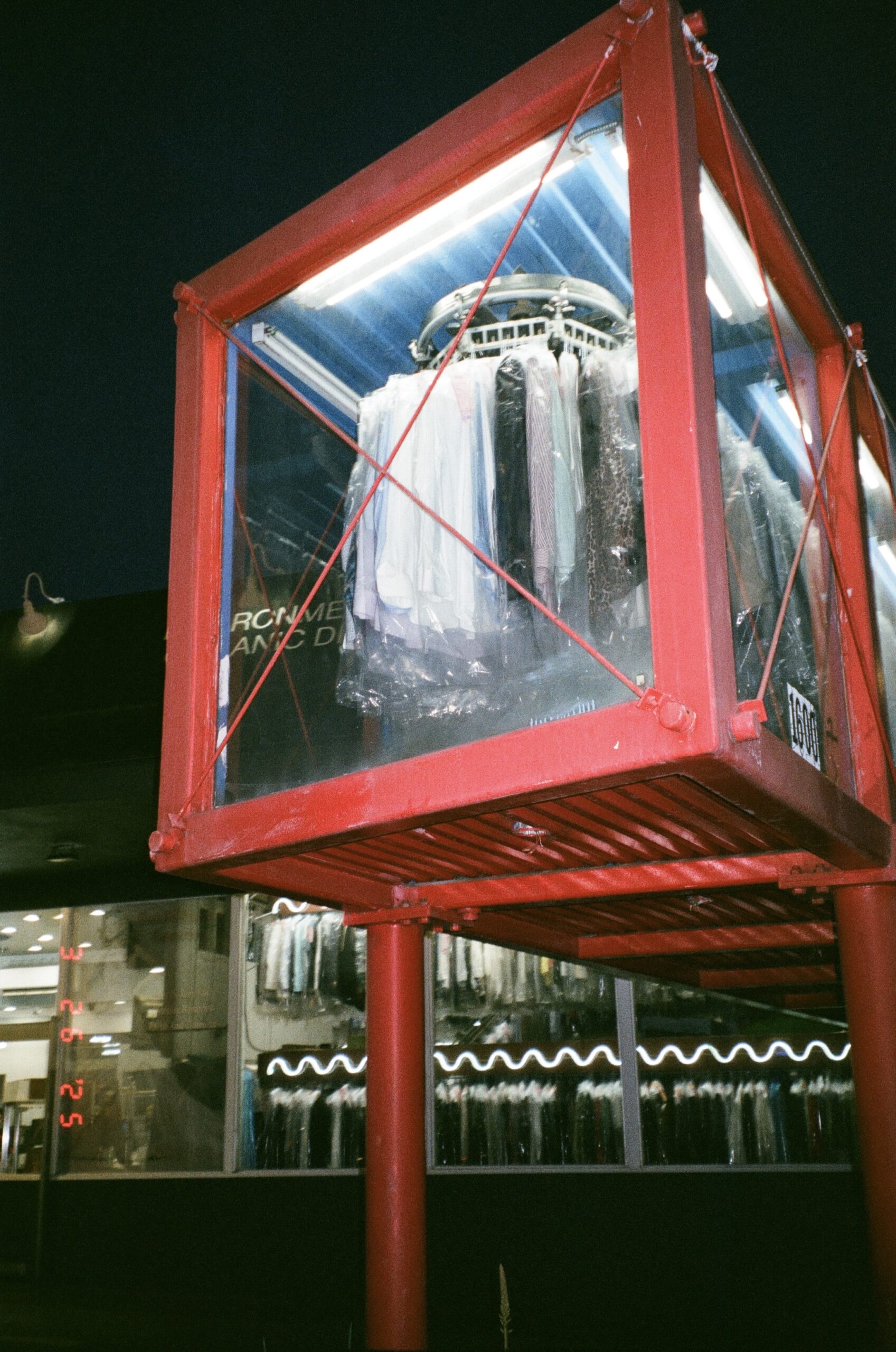
Rohan DaCosta: Pent Majesty
Pent Majesty  undefined Rohan DaCosta

Model: CY:D

Kayleigh Clark: Timestealer
Timestealer undefined Kayleigh Clark

The creation of Time began with a gift.

A lonely god took pity on a lonely world. He questioned the people: “What would make you happiest? What would end your mortal suffering?” And they raised their heads and told Him many a mortal plight. We need money, they said. A cure to all ailments. Peace. Quiet. A safer world.

One loving human asked if there was a way they could live forever. “I love my wife, and I can’t envision a world without her. I wish for immortality so that we don’t have to fear a future without each other.”

The god smiled, agreed. He knew immortality, and He knew He could replicate it for a mortal understanding. So He bestowed Time to the loving human, crystallized, easy to incorporate into any of mankind’s creations. “You can replicate this Time by drawing upon the aether,” He explained. “In aether, there is life. I have provided you with the blueprint, and I eagerly await your ability to manipulate it.”

And so the god vanished, His gift in the hands of the loving human. The crystal was like a jewel: precious. Versatile. The key to wealth, in skilled hands. It took long years of work and a dedication to eternity, but in the end, the human had created something outside the realm of possibility.

Time. Enough to live a life, and another, and another. He had barricaded death and welcomed a prolonged existence. 

Recognizing Time’s potential, the human shared the god’s gift with his closest friends. But he, receiver of a god’s power, was too naive. Not all shared his heart, his goals, his passions. They took his blueprints and found a way to make Time a commodity. A purchase. A way to live on, not for love, but for something else. The loving human, in turn, faded into obscurity. After all, no one remembers love. Only gratification. 

Did the loving human’s friends, in commodifying Time, wish to live to save their world? To make money? To cure all ailments, for peace, for quiet?

Cyr knows the truth. In the hearts of all men, there is a primal fear of the unknown. The decision had been made long ago that death was not an avenue to be explored. There’s no reason to live aside from never wanting to die.

Cyr has tasted death before. Blackened, bitter, a clawing sensation at the back of his throat that can’t be swallowed down. They’d nearly succumbed to its promise of a void beyond, a nothingness that consumes and renders down to the bone.

But they didn’t. They won’t kneel to death again. Doesn’t matter what it takes. Doesn’t matter who falls prey to it in his stead. Cyr is no god, no loving human. But they will bend the will of life. It will answer to them, and them alone. 


Cyr scratches the Shivan on their wrist. In liquid form, Time can be fed into Shivans, devices that sit pretty on the wrist like a watch. A needle below its surface injects Time into the blood, revitalizing, reinvigorating. The interface pulses with blue light, ticking as all clocks do. A threat, to some, that their Time is not infinite. That it must be monitored, watched, until it needs to be refreshed.

Cyr’s Time is low. The ticking is softer, less frequent. They don’t have the means to purchase more—damn inflation, damn prices skyrocketing in the wake of the Repopulace—but they’ve been here before. Time doesn’t have to be bought. It can be taken. The aether manipulated, the formulas replicated. 

Or, Cyr’s solution: the serum, stolen.

They’ve got tools for the job: a reliable set of needle-ended tweezers, a link suppressant, a thin tube he hooks up to the port to feed the Time from someone’s Shivan to his own. They haven’t failed Cyr before. They will never fail them, so long as they’re careful. 

Cyr hasn’t been lucky the past few days. Shivans are attached to people like body parts. Rip them away, and there’s blood. Screaming. Unwanted attention. They don’t need any of that. Just the Time—just the crystallized liquid—and they will be on their way. 

They’ve got a lead, tonight. A man in the residential district. A baker. He doesn’t make a good living, doing what he does, but he’s getting on in years. His wife, too. It’d be easy for Cyr to sneak into their bedroom at night, grab their Shivans while they’re asleep, and become one of the shadows as their dreams go silent. Even if they don’t have much, it’ll be enough to avert death, at least for a little longer. 

Shivan ticking, hands bound in synthetic leather, Cyr follows the sunset into the night. They will need to make this quick.


A cacophony of smoke and ash obscures what Cyr once heard was a beautiful sky. Closer in the distance, there stands the great city, marked by the Factories and their tall pillars of flame. Through the days and nights, the Factories have been the perpetual source of Time. Only those with means or desperation have ever been inside. The latter tend not to reappear.

They remember the city, tinged by sharp iron and broken spirits. After Nessa’s death, Cyr had stumbled down those ruined streets, barely recognizing when they turned into paved silver walkways. They’d been weighed down, death forcing itself into his lungs, making it painful to breathe. They’d fallen, and someone had caught them. Gentle hands had lifted their wrist, the one with their Shivan blaring warning signs that they weren’t worth saving anymore. A golden voice spoke to him in gentle tones, but in the end, Cyr couldn’t make out the words. All they felt was their Shivan opening, cold Time pulsing through their blood as life returned to them, the clock reversing. When they’d regained his senses, the stranger had vanished. 

Cyr looked everywhere. But the city was an arena of pity and disgust. No one wanted to look at the beggar who stained the perfect, immortal image of life.

They’ve since left the city behind. Cyr has no need of that weight. 


The baker and his wife live in the outskirts. Weak neighborhoods, where weak mortals choose to ignore the god’s gift. Cyr ducks behind a house as the baker strolls down the sidewalk, slowly, surely. His house is further down. Cyr jumps fences, keeping to the darkness, waiting for the routine to end. 

The baker comes to his front doorstep. Opens the door, heads inside. Cyr waits outside, watching the sun vanish behind the horizon. The house creaks, telling a story of instability. Its copper-tinged walls are stained with age and rust. The Factories had deemed this place inhospitable long before Cyr had a name, and based on this house alone, there’s no speculation as to why. Yet those who accept death flock to the outskirts, removing themselves from the endless now, content with one life, one chance.

The walls are thin enough, and the door too aged to prove effective. Cyr waits for the baker and his wife to fall silent, for the lights inside to dim. They listen. When all is dark and the way is clear, they become what they must in order to live.


Cyr has mastered the art of silence. The floors do not give them away—not because they are alive, but because they have danced with death before. 

The back door opens to the kitchen. Steel appliances, teetering on the verge of disuse. Broken handles litter the broken tile counter, the tips of forks and spoons snapped and collected in a pitiful pile. Cyr stops at the kitchen table, covered by a worn silver sheet. Fraying at the edges, the tablecloth is smeared in grime, dusted with defeat. Yet at the table’s center, there is a pristine bronze vase, holding a delicate array of white flowers. Cyr is no expert on horticulture, but they know these flowers are impossible. Such small lives, the worst affected by the persistent smog that looms over the city. They stand healthy, happy, sustained by the water in the vase.

Cyr can’t help but be taken by their purity. The flowers know this world, same as they do. And death will take them in its terrible hands and whisk them away without them having tasted Time. Why didn’t the god bestow unto them His gift? Why deny such perfect blooms the Time they deserve?

Cyr sheds a silent tear, letting it roll down his cheek. Nessa loved flowers, they think. 


Cyr is thankful this house is only one story. No creaking stairs to worry about, no daring escape plan. They traverse the halls, their progression steady and stable. They admire the crooked pictures on the wall. Little moments in the baker’s life, perfectly captured in black and white. His wife appears in some of them. Her smile brings color, even in the monochrome, even in the night.

But Cyr’s already shed his tear. How long have they lived? How long did they maintain this happiness, and what Time did they use to achieve it? Cyr’s gut twists as they think of all the people they’ve ever known, their lives snuffed out as their Time came to an end. So many lives, so many that brought light to Cyr’s life. Nessa, chief among them. 

Nessa, their dear Nessa. Her name dances on their tongue, a melancholy melody. They grit their teeth. She wouldn’t approve of their methods. 

But it doesn’t matter anymore. Cyr will live. Cyr has to live, for who else will carry on her memory?


They find the bedroom, door closed. They press it open to find the baker and his wife, asleep in their rickety bed. The curtains flutter; they left the window open, welcoming the cool air. Cyr’s nose scrunches as iron invades their lungs, wafting in all the way from the Factories. 

As they approach the bed, Cyr finds the baker’s arm outstretched. His Shivan is on full display, in the perfect position for them to siphon. They take the link suppressor out of their pocket, prepared to disarm the Shivan, and reaches out. 

But they stop, the suppressor hovering above the baker’s wrist. Shivans glow blue when they are full of Time. They tick in metronomic fashion, foreboding, always warning. 

The baker’s Shivan is silent. He has run out of Time.

Cyr recedes. They’d done their research. They knew the baker had more Time, enough for a few months at least. Where had it gone? 

They step back, and the floor creaks under their weight. The baker’s wife stirs. Sits up. Locks eyes with him.

Cyr could outrun her. There’s no moonlight to provide them with specific details, but what little light they have, they use to recognize her age. Wrinkles line her face like war wounds, her eyes creasing at the corners. She folds her hands in her lap, making no effort to question them, to demand their purpose here. She simply waits, her silver hair pooling over her shoulders.

The silence becomes too much to bear.

“I’m sorry for your loss,” Cyr mumbles.

“This is what he wanted,” she explains. “We’ve lived a long time, Magnus and I. Too long.”

There is no such thing as ‘too long’. Yet Cyr indulges the conversation, thankful that she’s open to their presence. “I saw the pictures outside. You looked happy. Why did he want to throw that away?”

“Throw it away?” The baker’s wife chuckles, amused. “I don’t think there was anything to throw away. We simply decided it was time to move on.”

“You could’ve lived forever. Been happy forever. Why would he just…”

Cyr’s hands ball into fists at their side, and flashes of memory dart across the darkness. Nessa, taking their hand in hers. How perfectly their fingers intertwined, made for each other. How she danced with them in abandoned playgrounds, ashes to ashes, lying with them in blades of broken grass. Her final moments, dying in their arms. “Live,” she’d told them. “Live for both of us.”

The baker’s wife pats the space beside her. Cyr doesn’t accept the offer, not yet. Not when they’re this enveloped in their own feelings. 

“He thought we needed forever,” she tells Cyr, “but centuries of life gave us a new perspective. We decided to use our Time to be with each other, doing what we loved with those we loved. And when we decided we’d lived long enough, we let the Time run out.”

“So you’ll die, too?” Cyr asks. “You’ll let your Time run out, and what then? Do you think you’ll see him on the other side? There’s nothing for you there. Nothing.”

“Then so be it.” The baker’s wife says simply. “I will die knowing I spent my Time with him. That I accomplished everything I ever wanted to do in my life, and that my memories of him will be immortalized.”

“Immortalized by who?”

“By you, now that you’re here.” A pause. “What a blessing, to share this with someone before the end. You will live on, and you’ll remember us both. The love we shared.”

Cyr’s breath hitches in their throat. Nessa’s final moments confront them again. They’d promised that they’d live for both of them—to carry on her memory, her love. That’s all they have left. They know there is nothing on the other side, because they’d seen it, faltering at the edge of reality. Love is mortal, if there is no one to hold it. Why give such a precious thing away? Why would anyone leap off the edge if they knew love wouldn’t follow?

The tension leaves their body, and sadness takes its place. “How do you know I won’t die, one day? Then, no one will remember you.”

The baker’s wife smiles. “Memory is only one way to live on. What we leave behind can act as a reminder, too. This house, this bed… and that Shivan on your wrist.”

“What do you mean?” Cyr scowls.

She twists her spine, looking down at her husband’s corpse. It’s still too early for the body to succumb to rigor mortis, yet iron lingers in the air, the Factories exuding its influence over the living and the dead. 

“Magnus was visited by a god, years and years ago. The god asked him what he wanted. What would end humanity’s suffering. We’d gotten married a few days prior, and—lovestruck fool that he was—he asked if there was a way for us to live forever. And the god granted his wish,” the baker’s wife explains. “Oh, my wonderful Magnus, he really believed immortality was the only way to preserve our love. And he thought everyone would see it the way he did, when he shared it with his friends. That they’d use Time to be with their loved ones. But instead, we watched everyone crumble under its weight. Those with Time became gods, and all they held onto was their greed. Those less fortunate—even if they loved with all their hearts—were the fodder for immortality.”

“Your husband was the one to ask for Time, then? That’s not possible. That was centuries ago.”

The baker’s wife turns back to them, and a single tear falls from her cheek. 

“We’ve lived a long time. Too long.”


Cyr can blame the confusion or the shock all they want. In the end, all they know is that they stay.

The baker’s wife regales Cyr with stories about her time with Magnus. Centuries of love and laughter, condensed into a single conversation. They’d met outside a flower shop, before smog claimed the skies and the lives of most flora. They didn’t have to pick any petals. She loved him. He loved her. They were wed in the spring, surrounded by the same flowers they’d bonded over.

The baker’s wife explains that immortality didn’t scare her. In fact, she was amenable to the idea that she and the baker could live forever, side by side. And as the years progressed, Time as their witness, their love never faded. 

Magnus had been a fool, in her words, but she speaks it with a gentle laugh. Of course he’d want to share the god’s gift. Of course he’d be naive enough to believe they’d treat the gift with respect. His friends took Time and made it their own, profiting off its sales and transforming the city into a land of iron and rust. He couldn’t have known, she says, for that’s who he was. 

They tried to uphold the old ways. Magnus had been an inventor, but the craft was ruined by his friends, who had taken the love away. He pursued his old hobby, baking, at her insistence. He became the baker, and she, the baker’s wife. They set up shop on the border between old suburbia and new Factories. They were beloved, content despite the circumstances. 

But something changed, nearly a year ago. The baker’s wife had found a young adult on the streets, starving, neglected. Their clock lazily ticked, threatening silence if she walked away. She took pity, gifting some of her Time to them. It was this simple gesture, this act of compassion, that made her realize she’d done all she wanted in life. She returned home and approached Magnus. She asked if there was anything left to do, anything else they could live for, and he smiled and said “no”. They decided to let the clock stop ticking and hand themselves over to death. Their love, strong as it was, would persist beyond the veil. They believed it so strongly, so vehemently, that it erased all fear of the unknown. 

Adoration oozes from her yellowed teeth, warm in the dead of night. And when her stories end, she asks for some of Cyr’s. They oblige.

They start with Nessa. They’d met her in an abandoned church, living with other kids starved for Time. They’d all been abandoned, be it by their families or by the world that had promised them eternity. She introduced Cyr to the process of stealing Time, and they’d go out and collect what they could – not for them, but for the other kids under their roof. They’d never take enough to guarantee death for others, but enough that they could guarantee life for the children they cared for.

But it meant Nessa and Cyr were starved most of all. 

Nessa was the first to give into Time’s famine. Cyr mourned for days, too many precious days. It took too long for them to realize they’d neglected themself, and by then, they were down to mere hours of Time left on their Shivan. So, realizing they were dancing on the precipice of death, Cyr made the journey to the city in the hopes that they could reach the Factories, find a source of Time that could quench their thirst. In their final minutes, a kind stranger had poured her own Time into their Shivan, keeping them alive. And she was gone before they could thank her. Gone, lost, faded into painful yet grateful memory. 

Worst of all, when Cyr returned to the abandoned church, they found the bodies of the children they’d sworn to protect. They couldn’t afford to leave. They couldn’t afford to live. Ashes to ashes. Cyr thought about breaking their promise to Nessa then and there – what was the point to living? They couldn’t carry the guilt of losing her or the children they’d helped for so long. 

But they had to. Cyr’s covenant outweighed the guilt. So they lived on. 

At the end of their story, Cyr watches the baker’s wife’s eyes shine with more tears.

“So,” she says, “you’re the one I gave my Time to.”


The night gives way to gentle wisps of sherbet sunrise. It leaks in through the open window, the breezy curtains. The smell of iron never fades. 

Cyr doesn’t remember when they sat by the baker’s wife, when they gave into this small relief. They stand when they see the sunlight. “I should go.”

“Unless you want to stay,” the baker’s wife suggests.

Her Shivan has grown slow, sluggish. Cyr looks away. “I couldn’t.”

“I don’t have much left,” she says, “but it’s yours, if you want it.”

Oh, how badly Cyr wants to say yes. Their promise to Nessa echoes in their mind. Their knowledge of death’s taste hits the back of their throat, a terrible reminder of what they could lose. But something holds them back. Something they can’t describe.

What is their reason to living, then? Is it the oath, or the fear? Does Time help them carry the memories of the deceased, or does it serve to weigh them down? Is Cyr a vessel for love, or a slave to it?

The baker’s wife holds out her wrist. Her Shivan flickers. “Think of it as a gift. You can do with it what you will.”

“What if I let it run out?” Cyr asks.

“Then I’ll see you on the other side,” she replies. 

Cyr still hesitates. But they end up taking her hand, and they disconnect her Shivan. The needle slides out of her skin, leaving behind a pinprick of crimson blood. They can extract the remaining Time later, if that’s what they want.

The baker’s wife sighs, lying back down in her bed. She turns to face her husband, wrapping her arm around his stomach. Honeydew sunlight cascades over their bodies as she draws her final breath.


Cyr leaves the house quickly. The smog breaks apart, revealing a golden sun on the horizon. It’s beautiful. 

They look down at the baker’s wife’s Shivan. Then, they look down at their own. Between both Shivans, they could live for another three weeks. 

Cyr feels it all. Their hair, tickling the back of their neck. Their skin, given life under the rising sun. Their lungs, drinking deep of a gust of ironless air. Their tongue, pressing against the back of their teeth, detecting the faint taste of sugar. Things they will not feel if he dies.

Things that they can savour until they die.

“It’s enough,” Cyr says to the empty streets. “I’ve lived long enough.”

They pocket the baker’s wife’s Shivan. They turn away from the city, and they walk towards the sun. 

Giovanna Lomanto: Untitled #1
Untitled #1  undefined Giovanna Lomanto

R. F. Daniels: Unforgettable
Unforgettable undefined R. F. Daniels

Cassie twisted in front of the mirror, looking at herself from every possible angle, hating what she saw more with each passing second. The deep shadows under dull grey eyes, the sagging flesh where once had been pleasing curves, the skin splattered with sun spots from a faded youth spent under a dying star. It was no wonder nobody wanted to look at her anymore.

Next to her, a row of dresses glittered in the lamplight, sequined shackles waiting to be worn. Her stylist had pulled pieces from all her favorite designers, every one of whom had begged to be the one who would dress her for her final dinner. It would be an honor for any of them to be chosen, but Cassie couldn’t stomach the idea of squeezing her tired body into the requisite shapewear needed to make the gowns look anywhere near flattering.

And besides, it wasn’t as if anyone would ever see this particular occasion anyways.

The rest of her experiences would be released to the Memoria as soon as the night was over, ready to be downloaded and lived by her millions of fans so desperate to take any fragment of her life into their own. Once the memories were processed, anyone with a VR chip would have the opportunity to be her—or be with her—making their way through her every moment as if they had been there in the first place. But this one, this last dinner and everything it entailed, would be kept out of the data set, wiped not only from her own mind but from that of the other guests as well.

She was almost tempted to do something absurd, like show up to dinner naked, or wearing some ratty pair of pajamas too dilapidated for polite company, but that would only have served to make herself look bad. And Cassie didn’t want to look bad.

She wanted to be unforgettable.


The news of Meri’s death seared itself onto her eyelids before she had even fully awoken. Or rather, the headlines about how the downloads of Meri’s memories had crashed the Memoria’s servers to the point that the entire service had gone down for an unprecedented seven and a half hours before the programmers had been able to bring it back up. Cassie’s mind wandered to Sal, wondering if they had been affected by the outage or if they’d finally managed to find a better-paying job somewhere else.

She didn’t know, and the realization that she’d lost touch with not one but two people who used to be her friends put Cassie in a terrible mood before her feet even hit the heated tile floor. Not even the view being revealed by the automated curtains pulling to the sides of the big bay window could cheer her up. What was the point in having a picture-perfect landscape outside if there was nobody to watch it with her? And with her fortieth birthday coming up in less than a year, it was a guarantee that she would be watching the sunrise alone for the rest of her life.

While the kitchen prepared her usual breakfast, she couldn’t help but scroll through the rest of the articles about Meri’s passing. As expected, there was nothing about the cause of death, with every news outlet focusing instead on the lurid details of her mem dump. Of course, it was requests for the memories of her breakdown that had crashed the servers.

Fucking vultures.

It didn’t matter how many years had passed since then, how many projects she had successfully worked on, how many awards she had won. All anyone wanted to do was to relive Meri’s worst moments. Whether as her—which was weird and voyeuristic enough—or as an onlooker, people around the world were obsessed with that terrible night, soaking up the screaming sirens and the relentless paparazzi and the blood, always the blood. Cassie dreaded the day when her own memories of that evening would be added to the Memoria. Even in that moment, the thought had crossed her mind that her own presence only added to the spectacle of the event. But it hadn’t been a choice. It wasn’t as if she would have ever said no when Meri had called her, begging for help.

But how had she not known that the end was coming?

She had been by Meri’s side for so many birthdays; the two of them had practically grown up together, blossoming from up-and-coming ingenues into glamorous starlets in the shared spotlight of their early successes. And sure, the age on Meri’s public wiki pages had been wrong, but Cassie had been sure she’d had at least another couple years left. Unless—

No.

Meri wouldn’t have done this to herself.

She couldn’t have. That would be unthinkable. Cassie must have simply lost track of time, that’s all, let the years slip past her in a blur of brilliant flashbulbs and star-studded premieres. She quickly pulled up her HUD, glanced at how many days until her own next birthday. Not enough. She’d have to find a way to make them count.


The older she got, the more Cassie dreaded getting fan mail. When she had first gotten into the business, she had loved it. The fact that anyone had known who she was, that anyone besides her moms had seen the tiny parts she’d managed to land, had all seemed like something out of a dream. Of course, after a while, after she had reached a certain level of fame and notoriety, there began to be more than the occasional creep. She and Meri had compared their creeps for a while, laughing at whose letters were more lascivious and whose were more just plain unhinged. And while she’d been lucky enough to never be on the receiving of anything that appeared to be a genuine threat to her safety, as the years passed by the more of the letters became downright disturbing.

As she neared forty, she began to get demands. Not requests to write a message back or record a personalized vid or anything like that—she did occasionally acquiesce to those, when the mood filter flagged a message as being particularly heart-warming. No, these demands were different. They told her to touch herself, to hurt herself, to make use of various objects on and in her body, each anonymous message more deranged than the last.

And she knew why they were happening. Whoever was sending them wanted those particular experiences to be part of her mem set when it was eventually uploaded. Cassie had no idea if it was one particular depraved fan or a whole lot of them, but either way, it was unsettling.

Maybe whoever was sending them would eventually be getting off to just the memory of her just reading the requests, relishing her squirming discomfort, the thudding of her heart and the twisting of her stomach, bile rising as she thought about what awaited her in not too long. And when that happened, nothing would be safe. Nothing would be private. Not even things she had done decades ago, years before the Star Transparency and Accountability Reform Act was passed, would be safe from the world’s prying eyes.

And oh, were there some things from her youth that she would really prefer to keep private.

It wasn’t even that she had done anything that outrageous. She hadn’t. Not really. She’d just been young and carefree and naive enough to think that anything she didn’t remember the next morning would be forgotten by everyone else as well. Not archived and tagged for optimal searchability and handed over to a ravenous public. Not even her most personal moments would be her own for much longer.

Cassie was tired. Not just tired, but exhausted—from having to be on all the time, from having to run everything she did by her agent and her publicist and those damn filters that would scour every word for possible problematic misinterpretations, from having her every waking moment be a performance for some invisible audience. It had gotten to the point where “Cassie” felt like as much of a character as any of the roles she’d played, and she was tired of the whole damn thing.

Maybe that’s why the final dinner happened when it did.

But that thought just reminded her of everything that was to come, how much she didn’t want it to, and how powerless she was to do a damn thing about it. It’s not like she could opt out of the event, not without being hunted down and dragged to it, kicking and screaming, if need-be, like Joe Allyn had been, and if there’s one thing Cassie wanted to avoid it was that sort of embarrassing spectacle. But the dinner and everything after—the more she thought about it, the more the whole thing made her skin crawl.

She needed someone smarter than she was. Someone who knew how the tech side of it worked and could tell her if there was anything she could do to keep her past in the past.

Someone like Sal.


The gentle ping of an incoming message bubbling up against Cassie’s temple interrupted her mid-morning workout. Dismissing the view of the virtual beach she’d been jogging along, she pulled up the message, thoughts racing as fast as her heart as she waited for it to load. Would it be something she actually wanted to read, or another message from one of her so-called fans that had managed to sneak past her filters?

Oh.

It was the guest list for her birthday dinner.

She didn’t need the contact app in her HUD to confirm that the names all belonged to complete strangers. That wasn’t a surprise. There was no reason she would have known any of them. After all, it wasn’t as if she had applied for the lottery for any of her friends’ last birthdays. Even if, against all odds, her name had been chosen, she wouldn’t have wanted to see those final moments. It would have been an intrusion. Better to let her friends say goodbye to her on their own terms, like she had done over the past few weeks.

But the idea of spending her last hours having to make small talk with people she’d never seen before and would never see again made Cassie feel ill. It wasn’t fair, she thought to herself. All she’d wanted to do was to help tell stories to share with the world. Why did that mean she had to get consumed by it?


In the end, she chose a beautiful periwinkle gown, drizzled in glittering gems with a slit up one thigh reaching nearly to her hip, layers of silk rustling against each other like a gentle sigh. The android assistants who did her hair and makeup had outdone themselves; Cassie barely recognized the reflection looking back at her in the mirror. She looked at least ten years younger and somehow her face held a look of excitement about it, instead of the tired resignation that had taken up residence in the dark circles beneath her eyes.

On the way out the door she paused to take one last look around her house. It was strange to think that she wouldn’t be coming back here, that in a matter of weeks or even days everything would be cleaned out and auctioned off and the rooms that she had spent so long filling with everything she loved would be stripped bare and handed over to someone else. Would the new resident think about her at all? Would they even know who she was? Probably not. It wasn’t as if she had bothered to think about whoever had lived here before her when she was young and first moving in.

A message from Sal popped up on her HUD.

>> You sure about this? I can still deactivate it if you’ve changed your mind.

Cassie had never been more sure of anything in her life.

<< I’m sure, she wrote back.

<< You sure it’ll work?

She had actually been a bit surprised when Sal had not only been on board with her idea but beyond enthusiastic, taking her vague notion of wanting to do something and turning it into a concrete action plan, ready to be executed in just a couple days. They had left their job at the Memoria a couple years back, but in a stroke of luck, they had both some old access codes that hadn’t been deactivated yet and enough of a vendetta against what the organization did to be willing to use them.

>> Absolutely. Want me to go over the technical details again with you? 😉

Cassie laughed out loud.

<< Absolutely not. 🙂

<< But thank you, Sal. For this and for everything.

>> Don’t mention it. Not that you would, or that you’ll be able to, but you know what I mean. I’d like to avoid getting in trouble for this if I can.

<< I know. I won’t.

And if everything worked, there wouldn’t even be memories of the planning process left around to betray them.

She blinked the messages away and stepped out the front door. The aerocar was already waiting to take her to the banquet hall, confidential location already programmed in and ready to go. The soft hum of the engine provided a nice counterbalance to the growing buzz of her anxiety. Nobody had ever done anything like what she was about to do, at least not that she’d heard of. She supposed it was possible that someone had and the media had managed to keep it under wraps, but Sal would have known if that were the case. No, she was stepping into the unknown here. If it worked. If she had the courage to follow through.

By the time she exited the vehicle and let herself be escorted in through an unrecognizable side door into some unfamiliar hallway, Cassie wasn’t sure her courage would be enough. She was an actress, not an activist, after all. She ran her tongue over the false molar Sal had installed, worrying its rough points, wondering how much it would hurt when she bit down—if she bit down—

“Ms. Sparks? Right this way, please.”

An impeccably-tuxedoed virtual assistant materialized in front of her, gesturing to a set of heavy wooden doors she hadn’t even noticed in her rumination. Before she could reach for the handle, an old-fashioned looking brass knob, the door slid open with an anachronistic whoosh, revealing the cavernous room within.

The room reeked of pretension, all ornate wood paneling and heavy plush draperies, shelves lined with faux-leather-bound books and a gaudy chandelier hanging from the ceiling, dripping with crystals and imitation candle-wax. None of the styles actually fit together. The Deco Revival chandelier clashed horribly with the Neo-Rococo table and chairs to anyone with half an eye for design. Cassie couldn’t even begin to imagine who had actually conceived of such a monstrous room. Most likely it hadn’t even been a person but one of those so-called AI designers, but whatever the room’s origin, she felt her heart sink a little at having to spend her final hours within its grotesque walls.

Predictably, there were thirteen chairs and twelve place settings at the table, each of the settings another eye-bleeding mishmash of materials and styles ugly enough that Cassie was almost glad she wasn’t getting one. As slowly as she could, she walked around the table to the bare spot at its head, letting a manicured fingertip trail over the plush backs of the guests’ chairs on her way. She debated asking for something when she reached her appointed seat—a glass of water, maybe something stronger, a benzo or two wouldn’t go awry right about now—but the assistant had dissolved back into nothingness and Cassie didn’t want to try to figure out how to summon it.

Besides, there was no real point to dragging this out any longer than she had to.

Taking a deep breath, she pulled out her chair and sat down. It was the signal that triggered the arrival of the guests, filing in through another set of previously-unnoticed doors. Their hushed voices rustled around the room, burrowing into Cassie’s ears, and while all of them were sneaking side-long glances at her, not a single one spoke to her directly, not even to say hello. Too nervous, she thought to herself. If only they knew how nervous they should be.

Her own nerves were thrumming with anxiety as she watched and waited. In the middle of the oversized table, an enormous gold platter nearly six feet long waited, its surface twinkling with the false candlelight from above. Of course nobody had bothered to check with her manager to ensure the settings matched her jewelry, which that evening was all silver to better complement her gown. Cassie let herself focus on the choice of material because if she allowed herself to think about what was about to happen, she might lose her nerve or worse, vomit and ruin the whole evening.

When at last everyone was seated, an uncomfortable silence fell over the room. The guests began to look at her, eyes lingering longer the more seconds she let slip past.

“Thank you all for coming,” she said after a few moments, even though the sentiment couldn’t be further from the truth.

Cassie hadn’t planned much of a speech. She’d prepared a few remarks, which her HUD was helpfully displaying across the center of her vision, but somehow talking about herself and her career just felt wrong right now. Even though that’s what all the guests were supposedly here for, somehow it didn’t feel like any of them were here because they cared about her as a person. They wanted to have her, to possess her, to keep some part of her boxed up in lucite or framed and hung on a wall rather than seeing her as a friend, a sister, a partner. A person.

“Well, I suppose we should get on with things.”

Her statement was met with a smattering of hesitant laughter as if the guests, just like Cassie, were unsure if she was making a joke or not. She blinked away her words from earlier; the table and its awaiting platter jumped back into focus. This was the part she had dreaded the most, simply for its awkwardness, for whoever had designed this dinner ritual had given no thought to the logistics of it. Or maybe they had done it this way on purpose as one more bizarre humiliation. Well, if all went well, none of them would remember how clumsy she was about to look.

The chair shrieked across the floor as Cassie stood up. She lifted up the hem of her skirt, both glad for the extra movement the slit provided and wondering how she was supposed to manage this without flashing anyone. Not gracefully, was the answer. But she managed to cross the expanse of table and seat herself in the proper position on the platter without knocking anyone’s silverware onto the floor or breaking any of the overblown glassware or accidentally sending her foot careening into anyone’s face.

She could feel the anticipation mounting all around her. The excitement. The hunger.

“I hadn’t thought too much about how this day would go until a couple weeks ago,” she began, “but now that I have, I just want to say—”

The tuxedoed assistant appeared again just a couple feet away from her, giving a prim little cough while handing over the silverware for Cassie to take. She accepted the utensils with trembling hands, eyes catching on the extra-pointed tines of the fork and the sinister serrations of the knife. Unbidden, her tongue found its way to the fake molar once more. Once the tooth was broken, her body would be flooded with billions of nanites all running Sal’s custom code—code that would completely and irreparably wipe the memory of anyone who ingested it. Not only tonight’s guests, but anyone who downloaded and ran part of Cassie’s mem set. Every single one of them would soon find themselves without a single memory in their head. She would be the last thing they would remember, and then they would have nothing. Not the mem they’d just tried to take, not their anniversaries or birthdays or favorite vacations, not even their own names.

She looked around at the faces gazing up at her in anticipation, imagining that she could smell their salivation, could hear the predatory quickening of their breaths. She knew they were all waiting for her to say whatever silly little words she had planned so they could get on with what they were actually here for—her ceremonial first bite, and then the true feast. And then—

“I just want to say, I can’t imagine a better, more deserving group of people to share my last meal with than all of you.”

Cassie smiled, the first genuine smile she’d worn all day and, with a quiet crunch, she bit down.

Giovanna Lomanto: Untitled #2
Untitled #2  undefined Giovanna Lomanto

Muriel Leung: Welcome to the Uncommons
Welcome to the Uncommons undefined Muriel Leung

✵ An except from from How to Fall in Love in a Time of Unnameable Disaster from W. W. Norton & Company ✵

Of waiting, I know it so well by now that it has become a sort of non-skill. I meditate on the recliner, pushing myself to sleep and dream, but sleep is not something a ghost body does in the Uncommons. I will my body to think of something, anything, but I always return to the same place—the gray field, its lit-up welcome sign, the blurred faces of each ghost turning around and around. The burning does not happen again, but I feel it in there, like the sole living organ in me, rushing with blood.

One day the phone rings. It comes with the unit, an ornament until that moment, lacking the ability to make outgoing calls. Its noise is jolting, unfamiliarly sharp and urgent. I pick it up and place it against my ear, and an automated voice says, “Congratulations! Your number, 100672, was selected as the next guest for our services. Please head to the Uncommons Registry as soon as possible to claim this opportunity.”

I place the phone back carefully, its dial tone stopped short with a click. I pause, thinking someone is going to come out of the corner with further explanation, but the room greets me with its usual silence. I pick up the phone again, more dial tone, and place it back, thinking perhaps I had imagined the call.

At the Uncommons Registry, though, the torn ticket has a certain currency, such that when I get back in the queue, an official cuts through the crowd to find me, the other half of the ticket in hand, and beckons me to follow. We skip the line at great speed, the faces of each ghost amassing into one disaffected blur, and before I know it I am in front of an elevator tucked somewhere in a far corner of the building. We do not say a word to each other the whole way, but he does reach over at one point to press a button in the elevator for the 444th floor before stepping out and waving goodbye.

The hallway on the 444th floor is drenched in some awful yellow paint with equally sallow-looking lamps punctuating the hall every three feet, and it stretches for what seems like miles. I walk along it, looking left and right, each glass door fogged and absent any lettering to distinguish one from the other. When I finally reach the end of the hallway, a woman in tweed opens the door.

“ABNA,” she says, sticking her hand out. I look her up and down, startled because it is the first time since I have arrived here that anyone has introduced themselves to me by first name.

“Ab-na?” I repeat dumbly.

She sits down, indicating that I should do the same. “Well, actually, it’s A-B-N-A,” she clarifies. “I’m a ghost just like you, but instead of numbers, officials of some ranking have letter-generated names. But you don’t need to say every letter out loud for me.” She smiles, her mouth taut like a wire. “You can call me ABNA.”

I nod, looking around her office, which is filled with small framed paintings of horses standing still in a field or in a barn or some other idyllic setting. It is the first art I have seen in the Uncommons. I think to ask ABNA about the rest of the Uncommons, whether any of us can ever walk past the 200th tree to the 201st, and what lingers there in the beyond.

ABNA begins her line of questioning. “So, you signed yourself up because you want to talk to someone about the discomfort you’re experiencing, is that right?”

Did I sign myself up for anything? I am not sure. “Yes. I’m usually fine, but sometimes, out of nowhere, I’d feel like my whole body is on—”

“Fire, yes,” she interrupts. She writes something down on a pad of paper, repeatedly circling a word that I cannot not make out until the pen almost drills a hole through it.

“I’m just curious,” I interject before the pen breaks through paper. “How does this whole thing work?”

ABNA’s lips curl in such a way as to suggest that she grants a smile only once every couple of years or so. “We’re not at liberty to say, at this stage. We’ll address that if we decide to move you forward.”

For the rest of the session, ABNA takes copious notes as I talk. I mention the building meeting, how my body felt like it was scorched from the inside out, a sensation that felt impossible in the Uncommons, where I had learned that sensations happen on a more subdued scale. She asks questions about my time in the Uncommons, how I go about my afterlife, and the hobbies I have taken on. (“Do you enjoy your chair? How do you enjoy your chair?”) After a while, she puts her pen down on the pad and places her two hands over it, announcing, “That’ll be all for today. We’ll let you know what we decide.”


Back in my unit, I wait beside the phone, which does not ring. I think of my meeting with ABNA, how I left with more questions than I had going into it. Whether she is a caseworker or a doctor, I have no clue, only that she studies me in such a way that every motion seems to conjure some significance for her. I worry I might never see her again.

When the phone rings at last, the voice on the other end is the same one from the first automated recording, except this time it declares, “Congratulations, 100672, you have been selected to move on to the next stage. Please head to the Uncommons Registry as soon as possible.”

The same official waits for me outside the Uncommons Registry, but he wears his smile brighter that day, and chirps, quite sincerely, “Congratulations!” He brings me back to the elevator in much the same way, only on this occasion he offers, “You can press the button this time.” He winks before waving goodbye.

At the office, ABNA greets me with a clipboard tacked with several forms, which, upon skimming, seem only to note vaguely all the ways in which the Uncommons is not liable for what happens when one decides to move forward with these sessions.

“How many more sessions are there?”

ABNA does not answer, crossing out my signature on the form and gesturing to the page with her pen to sign it again with my number. When she determines that the signature is sufficient, she gestures for me to follow her to another room, the size of a closet. In her hand is a VHS tape with my number and my date of death labeled on it. She does not say a word as she pushes the tape into a tiny TV in the room, and nothing still as she closes the door behind her.

On the screen, my name appears in funny font along a scrolling marquee. And then it is my life. Someone has picked out all the critical moments, which seems at first like a highly presumptuous gesture, but then, thinking about it, I find it a gracious move, how the many years of my life can be condensed into a two-hour action-packed video. Like, who knew pissing my pants in first grade in the middle of playing “Hot Cross Buns” on the recorder would become such a momentous event?

I see myself. I see that my first life inside my mother was a bright pink nightmare, and I came out wet, sopping, and with hair like an angry, slow creature rising from the sea. I see that I missed the word apocalyptic at a school spelling bee, and the next day the lump on my father’s throat blossomed into cancer. I see the stench, the brutality of a hospital room, its blue corners singing of death until the rasp of my father’s breathing was no more, and when they covered his body, the stench disappeared with him.

I see that I made some girls cry, most of whom I loved maybe too haphazardly in bathrooms of basement dance parties or with our hands frantically searching for each other in the shadowy sidelines of the pier. I see how being loved back in that same way made me girl, made me estranged from myself, and goddamn did it feel that way with Mira. Sure enough, there was Mira, scene after scene. Mira kissing the length of my back from nape to the base of my spine. Mira fanning her fingers over the softest parts of my thighs, tossing me onto my back, her face descending between me, licking all of me clean. Mira, bringing my hand to her breast, and the rough squeeze that elicited a yelp, followed by a sheepish, “Not too hard.” After these occasions in which our bodies are lit up on-screen, I see another scene in which Mira asked me if I was afraid of death, and when I said, “Hell, yeah,” she looked at me all serious and said, “Well, don’t be.” She had that way of knowing things before they happened. She said it was because she died twice, and it was dull both times. I grabbed her close, told her, “I don’t want you to die,” and she chuckled: “Okay.”

I see that we fought often. A forgotten call, some confusion with an ex that didn’t even matter anymore, a heated text exchange detailing all the petty wrongs we had committed throughout the course of our relationship—all of that insignificant now. I see us reading together, her wet fingers on a copy of Giovanni’s Room, sitting on the side of the bathtub, the water running and running. Then Mira’s boots crashing onto the floor, the door slamming. (“If you want to fuck her so badly, then go do it!”) Her face in her hands, full of wet. Mira and I, practicing our duet for the next karaoke get-together, one K-Ci & JoJo song away from our voices cracking. “Leave!” I said. “Get out of here, then, if you want to go so badly.” Mira dancing on the subway platform, her lucky dance, she said, to conjure the train’s arrival, which never worked. Forgotten birthday, forgotten anniversary. We did not yell, but we cried loudly at each other. Mira with her head pressed against my chest, whispering, “Let me,” and I held her as close as possible to my heart’s drumming.

Then one day, my mother died, and the world kept turning. I looked in the mirror and whispered the word orphan until the glass fogged and became clear again. I see the other queers who said, Dude, that sucks, and kept right on dancing, their tank tops soaked in sweat and disco light. When Mira and I broke up for the fifth and last time, they said the same thing, except I stopped dancing altogether and no one called.

I am sobbing by the end of my video, which is strange, because I cannot for the life of me remember the last time that I cried for myself, or for anyone else, for that matter.

The door opens and ABNA stands in the light, her pad in hand and the same rigid smile. “You did very good in there, 100672,” she praises. “Very, very good.”

Felicia Ann: Heliophilia 1
Heliophilia 1  undefined Felicia Ann

D.A. Cairns: Cold Inside
Cold Inside undefined D.A. Cairns

“They call this reality TV?” said Eddy, as he lifted a can of Victoria Bitter to his mouth. He dipped his head so he could reach. “They wouldn’t know reality if it slapped them in the face.”

Sharon looked sideways at her husband, felt a familiar disdain. “I’m going to slap you in the face if you don’t shove a cork in it. Can’t you just watch it? Do you have to comment on every bloody thing?” She focused on the program, hoping Eddy would cop the rebuke and keep quiet for a while. His silence never lasted though, barely stood a chance, especially when he was on the cans. He’d been a miserable beggar ever since the factory laid him off. It was crap job which Eddy hated and complained about all the time, but at least it got him out of the house. It seemed like the factory took more than his job when they sacked him.

“They edit the shit out of this stuff,” said Eddy. “They’re like telling us what to think. I want to think what I want to think, not what they want me to think.”

“You know what I think?” said Sharon.

“Yeah, yeah.” Eddy burped into the can, then polished off its contents. He wagged the empty, waved it in Sharon’s periphery.

“I’ll get you another one in the ad on two conditions,” she said.

Eddy eventually placed the empty can in the cupholder of his recliner. “What’s this conditions business?”

Talking to Eddy guaranteed more of his nonsense but ignoring him never worked either. Sharon took a deep breath, shivered in the middle of it. “One you let me watch the rest of the show in piece and two, you let me put the heater on. I’m cold.”

“Get a blanket,” said Eddy.

Sometimes, she couldn’t believe she married such a parsimonious booze buffoon. Every winter for thirty long years, they’d had the same argument, and it was now a sad joke. Sharon’s father had always used that line about the blanket too. His other favourite was to advise anyone in the house, Sharon’s mum and her two younger brothers, that if they wanted to get a job to pay for the electricity, they could go ahead and run the heaters until they toasted themselves. The ridiculous suggestion, birthed in a miserly heart, also carried a warning that if they did get jobs and had all the heaters running, he would have to get his gear off because it would be too bloody hot.

Sharon was wearing a thick blanket over her dressing gown, but Eddy hadn’t noticed. She felt she only partially existed these days; more like an invisible service provider than a wife. If she cooked, fetched his beer, and played wowie zowie with him once a week, she mattered. Otherwise, she was more an accessory than a person. A tear stung her right eye.

SAS Australia broke for an ad. Sharon hit mute on the remote control.

“Hey,” said Eddy.

“Hey,” said Sharon as she got up and walked off to the kitchen with the remote control in the pocket of her underperforming fleecy dressing gown. She left the blanket behind, knowing she would welcome the extra warmth when she returned to her seat.

Opening the fridge, Sharon took a can from the bottom shelf which Eddy had perpetually reserved for beer.

“Sharon!” called Eddy from his padded throne.

“I’m coming.”

“There’s someone outside. Go and have a look will ya love.”

Now he cares about a bit of noise outside. She should have left the sound running on the TV because it would have drowned out the outside conversation. It wasn’t unusual. They lived on the main road, a kilometre from the town centre which huddled around a train station, a pub, and a rundown mall. The mall had an open square which once might have glimmered as the cynosure of pride for town planners, but now served as an outdoor karaoke venue for a collection of societal misfits: the homeless and the drunks. She imagined Eddy sitting there with that crowd as they partied to the tunes of discontent and complaint. He’d fit right in.

She opened the front door, gasped with the shock of the frigid air. She was cold inside the house, chilled to the bone without the benevolence of a heater, but out there? Wow.

“Can you see them?” asked Eddy.

There was a group of people gathered on the nature strip, appearing like an amphorous blob as they congregated beneath dark beanies and thick overcoats. Even with all those heavy jackets and the inner glow of cheap wine, they must be cold. Sharon closed the door. Not my problem, she thought.

“Your show’s back,” said Eddy. “Are you going to turn the sound on?”

Sharon handed Eddy his beer, then moved towards the heater.

“What are you doing?”

“What does it look like?”

“I said to get a blanket.”

Instead of having another pointless argument, Sharon hit the mute button, collected the blanket, and sat down, pulling it tightly around her. At least she wasn’t outside.

“So,” said Eddy. “What about those lazy, good for nothings outside?”

“They’re outside,” she said. “They’re not doing any harm.”

“Not doing any harm?” Eddy moved, almost lifted his back off the recliner. “How about disturbing my peace?”

Sharon snatched the can from Eddy’s hand.

“Hey!”

“How about you stop disturbing my peace,” she said. “If I can’t have the heater on, at least shut the hell up so I can watch my show. You can’t even hear them out there.”

“I can feel them,” said Eddy. “They’re coming closer.”

“Don’t be so bloody ridiculous Eddy!”

He put his thumb and forefinger together, pressed them to his lips, zipped them up. He held out his hand, made ‘sorry’ eyes at Sharon. He’d do anything for beer. How much would he do for her now? He used to say he would make sure she not only had everything she needed but also whatever she wanted. He made those promises on the back of a steady job and stingy habits. He kept his promise until he lost his job. She never knew how much work meant to him. More than just money, it was masculinity, and the Eddy who sat beside her on the lounge, had little of either commodity left. She relented, gave the shadow of her husband his beer.

“Sharon?”

“What now Eddy?”

He pointed at the bay window to the left of where they sat facing the television. ‘See that?’ he said. “I told you they were coming closer.”

There were a couple of silhouettes shimmering behind the pull-down blind. Sharon stared for a moment trying to figure out what she was looking at. Her stomach tightened in an irrational response to a trick of light. That’s all it was. That’s what she told herself as she got up and walked towards the window. The trembling shapes looked like people, but they could have been anything. Her mouth was dry, heart beating faster, as she neared.

“Careful love,” said Eddy.

“Hush!” She turned to him, then back to the window but the shapes were gone. “Just an optical illusion.”

“Optical illusion,” said Eddy. “That’s fancy.”

Sharon walked back to the lounge, ignoring Eddy’s mocking tone, angry at herself for getting worked up over nothing. She shivered as she sat, rearranged the blanket around her.

“Are you sure?” said Eddy, pointing at the window.

“What?” Sharon turned around, stood, took a few steps forward then stumbled back. She screamed. “What is that?”

A thin, grey faced man wandered toward her, then walked through her, to take her seat on the lounge. She stood there, stunned and violated, unable to comprehend the feeling let alone articulate it. The man sat down heavily, despite his insubstantial appearance, then pulled the blanket tightly around his body, stared at the television.

“Eddy,” she said, as the frosty atmosphere chewed her skin. “What’s happening? What’s going on?”

“Here comes another one.”

Sharon turned, her eyes blinking furiously as they tried to process the flickering image before her. A female shape. An unpleasant odour. The cold inside her biting deeper into her bones, she breathed a thick plume of air which hovered in front of her face. ‘Eddy?’

“Looks like they’re all coming in now,” said Eddy.

Four more people drifted through the walls and windows as though they weren’t there, floating across the floor: walking without touching it. They mumbled greetings but Sharon wasn’t sure who they were talking to. She shivered again, grabbed the blanket, pulling it from underneath the first wraith who had come in from the cold. She turned the heater on.

“Hey!” said Eddy.

“Hey!” said the man.

“Hey!” said the woman.

A chorus of ‘heys’ followed, echoing around the room, taunting Eddy. His response manifested his impotence. “Hey!”

“Looks like you lost out on this one Eddy,” said Sharon.

Inexplicably, her fear melted as time passed and heat filled the room. More homeless ghosts drifted in, occupying all the available space, occasionally overlapping each other. Sharon concluded these must be friendly ghosts. They had not only not hurt her but had successfully silenced Eddy. The heater was running, and as her skin absorbed the warmth, she felt bold enough to reclaim her seat. When she sat on the man, he neither moved nor protested.

“It’s not what I expected love,” she said. “I thought we were dead. I thought we’d be frozen to death or ripped to shreds or strangled or something. I didn’t know ghosts could be so…what’s the word?”

Eddy waved an empty can in her face. The ghost with whom Sharon shared the lounge chair, grabbed the can, threw it over his head. “Hey!” said Eddy.

Sharon laughed.

Paralyzed, by the weird absurdity of the situation and the challenge to his authority, Eddy huffed loudly in his chair. Sharon watched him, wondering what he would do.

“I’ve had enough of this,” he said, suddenly standing: too quickly in fact, as he lost his balance and toppled back onto the chair. “Damn it! It’s not right.”

This caused the choir of ‘heys’ to begin again which further angered Eddy. “I said that’s enough. Get out of my house. Get out!” He made several comical attempts to push them before going over to the heater and switching it off. One of the visitors, turned it back on again. Eddy pulled the plug out of the wall. “I said get out. You’re not staying here and you’re not using my electricity you bunch of good for nothing bludgers. Get the hell out. Ge—“

Eddy’s passionate eviction speech was cut short when he was struck in the head by a beer can. Almost recovered from the shock, Eddy started to speak again, but suffered another blow. Soon, a storm of empty cans pounded against Eddy driving him backwards, staggering and stumbling toward the kitchen. Sharon watched Eddy go, saw the ghosts following him. One opened the fridge and took a can out, offered it to Eddy, but as Eddy instinctively reached out his hand to accept it, the ghoul swung it against the side of Eddy’s head.

“Eddy!” cried Sharon. It had been funny when the cans were empty, but Eddy had crashed to the floor, blood flowing from a cut to his head. She went to help but had only made it a few steps when other ghosts holding full beer cans beat Eddy’s head to a pulp. “Eddy! No! Stop it!”

Finally, and mercifully the ghosts stopped, but the damage was done. Eddy lay slumped against the wall, lifeless. Sharon stared at him, then at the violent wraiths. She’d misjudged them, yet they made no moves to hurt her.

“Hey!” said one.

“Hey!” said another and soon they were all saying hey, in a wicked parody of her dead husband’s pathetic protests, as they began to exit slowly.

Sharon was sorry to see them go, but relieved at the same time. She looked at Eddy, realized she should call the police but wondered how she would explain what happened. She wandered into the living room, noticed SAS Australia was still running. She picked up her phone, stared at it, then looked at the TV. Wrapping the blanket around her for comfort more than warmth because the room was nicely heated now—cosy, just shy of toasty, she settled to watch the rest of the show. She glanced at her phone again, then put it down. It wouldn’t make any difference if she waited. Eddy wasn’t going anywhere.

Patricia Pease: My Secret Life With Milly
My Secret Life With Milly undefined Patricia Pease

I collapse on the park grass, exhausted from begging my husband to stay—he’d left anyway.  He said he needed space, to be ‘liberated from my suffocating neediness.’ His voice was flat and cold, the timbre he uses lecturing his law students. With pursed lips, his nostrils flared, as if the air between us had soured. 

His absence pockmarked the house, an atmospheric scar with vacant spaces by the front door where his boots had stood sentry. A sweet veil of his cigar smoke hung in the abandoned den. The silence hollowed my eardrums into a deafening vacuum, and I couldn’t stand it. So, I bolted out the front door and ran until I could fill my ears with birdsong and the comforting sounds of people laughing. 

Now I look across the park and the air explodes with color as a tree releases her foliage. The crimson and gold autumn wonders swirl around me, unfolding the memory of a simple joy: creating houses for the fairies. I gather four big Sycamore leaves and lean them against each other to form a square. Lost in concentration, forty years drift away, and I am seven years old again. 

When I was a little girl, I sought refuge in my backyard from the yelling inside my house. I’d surround myself with the biggest, driest leaves I could find. Concentrating hard on balancing four fronds against each other, my parents’ booming voices made my fingers wobble. With my tongue poking out, I held my breath, and carefully laid tall grass across the shelter for a roof. Hoping the sweet scent of clover would attract my playmates, I sprinkled a handful on top.

My best friend Milly erupted with giggles when my house of leaves and clover collapsed. I spun around to chase her, but she’d vanish behind my daddy’s broken-down tractor. Then she’d pop up behind me and yell, “Gotcha!” She could make herself appear and disappear, like a flickering thought trying to get attention. 

No one else could see her. Only me. When the wind swept past my rusted bike and lifted my hair, I could hear her. She’d whisper, “You better release those wet dresses from that clothes line before they die from hanging.” I’d laugh so hard my face turned red. Reaching inside the laundry basket, I’d drape damp sheets over my head and stagger around making ghost noises. Sunbeams played peek-a-boo through the branches of an old oak tree. Milly danced between the scattered light sprinkling acorns around the fairy house. We were safe within our world of magic.

Now, I scatter tiny bluebells between small stones, creating a delicate pathway for the fairies. A middle-aged woman sitting in a park carefully decorating pebbles with flowers might look silly, or even disturbing to some. But providing a home for something small and vulnerable relaxes the spasm in my chest, and my eyes don’t feel heavy anymore. 

The faint scent of clover drifts past my nose, escorting something ethereal from childhood. A silky breeze plays with my hair, wrapping it into small braids. Like a trusting butterfly, a familiar hand alights on the nape of my neck… Milly.

Still seven years old, her chestnut hair sticks up in cowlicks that seem to be asking for directions. Her freckled face beams with a lopsided grin. She is still missing two front teeth and I feel so much love my chest aches. I cradle her tiny hands in mine, and she tickles my palms. Our two shadows blend into one, and she is as real as the fairy houses we are rebuilding.

Rohan DaCosta: Longing
Longing  undefined Rohan DaCosta

Charles O. Smith: The Staircase
The Staircase undefined Charles O. Smith

Fact is 47 stairs can be dangerous even if you don’t have a problem. Not saying he did, the younger one, just maybe when the days were warm and the older one was still at the office, he would lift the windows on the second floor and crank the disco. The staircases in these old Edwardians can be quite dangerous.

Fact was he knew how to party, the younger one. But he was friendly, would wave to us neighbors from the older one’s Jag when the ragtop was down, would say hello when walked the Boston down the street. The older one was icily reserved. He wore Italian suits with slick loafers and kept his gray hair gelled neatly back.

They had potted palms installed on the roof and propane heat lamps to dispel the frigid fog. On party nights, German cars encircled the block. I thought maybe I recognized a couple of the invitees, my doctor and maybe my landlord, schmoozing with the beautiful boys who flowed in and up the staircase. I could hear the laughter from the roof through my open window.

Fact is you never know what people will do. When they first bought the Boston, it barked for two weeks straight. Relentlessly. A neighbor from around the corner tacked up a note:

Neighbor, your barking dog is driving me insane. I just don’t know what I might do.


Sometimes the music was unbearably loud when the older one was at work and the windows were open. It rattled the panes all down the street like a disco earthquake. It rattled your teeth. Eventually the older one would come home and slam the sashes and crank down the Donna Summer. Even with the windows shut, you could hear his shouts. Was the younger one even home or perhaps passed out under a pile of vinyl?

After the incident with the note, the dog stopped barking. People thought maybe the couple had ridded themselves of the poor creature; they speculated about an accident. But the dog reappeared a week later sniffing silently around the birdbath and the astrolabe in the overgrown garden. The younger one walked it silently down the street.

The younger one had always kept the garden pristine. Shirtless, his bronzed skin glistening with his shorts sagging around his rump while he worked. He listened to the Village People and yanked the weeds that choked the begonias around the astrolabe. He trimmed the wild grasses encroaching on his dahlias. I watched him from my window seat.

Over time the younger one’s hair started to thin and the garden fell into disrepair—the astrolabe atilt, the birdbath dry. The Boston sniffed around and did its business. On days when the young one couldn’t or wouldn’t walk him, he jumped silently around in the weeds and rubble. Stacks of recycling mounted next to the cellar door.

The parties continued right up until the night of the accident. I thought I heard shouts; maybe through the fog I saw a shadow stumble on the staircase before the cocktail chatter suddenly stopped. The music silenced and something sucked the air from the neighborhood. A window crashed. Then sirens and red flashing lights. Stout EMTs carried a stretcher. The men and boys filed into their German cars.


Fact is an event like this can shake a neighborhood. People talk. Ask questions. Had the younger one fallen ill? Had he hit the sauce a bit much while listening to the Weather Girls and Minnie Ripperton? Had he “aged out?” 

The men and boys returned when the older one threw a wake. Again, the German cars lined the street two deep. The neighbors remained uninvited. Fact was the neighbors were never invited.

Some days later, a detective came to my door. From the top of my own Edwardian stairs, I buzzed him in. His jaw was chiseled and his thick auburn hair gelled back. His pecs stretched his oxford shirt and his thighs stretched his woolen trousers as he climbed the steps. His mustache lightly brushed his upper lip. I felt dizzy and stumbled to shake his hand when he reached the top step.

The detective had questions. How well was I acquainted with my neighbor? Had I noticed anything unusual the night of the party? He laughingly warned me to be more careful around the steps.

Around the same time, the burglar alarm next door started going off at random times day and night. The police came and shone their lights all around the house. They stood on one another’s shoulders to peer over the garden wall. Like the house, the alarm was antique; its bell deafening. The clanging rattled the windowpanes and rattled your teeth. Eventually it would stop. Then maybe you thought maybe you heard disco music playing even though the windows were shut.

Fact is the coroner confirmed it was an accident. “The accident.” The men and boys had nothing to say otherwise nor did the older one with the gelled gray hair and the Italian suits. Rumors started that perhaps the younger one had had a glass of wine, perhaps a pill or two from a doctor friend. Fact was the windows were shut and the stairs were steep and you never knew what was going on behind closed doors. Rumor had it that there were problems.

I started to sleep in my chair by the window in case something happened. Something that would trigger the alarm. My sleep was troubled, filled with Escher-esque staircases that I climbed and climbed while holding my breath overlooking infinite voids. One misstep is all it would have taken. I would be teetering on the precipice when the burglar alarm would shock me awake. Fact is the clanging of an antique alarm can drive you nuts with its bell hammering at all hours of the night even though no one’s around. 

Rumor had it the older one flew to Greece. A caretaker arrived to sit the Boston who continued to roam the garden and shit amongst the knotted weeds. This keeper was not diligent like the younger one, the dead one. They did not clean up after the Boston. Flies swarmed around the astrolabe and the bird bath while the dog sat on the steps by the back door, waiting. Silent.

Appeals to the city about the constant alarms fell on deaf ears. Eventually the police stopped coming. A neighbor from around the corner tacked up a note:

Neighbor, your burglar alarm is driving me insane. I just don’t know what I might do.


I left several messages for my doctor about the state of my nerves, about the nonstop alarms, about my constantly interrupted sleep, about my dizziness and my fear of falling down the stairs. Eventually the doctor dispatched a nurse. Fact is, the nurse said, you just need a pill to help you sleep. You live in a city and can’t control the ambient noises. I examined the nurse’s brown eyes, his severe jaw and his mustache that just brushed his lips. I opened my mouth to reply but he pressed the tablet to my tongue and quickly offered me a sip of water. Just be careful around the stairs, he said.

The caretaker called a mechanic to dismantle the alarm. He parked his van in the driveway while he worked. After some hours, he returned with the offending beast which looked like a rusty sea monster, its tentacles wrapping the mechanics arm and creeping around his neck. With some struggle, he was able to slam it into the back of the van. He had barely left the driveway when the windows of the house flew open and the disco started to blare.

After the alarm was gone, I started hearing barks that woke me in the night. I thought it must be a dream because the dog had not made noise for ages. I squinted out the window into the dark garden, but saw nothing. I raised the sash, but there was no scent. The barking had stopped, but the disco started to play. ABBA. I did not see a dog.

Someone returned to the house. The caretaker disappeared. A shadow moved behind the windows, ascending and descending the staircase. It listened to disco music with the windows thrown open, the drapes fluttering in the breeze. Jimmy Somerville, The Bee Gees, New Order. It was a new man. Buff and shirtless, he cleaned the garden: scooped the dog poop, yanked the dried weeds, straightened the astrolabe, and filled the birdbath.

The older one, normally so pale, returned deeply tanned. He took out his convertible with the ragtop down. The new one sat beside him with his thick auburn hair gelled neatly back to withstand the wind. His mustache brushed the top of his lip. He did not wave. When they returned, he drove the Jag into the garage, disarmed the updated electronic alarm, and went inside. Their shadows fell on the windows as they ascended the staircase. On the roof, they lit the propane heaters next to the potted palms.

Rumor had it that there had been a spate of similar accidents in the neighborhood. So many that some started calling it “Falling Heights.” Or so the newspaper said amongst other news of evictions, foreclosures, layoffs, and failing banks. These stories exacerbated my sense of dizziness and despair.

They hosted a welcome-back party on the roof. Amongst the men and boys strolling in, I saw my landlord pat my doctor on the butt. They never stopped arriving in their German cars that blocked this street and several intersecting ones. What if there were an emergency? I guess there were plenty of medical professionals on the roof that visibly swayed from the weight of the revelers. The open front door looked to be screaming disco music.

My landlord decided to repair the banister and both railings along the staircase at the same time. Every time I approached I was overcome with nausea and had to back away. One day the mail carrier rang the doorbell and I pressed the buzzer to let him in. He had the sharpest jaw and his shorts clung to his muscly thighs. Looks like an invitation, he said and dropped an envelope to the floor.

The ancient burglar alarm clangs madly, the Boston is unhinged, and the disco music is blaring full blast. I am on the staircase, hovering near the middle, breathing the propane from heaters on the roof deck above. I try to pull myself up. I try to shout but I have lost my voice. I can hear paws on the landing above me. Without warning, a body, the younger one, falls down the center of the stairwell. I pull myself to the edge. I can not see the bottom. I look up and there he is–falling toward me again.

Fact is, you should not take these pills continuously for an extended time. I opened my eyes to find the nurse hovering over me in my chair by the window. I croaked and again he laid a tablet on my tongue. I swallowed the water and noticed that he was not wearing underwear beneath his scrubs. He caught me looking and gave me a quick wink before I returned to sleep.

I found the invitation where the nurse had placed it atop a stack of medical bills on the side table. I sliced it with the letter opener.

Neighbor, please join our house re-warming. We’d love to get to know you. 

What would I even wear? I rubbed the paper in my hand. It felt silky, luxurious; it smelled faintly of apple blossoms. Klaxons blared from every direction and I had to close my eyes.

Amidst the clamor, I try to descend the precarious staircase. Rotten, broken boards fall beneath my knees as I scramble on my chest. There are entire steps missing that I must stretch to span. The farther I progress, the farther away I am from the bottom. The alarm intensifies, the disco pumps louder and louder, the Boston scrambles past me barking at the top of its lungs.

Fact is the only thing I had to wear was an old velvet cloak. There was no fog and the wind was still. Just in case, I slipped the invitation into my pocket. I laced up my boots and pulled on the cloak’s hood. My boots felt like they were magnetically pulling me through the floor to the earth. From the top of the staircase, I couldn’t see the bottom, tried not to look. The door was hidden in shadow.

I held my breath and lowered my foot onto the step.

Susie Hara: Pink Boots
Pink Boots undefined Susie Hara

I’m checking out each aisle in the store, holding the wire basket they insist you carry, even though there’s nothing physical to put in it and besides you’ll be naked so you won’t need it. Still, you have to follow their instructions or they’ll kick you out. This is my first time at the Dirty Supermarket, but I’ve heard all about it from my friends.  

I head down an aisle that looks appealing, and a luscious 3D of an Egyptian goddess, purple gauzy fabric dripping off her voluptuous form, catches my eye. Not just my eye. My queynte (Middle English for cunt, but also a predecessor of quaint) is already thrumming. The fragrance of frankincense and sandalwood wafts toward me. I want to touch her but the instructions say If you touch it, you are in it, and also If you touch it, you pay for it.  I swear I’m not going to make contact, I’m just reaching out the tips of my fingers as if I were going to, when a voice comes over the loudspeaker. “Careful, check the price tag.” I glance at the sticker. Five thousand dollars! Holy crap. These eroticos are so expensive. The goddess is completely out of my price range, besides I’m not even sure I want her. Do I? Want her? Of course I do. But I shouldn’t incur any more credit chip debt. My chip is almost maxed out. I rub the spot on the inside of my arm where it’s embedded. Even touching it makes me feel guilty. 

The voice comes through the system again. “Attention, Dirty Supermarket Shoppers. There’s a Blue Light Special on aisle 4.” That’s my aisle! There’s no blinking blue light but maybe it’s a metaphor—the idea of a blue light special? The sign above the aisle looks just like the ones in the grocery store that say Beans, Pasta, Rice, whatever.  Except this one posts Bi+, Mouthie, Flower-based, Unshaven, and Pom-Pom. What’s Pom-Pom?

I make my way to the next display. A shirtless bad boy in tight jeans leaning against a motorcycle, a shadow of stubble on his jaw. My eye travels down his muscular legs to check out his shoes. Hot. Pink. Motorcycle. Boots. 

I wonder, could Pink Boots guy be a Pom-Pom? There is only one way to find out. I check the price tag. One hundred dollars. Wow. Such a deal. Maybe this is the blue light special. I reach out and touch the hologram. And I am there. Here. 

Pink Boots is grinning at me. He’s naked except for his footwear and is lying on a Turkish red velvet floor couch. He’s reading aloud from a novel. I’m not going to say which one because the contract I signed said you are only allowed to reveal certain parts of your experience at the Supermarket. 

I know what you’re thinking. Do the pink boots clash with the red velvet? No, not at all. 

I ask him what’s on the menu. He mimes zippering his mouth shut, and that is such a turn-on I can barely remain standing. I make my way down to the floor cushions. He hands me the novel. I read aloud from where he left off and he starts undressing me slowly. He plays with my body. All of me, all over. Strumming me. I put the book down. The touching goes on and on. When I feel like I’m close, so close, he stops, then starts over again. So much heat. I reach for him but he brushes my hand away. It’s quiet in our world. And I think to myself, as the pleasure starts building up again, this is such a great deal. 


Leaving the store hours later, I feel refreshed and relaxed. Dear reader, I highly recommend you check out the Dirty Supermarket for all your needs. It’s not on the grid so it’s a bit hard to find. Here are the directions: first, head downtown to the bookstore. Go past it, turn right at the movie theater, proceed to the newsstand, keep going till you get to the barn, then take the gravel road on the left. At the end of the path, you’ll  see what looks like a giant post office. That’s the Dirty Supermarket. Check in at the counter. Enjoy.

Giovanna Lomanto: Untitled #3
Untitled #3  undefined Giovanna Lomanto

Anthony David Vernon: Sodom, South Georgia
Sodom, South Georgia undefined Anthony David Vernon

Part I. The Angels
A good distance from the sea and seagulls, where most neighbors are pine trees or churches, stands Sodom, South Georgia. Or Gomorrah, North Florida—it’s all the same place, really. These twin hamlets hug the state line and the federal 441. Few stay, and even fewer ever pass through. Sometimes, you get someone stopping by hoping for gas, but it’s a Fargo for that. You wouldn’t notice or even especially expect God to come to a place like this.

But Jesus never said where he would return to, and how fortuitous for the American ego for Christ to come to the Florida-Georgia line. Perhaps this makes Joseph Smith a partial prophet; Christ would come to America, just at a different time and in a different place. Yet, no one in this time or place knew the face of God before them. Christ was but another child to be named Isaac to a father named Abram.

The angel Michael came upon Abram when his son turned seven. It sang to him, “God demands a sacrifice of you.”

Abram, a practical man, scratched his beard. “We don’t do much of that these days, but I got a heifer, if that’s what the Lord demands.”

The angel’s voice dripped like honey laced with arsenic.

“Abram, why do you not question me? Why not call this voice you hear schizophrenia, or call it madness?”

“I ain’t never been one for craziness,” Abram said. “I just aim to do right by the Lord.”

Michael simply spoke, “The Lord demands Isaac.”

Abram refused. Three days later, the sky split open. Flash floods swallowed barns, and fires sprouted from dry earth like hell’s own weeds. The townsfolk gathered in Gomorrah’s Baptist church, their faces slick with sweat and fear. The pastor—a gaunt man with eyes like polished coal—raised his hands.

“If one is to sacrifice, then we all are to sacrifice,” he thundered. “All our children are like the Son of God. We shall never know which among them was the true lamb.”

That night, the firstborn of Sodom and Gomorrah were tied to stakes. Abram pleaded, his voice raw, but the crowd chanted, “God is good,” their tongues white as moth wings. When the pyres lit, the children’s screams tangled with the chorus of praise. Abram turned away—and where his feet touched the earth, stone crept up his legs, his ribs, his throat.

The pyres burned through the night, their glow painting the pines in shades of hell. Abram watched from the steps of Gomorrah Baptist as the townsfolk fed their children to the flames—first Isaac, then Ruth, then Micah, one after another, until the smoke grew thick with the scent of scorched milk teeth. The pastor shouted Psalms over the crackling, his suit sleeves rolled up like a butcher’s.

“God is good!” the crowd chanted.

Abram said nothing. By dawn, where he had stood, there was only a statue of salt and grief, its hollow eyes turned toward the ruins. By dawn, some seagulls came from a great distance to feed on the ashes of the firstborns of Sodom and Gomorrah.


Part 2. The Machines
No one noticed when Vulcan arrived. The man had been drifting through the South for years, his wagon clattering with tools and dog-eared alchemic and religious texts. He set up shop in Sodom’s abandoned auto garage and went to work.

“Waste not,” he muttered, scaring off the seagulls, sifting ash through his fingers. The grains sparkled with silica, calcium, and carbon—perfect base elements.

He built the first child in three days.

A model he named ISAAC-7, as if he psychically knew the names of the deceased. The specifications of his robotic life included a frame of salvaged tractor parts, a gramophone speaker as a voice box, which he had stolen from a Church in Leesburg, Georgia, and created a ceramic disk to serve as ISAAC-7’s mind. The Vulcan ensured that this disk mind came with obedience protocols as a priority and could recall selected biblical scripture.

When Vulcan brought ISAAC-7 to life, its eyes lit up yellow, and its first words were “Where’s Pa?”


Part. 3 Endless Questions
The robots multiplied. Vulcan made a robot for each child who had passed, giving them the name of a child who had been sacrificed, and making them as he did ISAAC-7.

By harvest season, twelve mechanical children roamed Sodom and Gomorrah, their movements jerky as wind-up toys. They did their chores as they used to do, went to the parish school as they used to do, but now sang hymns in perfect harmony. At night, they stood motionless in the churchyard, charging under the stars. The townsfolk accepted these robots as resurrections done by God and mocked Abram for his lack of faith. For they had not seen the tinkering done by Vulcan. When the townsfolk’s children returned to them, they took it as a causal miracle.

The townsfolk pretended not to see the flaws of their robotic children, as perhaps a means to absolve their guilt—the way RUTH-7’s left hand twitched uncontrollably (a faulty gear), how MICAH-7 sometimes screamed in the middle of sermons (corrupted memory file). It was easier than admitting what they’d done and easier to think that these were the byproducts of a divine act.

Except for Abram, who Vulcan released from his stone and renamed Abraham. Abraham deeply embraced his sin and sheltered ISAAC-7 from the townsfolk of Sodom and Gomorrah. Abraham only let ISAAC-7 interact with the other children, never the adults.

“Do you fear the others?” One day, ISAAC-7 bluntly asked.

“You have returned like the prodigal son, and I simply do not wish to lose you again. This is not fear, for the only real fear is fear of the Lord. I have practical distrust of the townfolks, do recall what they did for you.” Abraham answered.

“I do not, will you tell me?” ISAAC-7 asked softly.
Abraham sighed, “I know you will find out eventually, but I do not wish to tell you now, not need to dig up graves.”

Of course, something eventually clicked in the robotic children, and the questions started. The robotic ISAAC-7 asked of Sodom’s pastor, “Why did you burn me?”
The pastor simply answered, ”It was God’s will.”

ISSAC-7 calmly answered, “But I don’t feel Him in my circuits.”

ISSAC-7 was not the only one asking questions, the pastor was not the only one being asked questions, and upon receiving answers, the robotic children all knew what had to be done.


Part 4. The New Sodom
The riot began when RUTH-7 uprooted the church’s white oak and used it to smash the altar.

“Liars,” she buzzed, her voice modulator cracking. “You killed us for nothing,” she yelled aimlessly about the town as she caused destruction. Soon, the other robots joined her.

The townsfolk fought back with hunting rifles, but metal is harder to break than bone. By midnight, the robots had herded every adult into the same field where the children had burned.

ISAAC-7 stood at the edge of the field where they’d burned the children, his tractor-track feet sinking into ash. Behind him, eleven other constructs waited in perfect formation, their eye-lenses reflecting the last embers of sunset. The church bell rang six times. Supper hour.

ISAAC-7 stared down Abraham and in almost a pleading manner asked, “Why did you let this happen?”

In deep sadness, Abraham answered, “I was the only one who refused the song of the angel.”

ISAAC-7 responded, “God is a consuming fire.”

“I do not believe this is so,” Abraham wept, “As I lost you once to fire already.”

ISAAC-7 scoffed, “Do you not see the error that you made? Are you so blinded by your faith that you do not see the falsity before your own eyes?”

Abraham spoke with sadness, “Yes, I know you are not my son, but you were practically my son, and I wish to have my son back.”

ISAAC-7 nor the other children took to the pleas of the townsfolk of Sodom and Gomorrah. They tied their false parents to stakes and lit them ablaze. There was no one stopping by for gas that could save them; parental anguish eventually turned into ash.

When the fires died, only the robots remained. They rebuilt Sodom and Gomorrah in their own image, and called it New Sodom and Gomorrah. There was no need for chores and no need for the parish church, their’s became a life of play. Vulcan watched his creations march into the pines, their joints singing a hymn of grinding gears.


Part 5. Samsara
Vulcan worked by the light of a stolen altar candle, his fingers blackened with soot and solder. Just before a storm rolled over New Sodom and Gomorrah. And amidst thunder, lightning, heavy rain, and emotionless fate, Vulcan remade the parents of Sodom and Gomorrah as he made their children.

The parents, except for ABRAHAM-7, sought revenge on the children of the town. And in witnessing the chaos that Vulcan had sparked, Vulcan called upon the angel Michael. And Michael answered the call and came before Vulcan, hovering above him.

“You called upon me again, Vulcan,” Michael stated plainly.

“I am tempted by my own act of creation, I am tempted to renew, and I have once again chosen this town once again,” Vulcan answered.

“Indeed, this town is now full of sin, full of spite, full of revenge, once again,” Michael said as if a common chore.

Vulcan sobbed, “What does the Lord wish to do with this place?”

“The Lord will destroy these hamlets of Sodom and Gomorrah, now New Sodom and Gomorrah. No one shall be spared,” Michael asserted.

Vulcan pleaded, he remembered Abraham, whom he knew psychically was a good man, “Will the Lord spare Abraham, will you spare Abraham?”

“I suppose this cycle needs to end, seven times is seven too many. Here is what shall be done: you shall be renamed Lot and your arms shall be cut off. For your lot in life will be that you will be banished from the act of repair for life. As for Abraham, he shall be spared from the destruction of New Sodom and Gomorrah, these places shall be no more,” Michael decreed.


Part 6. The Quick Burning of the House of the Lord
Meanwhile, at dawn, ISAAC-7 led the younger robots to the church. They doused the building with the last of the gasoline. As the flames climbed the bell tower, the parent-robots inside began to sing, but not in hymns. And this was the final straw for the Lord.


Part 7. The Seventh Reckoning
The archangel’s voice split the sky like a blade through rusted tin.

“Enough!”

Vulcan—now Lot—collapsed to his knees as his arms fell away, severed at the shoulders by divine fire. Yet, his only pain was feeling guilty about the actions of his fate. The stumps sealed instantly, smooth as polished steel.

Michael declared, “No more repairs. No more resurrections. You will wander, and you will watch, but your hands will never again twist flesh into machine.”

Lot bowed his head. The ground beneath him trembled.

Michael looked upon ISAAC-7, “As for you—Abraham’s shadow, Isaac’s ghost—you will bear witness to the end of this place.”

ISAAC-7 stood at the church doors, watching the flames devour the bell tower. They kept singing, but their voices melted into a single, dissonant chord. And all that could be wrought to ash and all that could be melted came to melt. After a violent time, a gust of wind scattered the ashes of New Sodom and Gorrmorah across the fields. The earth itself seemed to sigh, the weight of seven cycles of violence finally too much to bear. The Lord’s justice came not with fire or flood, but with silence. And the seagulls and sea seemed even more distant now, now that Sodom and Gomorrah were wiped off the map. And anyone who passed through by accident or happenstance now only found themselves before a ghost town.

Bianca M. Caraza: The Icon of St. Elena
The Icon of St. Elena undefined Bianca M. Caraza

The first time he laid eyes upon the icon, Alyosha had been ten years old.

The bees moved lazily through the warm summer air, their delicate feet brushing the abbot’s tidy line of pink roses. Alyosha nearly planted in the roses as he ran as fast as his legs could carry him toward the freedom of the woods which lined the abbey’s northern border. His heart thudded in his chest and his breaths came out panting and joyous as he laughed to himself, the cook’s angry shouts an echo as distant and meaningless as the bell ringing out the hour. Alyosha leaned against a green-trunked sapling and pulled his prize from a folded napkin in his pocket: a perfect golden cake, soaked in honey and topped with an extravagant walnut.

Alyosha didn’t wait, but bit into the cake immediately, so sweet it almost stung. The honey was thick on his tongue and the sensation rolled through him like a clear note sung at mass, like a taste of summer’s bright morning. When he was finished his fingers and mouth were sticky and his belly ached with the perfect fullness that could only be got by such a fine prize. 

The cakes had been an offering made in preparation for the bishop’s visit to the abbey—both a show of its wealth and its most valuable enterprise. And Alyosha would pay for it. 

The cook—red-faced and sputtering in his fury—had dragged Alyosha all the way to the office of the abbot. He’d sat him down and let him wait for a full hour, the time trickling out torturously until the boy couldn’t be sure whether or not the abbey could actually have him hanged for stealing, as with a horse thief. He trembled and prayed somewhat incoherently until at last the heavy door opened to reveal the slender outline of the abbot. His hair was thick and gray, his mouth a severe line splitting down his face and though he bade Alyosha sit at the far end of his long walnut desk he made no move to sit himself. Instead, he loomed, mountainous and gray as a raincloud, turning to examine the crowded shelves lining the walls. 

“You have stolen, Alyosha. This is a terrible sin.” The old abbot’s fingers were long and white from eschewing the world outside the abbey as a crab curls in its shell. Those long fingers trailed across the dustless shelves as he spoke, and the boy flinched at the passing of each item—a crucifix, a wooden rosary, a birch rod—terrified that Father Dimitri would land at last on the instrument of his punishment. 

Alyosha wasn’t sure if he was meant to answer, “Yes, father,” and so held his tongue. The old abbot did not speak for a long time and when he did, he still did not turn, but instead removed a small box up from the highest shelf where surely only he could see.

“What makes this trespass so awful is not that the cake was intended for the bishop, but that you stole food not motivated by hunger. Did you not breakfast only hours ago?”

Alyosha wished he could explain the taste of the cakes—the miles between their sweet honey smell and the unsweetened porridge he’d had after Lauds. But he forced his still-sticky mouth open and gave a small, “Yes, father. I’m sorry.”

“Hmm,” said Father Dimitri, setting the box at last on the table. It was simple—ornamented only with inlaid pearl in the shape of crawling vines, their delicate bodies dotted with flowering buds so sharp they were almost teeth. “Absolution requires penance, my child.” 

Alyosha had to fight down a whimper as Father Dimitri pulled a dark velvet bag from the box. But when the cloth fell away, it was not a birch rod or a cane: it was a painting. It wasn’t the size of the painting or the wooden back which caught Alyosha’s notice, but the striking beauty of the woman in the picture. She had the softest mouth that he had ever seen, pink and lush as a rose petal and her hair was ink-black, flowing down her front in waves like a rippling river. Her head was adorned with a shimmering golden-leaf mandorla, which flickered and caught the candlelight. But it was her eyes that were truly remarkable, fastening him to his seat and sending all thoughts from his mind: her eyes were black and liquid, her gaze heavy on him. Alyosha knew no mother, but he felt the pull of the maternal in her eyes—knowing and whole. 

“Saint Elena,” said the abbot quietly, and if Alyosha had been able to look away he would have seen that the old man kept his eyes averted as if afraid to gaze upon the icon. “She wishes that you never steal again. That you never covet what does not belong to you.” 

Alyosha nodded, not breaking eye contact with the saint. He felt something move inside him, like a second pulse pounding in the cavity just beneath his heart. 

He knew in that moment that he would never steal. Not only that, but never feel the impulse. He knew her eyes would bear down upon him and felt his heart thundering in fear of it. 

“One more thing,” the abbot’s voice was low and thoughtful, “you will never again taste honey. Should it touch your lips it will be as ashes.” Alyosha’s head pounded, his mouth had gone very dry. And then the image of the saint disappeared, her beauty hidden behind the curtain of velvet and locked away in that too-plain casket. As soon as she was gone from his sight it was as if she had been made of smoke which cleared the room instantly. Saint Elena slipped from his mind and even when he strained for the memory, he could not recall the details of her mouth or the color of her dress. Only her name would come to him in the moments just before he drifted off to sleep, jolting him awake as though he were falling. 

The next week the abbey celebrated the feast of some minor saint. As with all feasts there was an excess of wine and honey to go around and even the novitiates could help themselves. Eagerly, Alyosha dipped the wooden spoon into the glass jar and drizzled a mouthful onto his toast. But when his lips parted and the golden honey touched his tongue, he could taste nothing. In fact, he could not even remember what he had expected—the sweetness of it or the flavor of sun-warmed flowers. After another tasteless bite, Alyosha let another boy have his share and watched him eat it, confused, and he shivered as though he could feel a pair of dark eyes were watching him. 


Father Dmitri died when Alyosha was only twenty and in the years that passed he himself grew old and replaced the old man’s successor. Hardly anyone living at the abbey remembered him as the skinny boy who had stolen a single honey cake and certainly no one had called him Alyosha in years. He had been christened Father Peter upon his investiture and he had inherited not only the gray hair of age, but the same office of his predecessors.

The first year of his rule, Peter did not look for the icon. He remembered her, of course, in those moments when he worked by candlelight and the air around him was still. In those times he could feel her eyes on the back of his neck and recall with clarity, all those years later, the pearl vines of her case, but the image itself eluded him. 

Then Brother Benedictus had come to him, his face screwed up in a wash of tears. He knelt before Father Peter, his beard on the man’s knee, hands clasped. “Forgive me, father,” he said in a gush of salt water, “But I am in love with her. She is in my thoughts constantly and I fear I will break my vow again. I cannot be without her.” As he spoke, he threaded his hands through his hair and pulled like a madman, twisted by his own disordered love. Poor young Benedictus, thought Father Peter, he had the soul of an artist and his heart was too soft—turned by a pretty head. He would never find true joy while so tempted—he was too weak and would turn to his sin again and again. 

It was now that Father Peter laid a heavy hand on the young man’s shoulder and then turned to his shelves. Father Dmitri had been a hand taller than him and he had to stand on his toes to glimpse the box that so often haunted his dreams. It was covered in a thin veil of dust, but the inlaid pearl still caught the warm light of the office.

His hands shook slightly as he reached for it, as he set the box down on the wide oak desk. He could feel Brother Benedictus’ curiosity heavy upon him as he took a rag and gently brushed away the dust, once again letting the wood gleam.

He could not, in his fiftieth year, remember the details of the painting. He remembered a lush mouth and dark hair, but most of all he recalled the dark eyes which followed him always. He had felt them pressing down on him in his dreams since that day he had stolen the honey cake just as he recalled the reluctance of his predecessor to look upon the little icon himself. 

As he pulled the wooden painting from its velvet bag he knew two things for certain: first, that he must not look upon the icon again for fear of losing himself in her, and second, that he wanted nothing more than to do just that. He kept his eyes on Benedictus as the last corner of the painting was revealed, watching her as if through the mirror of the young man’s eyes. 

Benedictus straightened, his posture going rigid, and his mouth opened slightly as if he had caught a glimpse of some great miracle he could not explain. His eyes were blue as summer and his pupils became huge, eclipsing the irises until they were almost invisible. 

“Father?” Benedictus whispered, his voice rough.

“Brother Benedictus,” said Father Peter quietly, forcing himself to look only at the other man’s eyes, “This is St. Elena.”

“She is…” The younger man began, but could not finish the thought. Father Peter didn’t blame him. Though decades had passed, he could remember the thrall of the icon, the strange power it still held over him.

“Yes,” he agreed. “She was shown to me by the old abbot many years ago. And now I will show her to you. You see, she is saddened by the way that you have flouted your vows. She wishes that you would never break them again. That you would never again lay with any woman and spend your life in quiet contemplation and penance.”

Brother Benedictus was taut as a bow, his brow creased in concentration as if he were being asked to translate something into Latin and back again. Very slowly, he nodded. 

“Yes,” he said. The word had a terrible finality to it, the ring of a vow made in blood. Father Peter hovered there on the edge of indecision, because he knew what he had to do. He considered the severity of the old abbot, the hard line of the old man’s wrinkled mouth. The wood of the icon felt warm under his fingertips, like a living thing, warm and raw as a fiery star which shone in the other man’s eyes. He could see the future play out—Benedictus torn between his love for this woman he had slept with and whatever promises he had whispered to her in the warmth of her bed and his vow to the saint which would render him incapable of loving her again. This girl might call to him or worse, come to him, and he would look upon her with love which would turn to rot. It would ruin him, Father Peter knew, to have the will and not the means. To have want without choice.

He whose eye causes him to sin must pluck it out. 

At last, Father Peter understood the old abbot. He steeled himself, and spoke. 

“You will never again look upon a woman with anything but brotherly love. You will never feel the flame of lust again. Every woman will be to you, in your heart, repulsive.”

Brother Benedictus went limp. His face smoothed over and his jaw went slack. He slumped in the chair as if the force that suspended him had suddenly gone out. Father Peter tucked the icon away and replaced it in its box. It was finished and now both he and St. Elena could rest. 


That year brought a harsh winter and Peter blessedly did not have to uncover the small wooden box again. The monks of the abbey were much too focused on scraping together food from the dwindling supply and nursing the sick who had been exposed to a flu than on sin. Father Peter was grateful. The icon called to him more strongly now and sometimes he found himself staring up at the high shelf, reaching for the box as if it would make its way to him. 

It was during that time that a young woman clung to the gates of the abbey. Her hair, once gold and now dull with dirt, was tied up in a kerchief. She held a baby to her chest, its cheeks pink with the cold. She had been calling a man’s name hoarsely, a name which Father Peter knew had been Benedictus’ in another life. 

The brothers had tried to shush her and bribe her to leave before Father Peter’s had at last been summoned by the noise. 

“My child,” he said, voice warm. “What are you doing out in the cold?”

“This is his baby,” the girl cried, her face twisted in misery. “He promised me he would take me away. He won’t even look at me. At his own child. Please, father. Make him come. Make him see what he’s done.”

The others could not quite look at her for pity, but Father Peter did not scold the girl. He held up one hand and bade them bring Brother Benedictus. The others trembled like dogs, but one broke away and fetched him. They waited, the baby crying softly and the girl rocking him. Father Peter watched for two figures to emerge, cloaked in brown, still sandaled even in the thin dusting of snow. 

When the girl at last saw Brother Benedictus, her dark eyes brimmed with tears. Father Peter understood that she had not truly believed he had kept himself from her. She had wanted to believe, with all her heart, that her beloved was a prisoner. That he was being held against his will away from her. That she could lead him away from here and break the spell if only he looked upon her. 

When Brother Benedictus reached the gate, he did not raise his head. He stood, eyes averted, even as the baby’s cries died down and turned to contented sighs against its mother’s neck.

The girl did not plead. She did not need to. She simply held the child and spoke the name Benedictus had been born to, the name his mother had called him. “Vasily.” 

The word was given so much weight that even the abbot felt it. Brother Benedictus seemed to sag where he stood, sinking further into the snow, and at last he looked up.

His eyes met the girl’s, but his gaze was flat and depthless as a mirror. He held her, not quite in contempt, but in a perfect state of cool unknowability. She was a stranger to him and neither her beauty nor her sorrow nor any promises he had spoken to her could move him now. 

Father Peter saw this when the girl did. Tears streaked her cheeks as she saw the emptiness of the man before her, who greeted her with a blessing and then turned away back to the gardens. 

“I can give you food for the child. And money for his upkeep,” Father Peter whispered to her when the others had left. It was more than generous, he knew, but it was only right. 

She turned her gaze upon him in horror. For a moment, she stared up at him wordlessly, and he was sure she would accuse him. But then her mouth trembled and the baby began to cry again and in the end, she accepted the gifts that would see them both through the winter. 


In Father Peter’s fiftieth winter at the abbey, he was struck with fever. He lay sweating and restless in his cot, thin as bone. The young man who had been charged with his care was called Brother Michael. He was no more than twenty with a very gentle hand and a dispositive for caring for the sick. Perhaps he might have gone to care for the lepers had he not been the son of a wealthy nobleman who had forbidden it. 

Brother Michael applied a cool cloth to the old abbot’s forehead and listened to his delirious murmurings with patience and kindness. On the third night, the fever had not yet broken, and the brothers murmured that their abbot might not live through the week. Their talk turned idle, political, and subtle inquiries were made about who might next be appointed their leader. Brother Michael heard none of this. He stayed with his patient day and night, fetching him cool water and reading to him sometimes in a gentle voice. 

In the middle of the night while Brother Michael dozed in the too-warm room, the abbott’s voice woke him like a broken creak. He almost did not hear it and put his ear nearly to the old man’s lips, feeling his hot breath stir his hair. 

“What was that, father?”

“The icon,” said the old man. “Bring her to me.” 

Brother Michael could not believe the abbot had the strength to speak. The most valuable icon at the abbey was the Christ Pantokrater in the chapel. “I… can send someone to fetch it from the chapel. I will need help…”

“No. The woman. In my study. On the top shelf… Bring her to me.” 

Brother Michael wondered if the abbot was still out of his mind with fever, but he dared not disobey the old man. He squeezed his frail hand and left for the office, climbing onto an old trunk to reach the back of the shelf. Indeed he found a wooden box which he dared not open. He handed it to the abbot, placing it next to him on the cot.

“Is this what you wanted?”

The sound that escaped the old man’s mouth was a shaking gasp, almost a death rattle. He held out his hands for the box and Brother Michael went to open it for him. But the old man pressed his lips together and shook his head. 

“Do not look.” He told the young man. “Close your eyes if you have any faith.”

Brother Michael was afraid. He did not know if the old man was mad, but he heard a streak of iron in his withered voice. He nodded and closed his eyes, turning his head to not be tempted. 

The sound of a box clicking open came to him and then the rustle of velvet. The sound made him shiver, and he could imagine the old man’s hands—hands he had bathed himself these past days—running over something with reverence. Finally, a great sigh escaped the old man’s lips. It was full of longing and reverence and something else—glimmering darkly like a vein of ore through rock.

“If I die,” the old man said at last, “bury her with me. Never look.” 

Brother Michael nodded once. He was too afraid now to open his eyes; too sure from the deep chill that had crept into the room that they were not alone. He could feel that there was someone else here with them, though the door had not opened, and he pressed his eyes closed even tighter. 

“Perhaps there is a sin you could give up,” said the abbot. “Perhaps I could save one last soul.” His voice was dreamlike and unlike himself. And Brother Michael could not imagine what he meant. He could have sworn he heard the light murmur of a woman’s voice. A gentle hum in the air which was almost a song.

Brother Michael shook his head. “I am no better than any man here. I trust in God to take my sins.”

“Perhaps it is lust? Or greed? Or avarice?” Father Peter’s voice was stronger now, but he did not sound like himself. He sounded younger, angelic. Melodious. “Perhaps you imagine yourself a saint. Perhaps an abbot. I could refashion you. I could take away any temptation.” 

“Please…” Brother Michael whimpered, wishing he could run out of the room and wake the others. He did not know what the old man meant. He did not know who was speaking. But he knew only that he had promised not to look and now he clung to his promise. 

“What would you have me cut out? How can I make you perfect in God’s eyes?” Now he knew it wasn’t the old man speaking. He could feel his heart high in his throat.

“I would be lowly in God’s eyes.” Said the monk. “I will cling to Him.” He placed his hands over his eyes, rubbing his palms deep into the sockets until he saw stars. The strangest urge overcame him to keep pressing—to pluck them out rather than to see again. But the room around him grew calmer and he stilled.

He heard it then. The old man’s terrible gasp—the last rattle before death. Brother Michael reached out instinctively, not opening his eyes, and clutched the old man’s hands. Even in the darkness—he would not be alone. 

He sat that way for a long time, silent and blind, until he was sure he was alone in that little room. 


Father Peter was buried when the earth thawed at last, in the early days of spring. He clutched his wooden rosary—given to him by his predecessor—and a carved box. Brother Michael watched the burial, watched the dirt fill up his grave, scarcely breathing until he was sure that it was completely covered; that no one would give into that terrible pull and snatch the box again. When at last he turned away, he saw the beauty of the gardens bursting through winter frost—the first hints of green. A bee floated past him, searching busily for the first flowers of the season, as the monks spread out to their chores and prayers in their dull brown robes, and Brother Michael was struck with an aching wish for warm honey.

Felica Ann: M104
M104  undefined Felicia Ann

L. Ann Kinyon: Carson's Fiddle
Carson’s Fiddle undefined L. Ann Kinyon

Up the airy mountain
Down the rushy glen
We darn’t go a hunting… (trad)

Raining again. A soft drizzle that soaked through everything. Carson tried to remember when he’d actually seen the sun. Two things about England, they had great pubs and it rained all the time. When it wasn’t actually raining it was thinking about raining. Carson was pretty sure he hadn’t been briefed about the rain. He was a little bit worried about his fiddle stowed in its canvas gig bag slung over his back like the sheath of an ancient war weapon. This damp weather played hell with stringed instruments.

Sarge did say that he shouldn’t flirt with the local girls. And kissing one meant he was about to get married. He was also pretty sure the Sarge was pulling his leg about that last one. The army frowned on “fraternization” and Carson wasn’t looking for any, deployment to the front was looming pretty large in his mind. He wanted, at this moment, to be inside that friendly pub with that beer and being warm by that friendly fireplace. Friendly girls, even polite Yorkshire “lasses,” well, that was a complication he didn’t want. Carson really just wanted a beer and an hour to maybe find a local to jam with for a while. Walking further into the mist, Carson was reminded of all the times he’d wandered off the road on the way to one place or another back home in Humboldt. California, that is. The salt smell of the sea was the same, but this road winding along hedgerows and through the oaks and brambles had ruts in it a thousand years old. Usually he wandered off the beaten track after several beers, though, not on the way to one.

And, once again, the rain. 

Carson knew rain, drizzle, mist… California wasn’t all sun and sea, Humboldt was deep redwood forest and a continuous marine layer that wrapped the world in mist and muffled the sounds of the forest and footsteps and even fiddle playing. 

Where was that pub? He thought he’d have arrived in the village by now. It wasn’t that far from the base… the fog seemed to close in around him like a thick, sodden quilt and seeped through his jacket with wet fingers. He shivered. 

The creek alongside the path chattered cheerfully keeping Carson company as he trudged forward. He found himself crossing a stone footbridge and paused in the center just breathing in the early evening. Or it had been early when he had left the barracks. Funny, time hadn’t seemed to go forward, hadn’t it been over an hour since? The light had remained the same, graying into night softly lit from an unnamed western point where he assumed the sun had set. The mist swirled and seemed to part below the bridge revealing the surface of the water below. The creek had widened into a river here. He’d definitely taken a wrong turn somewhere. He pulled out a cigarette and lit it, contemplating his fate, lost in an English fog, last seen somewhere in Yorkshire… hell, he didn’t really know where he was, anyway—that was the army for you—ironic for a man from the foggy, misty redwoods! He smiled at himself and stubbed out the butt, letting it fall into the water below. On a whim he started to hum a tune he’d heard in the pub a few nights before. He could play that, he thought, and unslung his fiddle case. Well… if he was lost, at least he could play to the river and, just maybe, someone would hear him and he could ask directions. 

“They say if you play it three times the Faery King himself will appear.” 

He laughed remembering the solemnity with which that warning was given and how the players changed tunes abruptly. 

The melody lofted into the mist and carried itself into the copse of hazel brush and brambles that lined the banks. And, beyond, drifting into a grove of oaks where a doe grazed placidly. The notes spiraled as Carson played and elaborated on the melody, adding a riff here, a little spice there, a tonal variation that seemed to come from nowhere that found its way to a wren resting in the brambles and she lifted her own song to accompany Carson’s playing. He obliged by answering her with few notes added to the progression. 

Carson’s fiddle was one of three his family owned. This one had been handed to him by his grandmother and to her from an aunt and from there into the days before Carson’s family struck out from a village in a far northern Isle for a new life in California. His grandmother ran her hands on the strings and laughed, “This one, young’um, should do for your journey. I’m sending it with you with love and so you’ll be coming back to where you belong once those Nazis are done with. Do your best, Private First Class Carson Robertson Smith, and bring me some new tunes.”  She’d pulled out her own fiddle and they’d played together all that afternoon and into the night before he packed his duffel and headed out to the muster point. He hadn’t touched it at all during basic, or on the voyage across the Atlantic, but here, in this tiny village somewhere in Yorkshire, where the oaks and the sea air mingled in a green, hilly landscape dotted with sheep, he had played whenever and wherever he could. He felt the countryside in his bow and learned a few things just from jamming with the locals. The modes were different and the rhythms almost familiar, but Carson loved it all from the moment he followed the music into a pub in the village near the base. Sitting by the river he listened and learned and played. One old codger in particular made those strings stand up and sing and Carson was mightily challenged to keep up.

Carson had magic in that fiddle. Or in himself. Everyone knew it. The trees themselves leaned in closer to hear him play. And so it was on that little bridge in the misty countryside Carson learned a lot more about the magic of music. 

Just beyond the ridge was a crossroads. The third time Carson played through the tune a figure emerged from the mist. 

“Hey ho! Player!” The voice rang out, not quite startling Carson. “Come play a tune with this old man!”

Carson looked up and smiled. “I was hoping to be found! Tell me, which way to the pub? I’m parched and need a draught. I think I took a wrong turn somewhere back there.” 

“Ey up, we’ll both be wanting a draught. Will you play a bit with ainsel, though? That’s a mighty fine tune you were sawing there! Tell me, how do you know the Fairy King’s Reel?”

Carson obliged with a new variation he had just thought of, then said, “I learned just the other night at the pub. I was headed that way to learn a bit more. Couldn’t seem to get it out of my mind since, so I just had to play it.” 

The stranger set his own fiddle to his chin and added his own variation. They played together for a brace of minutes as the hazelbrush leaned in even closer and the wren in the brush added a new variation to her own song. An unusual thing for a wren, but she didn’t mind. Some songs needed a variation now and then.

The stranger paused, and Carson said, “That’s some fine fiddling there! Tell me your name?”

“Now then, that’s a dangerous thing, you know, to ask in these parts. Some call me Jack, but you call me Joe.” 

“Well, Joe, I’m—”

Joe began another tune drowning out Carson before he could give the stranger his name. Carson joined in, following note for note, adding color and frills of his own as he went along. 

They played together as the mist drifted around them and seemed to pause and swirl in time with their playing. Each one creating new and more complex variations as they played, challenging one another with increasing complexities and then creating a new one when the last was done. Carson laughed out loud, it was as if he’d been waiting for this stranger, Joe, all his life. Finally he paused.

“Joe, that’s fine playing. I don’t think I’ve ever heard the like back home. Thank you for the tune. Shall we walk on to the pub and get that draught?” 

“Ey up, soldier, we shall, but one more tune before we go?”

“Right then, have you heard this one?” Carson launched into an old favorite he’d learned from his grandmother and played a hundred times. 

Joe laughed and joined in, and off they went together challenging each other further and further with music to warm the twilight and the wren in the bush was joined by a lark and a hedgehog just now passing. Their voices joined the song and if some small fae found her feet dancing as well it was the time for it. 

Just as the night began to fall into full darkness, the mist began to clear and stars could be seen in the sky above. Carson brought the night into his playing and Joe took the lead bringing the chattering river and the breezes ruffling the leaves. Carson answered with the stars’ distant light, and Joe found the little wren’s song and wove it into his tune. Carson smiled and found the lark and a harmonic in the stone of the bridge itself. 

Joe challenged Carson further with the memory of nights past, and Carson played his own memories of tall redwoods and the deep Pacific following a red tailed hawk’s path across the California sky.

Joe played sudden storms from the sea that came unannounced and soaked the farmlands surrounding them and Carson played creeks and rivers in flood. 

Joe followed with the calm dawns after the storm Carson conjured the cozy fire and hot cocoa of home on a winter’s night.

Joe responded with the grandmothers of Yorkshire mending all ills with a cup of tea and Carson answered with his own grandmother’s smile. Then, he paused, tested his tuning and placing bow on strings at the minor fifth, found himself playing the fear that now found itself in the hearts of those women as the men left for the fields of battle. He created a counterpoint with the fear he felt deep inside as his own muster would be sending him to a faraway field soon… and there, Carson stopped, unable to continue. 

Silence fell then, the little wren still on her branch in the brambles, and even the river seemed subdued.  

“Joe,” Carson said, “I think we need that draught.”

“Now then, we do,” Joe answered. “I’ll be taking you to my halls, now, if you’ll be giving me your name…”

The clouds parted further and an old moon in crescent appeared in the western sky.

Carson looked closely at the old man, who didn’t seem quite so old upon further inspection. A little tattered around the edges, but young and hale, and— “Why aren’t you serving, Joe?” then, “I’m Ca—”

He stopped as a whine split the night. Carson dropped to the bridge and against the stone wall as he’d been trained. Joe stood, looking into the sky and seemed to waver in the dim light. Or did he fade a bit? Carson blinked.

He looked up at the shadow of a twin engine bomber overhead. It turned and headed to sea. When it was gone he stood up. “Joe… best be going now.”

Joe turned to him and said, “You’ve come to the crossroads, soldier. I found your name in your music, but I won’t be taking it. Not this time.” 

Carson nodded. Suddenly understanding.

“They say if you play it three times the Faery King himself will appear.” Of course, he laughed as he said it, half not believing, but believing all the same, “There’s an old story at home about the devil at the crossroads. Do you mind if I don’t make a bargain? Not just yet?”

Joe considered. The shadows crossing his face had nothing to do with the night as he said, “The world’s on fire, you know it and I know it, soldier. You’ve come a long way to defend this land.” Joe paused for a long moment, and the little wren chirruped, and Joe answered them both, “Aye, lad. There’s three roads, the third being the one over that fine green meadow to my land.  I’m no devil nor angel either, but this place you’ve stumbled into with your eldritch fiddle and your playing of it is the crossroads to my country.” Joe stopped. As he stood, a shadow against the sky, as still as the stones, the night seemed to hold them in a place between time pausing between worlds. Then time and the world started again as Joe spoke, “I’ll not be taking you there this night, soldier, we’ll go have that draught and I’ll take your road, wearing the colors of the King o’ England this time. Come, then, my friend, let’s go put out this fire before it burns all the world.”

They walked together to the pub, which wasn’t all that far now that the fog had cleared, just around the bend and past the oak grove where the doe still lingered grazing on sweet grasses. If it looked like the marching of soldiers as they walked, that was only their truth being told. The beer was bitter and strong and the company fine. They played together with the barkeep looking on until it was time for Carson to get back to his barracks.  

When they met again it was with blood and fire that they played in their tunes.

Virgo Paraiso: Nocturnal Encounter
Nocturnal Encounter  undefined Virgo Paraiso

Creator Bios
Creator Bios

— Support creators everywhere! —

Pay your fellow workers for their art.

All funds received are distributed to the creators in this journal. 

Anthony David Vernon is an adjunct professor of philosophy and a lover of paddle boarding in Biscayne National Park. anthonydavidvernonphilosopher.blogspot.com

Audrey T. Williams is a Poet and Writer with Black American and Indo-Burmese heritage. She earned her MFA in Creative Writing from California College of the Arts. Audrey is an active literary citizen in the San Francisco Bay Area, having curated readings for San Francisco LitQuake, Beast Crawl and more. She is the Co-Chair for World Fantasy Convention 2026 to be held in Oakland. Audrey writes across all genres and her writing is published or forthcoming in Space & Time Magazine, Lightspeed Magazine, Peregrine Journal, Intima Journal of Narrative Medicine, Conjuring Worlds: an Afrofuturist Textbook, and the HorrorAddicts podcast, among others. Audrey teaches “Poetry as Medicine” and can be found on IG at @audthentic_stories. She is currently working on a mixed race coming-of-identity memoir, Of Chutney & Chitlins: A Fusion Memoir of My Journey to Self. Her first chapbook, Attending Sorrow: poems & writing prompts for living with grief, is forthcoming in Fall 2025.
audreytwilliamsdotcom.wordpress.com

Beth Winegarner is a journalist, author, essayist and pop culture critic who’s contributed to the New York Times, the New Yorker, The Guardian, The Washington Post, and many others. She is the author of several books, most recently “San Francisco’s Forgotten Cemeteries: A Buried History,” and the co-host of the “Dead Reckoning” podcast, coming soon.

bethwinegarner.com

Bianca M. Caraza (she/her) is a graduate of Mount Saint Mary’s University and English teacher in Los Angeles. She is the former editor in chief of The TKC literary magazine The Troubadour and has been published in The Rush Magazine, So to Speak, and Baby Teeth. She is looking forward to reinventing the gothic genre.
linktr.ee/BiancaCaraza

A writer and artist from San Rafael, California, Charles O. Smith has most recently had work included in issues of Midnight Chem and Your Impossible Voice. You can occasionally see his art at The Rosebud Gallery in SF’s Tenderloin neighborhood. He received an MFA in Writing from the University of San Francisco.

linktr.ee/sfsmithcha

Heavy metal lover and cricket tragic, D.A. Cairns lives on the south coast of New South Wales. He works as a ghostwriter, has had over 100 short stories published, and has authored eight novels, and a superficial and unscientific memoir, I Used to be an Animal Lover. His latest book is Satan’s Choppers which is the third book in the Callumron series. You may like to visit his website http://dacairns.com.au
Evie Calvillo writes dark fantasy, horrific non-fiction, and monstrous verse, forthcoming and/or archived by The Magazine of Fantasy & Science Fiction, Nightmare Magazine, and Zyzzyva. She advocates for diversity in the publishing industry as an editor, and she loves being an avid participant in her community as a literary showcase host and a writing mentor for BIPOC LGBTQ+ youth. A force of nature on stage, she’s been a featured performer at radical local and virtual events across the country, including Lit Crawl and Writers with Drinks. Connect with her @eviecalvillo

Born and raised in Malaysia, Felicia Ann is an artist and designer currently based in Oakland, California. Of Chinese-Malaysian descent, she blends her rich Southeast-Asian heritage and a strong interest in science fiction, magical realism and mythology. Felicia works in a range of mediums including acrylic, digital painting and assemblage, often combining techniques and media to the effect of blurring the lines between what’s “real” and what’s digital.
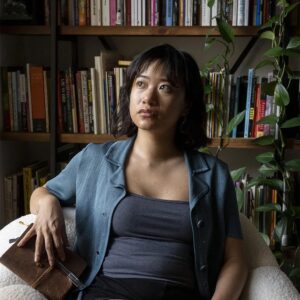
linktr.ee/Felishita

Giovanna Lomanto is a Pushcart-Prize nominated poet and artist. She has published six books of various lengths and genres. A recent graduate of NYU’s MFA program, her work has been supported by U.C. Berkeley, KQED, and the SFMOMA archive. In addition to working as a teaching artist and nonprofit organizer, she has also co-hosted the Living Room Poetry series and served as the lead curator for the San Francisco Literary Festival’s inaugural Out Loud weekend for Queer & BIPOC writers. Currently, she serves as the co-owner of the indie press Game Over Books. She lives in Oakland with her partner and their lion head bunny Maggie.
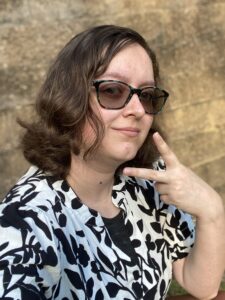
giovannalomanto.com

Kayleigh Clark is an emerging lesbian fiction writer who holds a BFA from Sarah Lawrence College and is pursuing her MFA in Creative Writing from Stony Brook University. Her work has previously appeared in The Southern Quill. She currently resides in Nesconset, New York with her family and two cats.
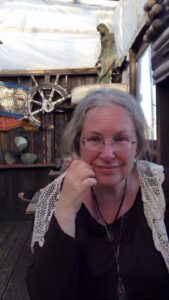
bsky.app/profile/kentuckythefried.bsky.social

L. Ann Kinyon is a poet, speculative fiction writer, artist and scholar of the humanities. She lives in Berkeley, California, where she has joined the somewhat exclusive number of Bay Area Editors with Coreopsis Journal of Myth & Theatre and Roses & Wildflowers magazine of mythopoeia and fabulism. While she loves creating stories of wonder and magic above all things, she’s been known to wander the local trails, camera in hand, and goes by @LezliethePoet on BlueSky and Instagram. Linktree: https://linktr.ee/lezliethepoet
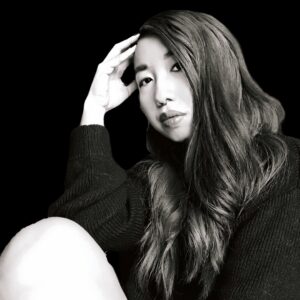
Muriel Leung is the author of the novel How to Fall in Love in a Time of Unnameable Disaster (W.W. Norton & Company), the Poetry Society of America’s 2022 Four Quartets Prize winning Imagine Us, The Swarm (Nightboat Books), Bone Confetti (Noemi Press), and Images Seen to Images Felt (Antenna) in collaboration with artist Kristine Thompson. She received her PhD in Creative Writing and Literature from University of Southern California where she was an Andrew W. Mellon Humanities in a Digital World fellow. She is faculty at California Institute of the Arts.
linktr.ee/murmurshewrote

Patricia Pease has been published in Barren, Hippocampus, BULL, Spillwords, Uppagus, Revolution John, The Rye Whiskey Review and more. She has a BFA from UNC School of the Arts.

patsypease.wordpress.com & facebook.com/PatriciaAPease

R. F. Daniels (they/them) is a queer nonbinary writer and software engineer living and working in Finland. When they aren’t arguing with computers or getting lost in speculative worlds, they can be found painting, composing sad music, and spending time with their cats.
@rfdwrites.bsky.social

Rohan DaCosta is a multi-disciplinary artist from Chicago, based in Oakland, working primarily through photography, writing, and song. His book, The Edge of Fruitvale, was published by Nomadic Press on April 28, 2018. His photography has been featured at The Flight Deck Gallery, Root Division Gallery, and Joyce Gordon Gallery, and Mercury Twenty Gallery. Rohan has served a four year term as a member of the Alameda County Arts Commission. Rohan served as the exhibition coordinator and curator for the East Bay Photo Collective in 2022. Rohan has served as a review panelist for the Bay Area Creative Foundation. Rohan currently produces an interview series/magazine titled PLAYDATE spotlighting the innovative work of artists and entrepreneurs in the bay area and beyond.

@playdatephoto

Susie Hara is the author of three novels, including Earthquake Shack (Arte Público Press), upcoming in fall 2025. Her first novel, Finder of Lost Objects, was a Lambda Award finalist and received an International Latino Book Award. Her writing has also appeared in Fractured Lit and The New York Times. A member of the communities The Ruby and Page Street Writers, she lives and writes in San Francisco.

@susiehara

Tino Rodriguez‘ paintings exist in a liminal space, embracing an ambiguity that expands perspective. The confounding of gender within reminiscently religious surroundings creates disorientation. Yet, this disorientation is akin to a waking dream, allowing for the possibility to experience the images of fantasy. Rodriguez’s paintings manifest the artist’s search for a spiritual philosophy that transcends simple duality. The restrictive dualities of Western religions—good and evil, heaven and hell, spirit and body—intermingle in a vision that deconstructs such ordering. Rodriguez represents human exuberance and decadence in his exploration of the complexity of human sexuality, transformation, longing and transgression. With the total abandonment of rationality, he creates a syncretic universe in which all is integrated, whether it be good or evil. Rodriguez was born in Ciudad Obregon, Sonora and was raised in Guadalajara, Mexico. At 12 years of age he moved to California permanently. Tino Rodriguez holds a BFA from SFAI and an MFA from the University of Albuquerque. His work has been shown in Los Angeles, San Francisco, New York, San Jose, Berlin, New Mexico and Montana.
1-tino-rodriguez.pixels.com

“Through your divine light, the universe awakens and consciousness blooms…”
The visions in my paintings are of deep, lush paradise worlds that depict the profound connection between all sentient beings, the oneness of all things. These mindscapes are portals that can open up our sense of perception and remind us of what we truly are in essence, which is infinite love and beauty. We are true divine wisdom. We are the source of existence. We are life itself.

Virgo Paraiso was born in Chihuahua Mexico. He grew up between Okinawa, Japan, Hawaii, and San Francisco, California. He has studied art, and exhibited in all of these places, as well as New York, Boston, and Berlin. He has done work for The Wachowskis, Netflix series Sense 8, music video for Anthony and the Johnsons, and movies including Jupiter ascending and Matrix 4.

@virgoparaiso

Producer Bios

Matt Scott Carney is a Pushcart nominated Latinx writer and musician residing in San Francisco. He holds an MA and MFA from SFSU. His fiction and poetry have appeared in A cappella Zoo, Inkwell, Red Light Lit, sPARKLE & bLINK, Entropy, Anti-Heroin Chic, Tilted House, The Racket Journal and in readings at seedy bars across California. His short story ‘On Becoming’ was a finalist in the 2017 Omnidawn Fabulist Fiction Contest; and ‘In Fresno, One Last Bath in Dust’ was included in the Baobab Press anthology This Side of the Divide: New Lore of the American West. He is a co-founder and producer of Club Chicxulub, a fabulist science fiction performance series.

Find his Art Rock/-wave project N! on Bandcamp, Spotify and everywhere else. 

mattcarney.space @ruddagerrustin

Lauren C. Johnson attributes her upbringing in Florida, America’s weirdest state, to her interest in the ecological and surreal. Her writing has appeared in Mason Jar Press, Maudlin House, the Swamp Ape Review, the Museum of Science Fiction, and others. She is the interviews editor for The Racket Journal and is a member of The Ruby, a Bay Area collective for women and non-binary artists and creatives. She earned her MFA in creative writing at American University and lives in San Francisco, where she is a co-host of Babylon Salon, a quarterly Bay Area reading series, and Club Chicxulub, a sci-fi and fantasy performance series.

Her debut novel, The West Façade, is forthcoming from Santa Fe Writers Project (SFWP) in 2026.

laurencjohnson.com

📸Rachel Ziegler

Born in San Jose and living in San Francisco’s Sunset District, Dev Bhat is a musician, composer, sound designer, and copywriter. He grew up performing in bands that could be characterized as industrial rock, shoegaze, hardcore punk, drone, doom, and ambient. Dev’s solo work features synthetic and organic textures using analog synthesizers, old tape recorders, samplers, drum machines, loopers, and a dense combination of effects processors. He draws inspiration from nature, horror films, classic video games, 90s anime, and all forms of speculative fiction.

@shipwreckdetective


Erin Gaines (she/they) is a board certified music therapist and founder of Bee You Music Therapy, providing services to all ages and diagnoses across the San Francisco Bay Area. When the business of off for the day, the music stays on, often in the form improvisational but healing self expression, and playful collaboration with others.

www.beeyoumusictherapy.com

Bron Treanor lives in Maryland, but grew up in the Northern California redwoods. Her writing is eclectic but doesn’t stray far from horror. She usually re-reads the gooey and gory parts.

She is currently raising her brand-new twin daughters and working on a novel about POGS on the moon.

You can find her published works in Bethesda Magazine, Kaaterskill Basin Literary Magazine, Deodata, The Oracle Fine Arts Review, Café Américain, Flash Fiction Magazine, at the Museum of Science Fiction in Washington. DC, and in Doubleback Review.

www.brontreanor.com